2026-10-01
Content
If you need a fabric that pairs relaxed softness with a fluid, body-friendly drape, crepe materials are a strong candidate. Crepe is produced by weaving hard-twisted yarns in opposing S and Z directions, and that yarn structure creates the fine pebbled surface that defines the family. The benefit is twofold: the surface brings visual depth without extra finishing, and the twisted yarns let the fabric fall around the body with a softer silhouette than most plain weaves.
Crepe materials are not limited to one fiber. Cotton crepe, polyester crepe, viscose crepe, and silk crepe all appear in garment production, and blends are common. The weave gives the family resemblance, while the fiber controls breathability, cost, wash behavior, and hand feel. So the buying decision is rarely crepe or not crepe. It is which crepe construction fits my garment.
This guide walks through the types, key physical properties, garment applications, quality risks, and sourcing questions that matter when ordering crepe materials for apparel lines.
For a fabric buyer, the four properties that influence performance most are weight, drape, breathability, and stretch. Each crepe type has a typical range, though specific mill outputs vary.
| Crepe Type | Typical Weight | Drape | Breathability | Typical Use |
|---|---|---|---|---|
| Cotton Crepe | 80-140 gsm | Soft, elegant | High | Blouses, camisoles, summer dresses |
| Polyester Crepe | 90-170 gsm | Moderate, smooth | Medium | Shirts, skirts, lightweight outerwear |
| Silk Crepe | 100-200 gsm | Excellent, luxurious | High | Premium dresses, occasionwear |
| Viscose Crepe | 90-150 gsm | Very good, airy | High | Loose tops, casual dresses |
Quick takeaway: For women's blouses and camisoles, lightweight cotton crepe in the 90-110 gsm range is the most frequent specification. For dresses and skirts, choose a mid-weight crepe between 110 and 150 gsm.
The weight range matters because it determines whether a fabric works for a light camisole (80-110 gsm) or a structured jacket (150+ gsm). If the mill gives you a crepe that is heavier than the spec, the garment can lose its soft character and become difficult to gather.
Drape is harder to measure than weight but easier to feel. Take a 30 cm sample, hold it at the corner, and see how it hangs. Good crepe falls into folds that remain soft. If the fabric curls and stays stiff, the yarn twist may be too tight for the intended garment, which makes seam sewing and pressing more difficult.
Cotton crepe delivers the natural breathability and moisture absorption of cotton with the structured drape of the crepe weave. For blouses, camisoles, and summer dresses, this combination is hard to beat because the fabric stays airy on the skin while holding a clean shape.
When you inspect a cotton crepe sample, look for three things:
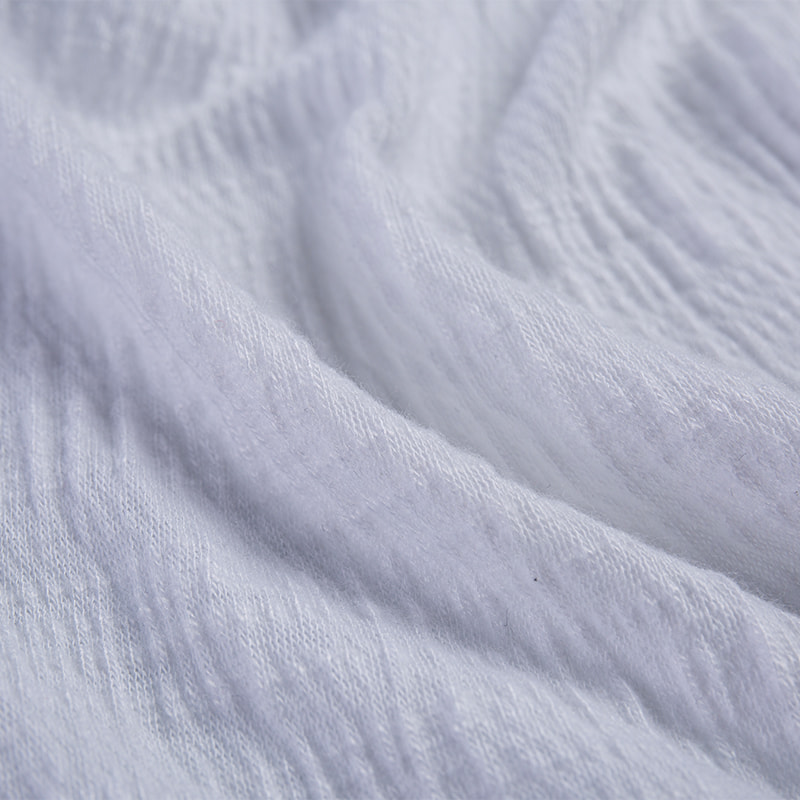 Lightweight Breathable Cotton Crepe Fabric for BlousesThis pure cotton crepe offers a soft, airy feel and classic texture, making it ideal for lightweight summer tops and camisoles. Its breathability and light weight suit blouse patterns without needing lining.View Product →
For a blouse line, a lightweight cotton crepe around 90-110 gsm usually provides enough body to avoid an inner lining while keeping the garment airy. This is the range most often requested for women's tops and camisoles.
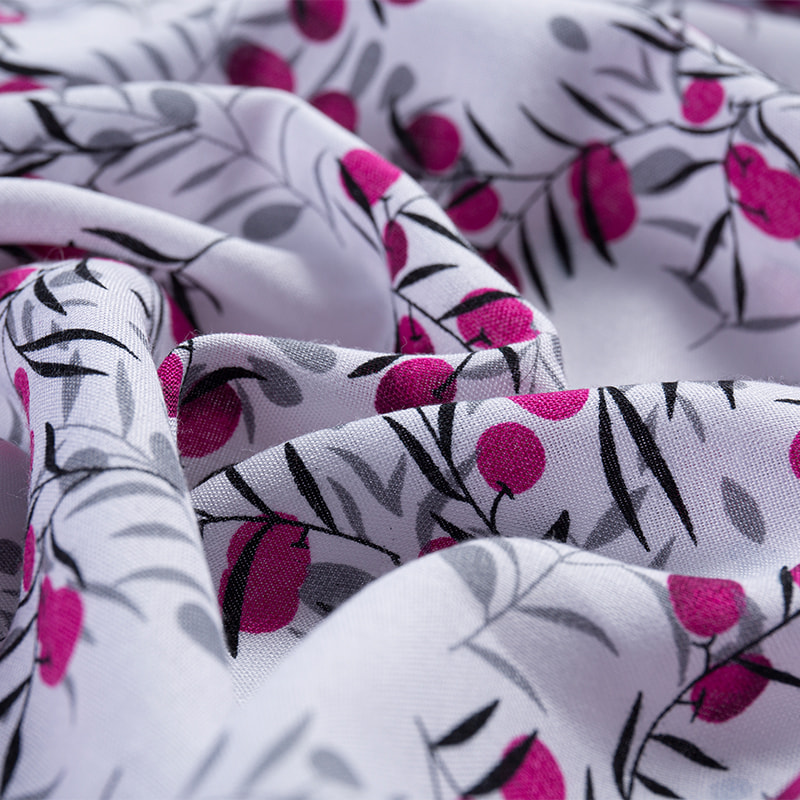
Printed cotton crepe is a smart option for brands that want floral prints or geometric patterns without losing the texture of the base weave. Because the crimped surface creates tiny shadows, prints appear with a slight dimensional character instead of a flat printed look.
When you evaluate printed crepe, check these points:
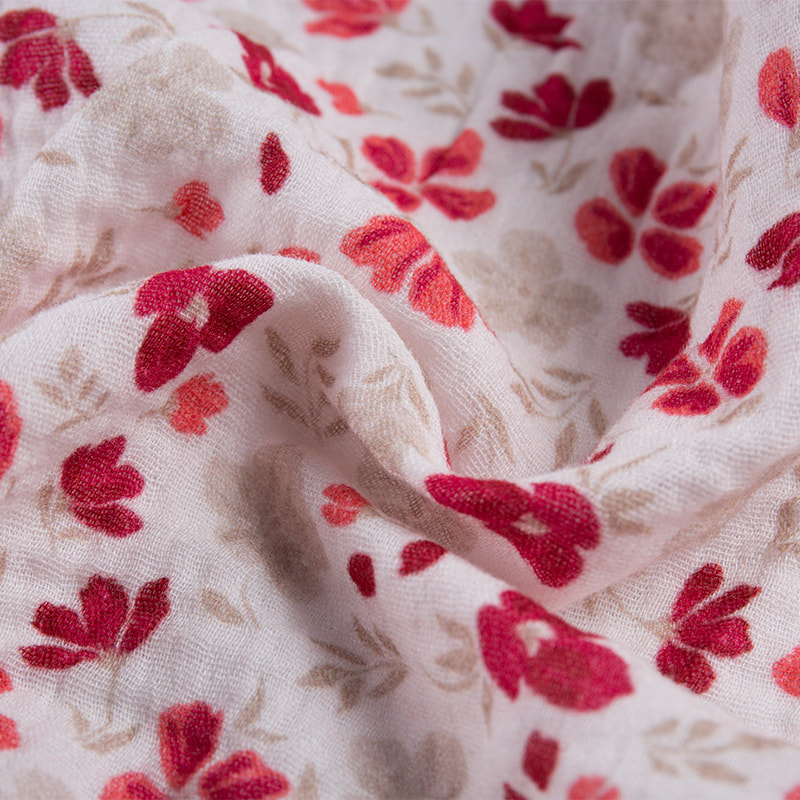 Washable Anti-Shrink Skin-Friendly Printed Cotton CrepeThis printed crepe resists shrinkage and remains soft after washing, with vibrant colors. Its skin-friendly finish and durability make it a reliable choice for produced garments and casual wear.View Product →
A washable, anti-shrink printed cotton crepe is a reassuring specification when production is outsourced. It reduces the chance of the garment changing shape after the first customer wash, and a skin-friendly finish avoids the stiffness often associated with printed fabrics.
The garment type drives the specification. Here is a simple selection guide:
For garments that need comfort with movement, look for crepe with 2-4% elastane. For loose, architectural silhouettes, non-stretch crepe preserves the intended shape better. When you compare blended and pure cotton options, the method of matching breathable soft fabric blends to garment types will help you decide which construction fits a specific end use.
Key thresholds for crepe quality:
Crepe materials can fail in ways a small swatch does not reveal. These are the most common issues:
These checks cost little but prevent expensive re-cutting after a full order.
When you source crepe from a woven fabric supplier, ask specific, technical questions. This separates an experienced supplier from a trader who has never touched the loom.
These questions matter because crepe materials vary considerably. A good supplier will know the weave structure differences between viscose cotton and crepe and will explain how the construction impacts the final garment. If a supplier gives vague answers, ask for a technical data sheet.
For sustainable collections, request proof of chemical management and wastewater treatment. The fabric's fiber content is only half the story. The rest is in the mill's environmental compliance. If you are evaluating a green crepe line, ask the mill to walk through the wet processing steps rather than accepting a sustainability label alone.
Crepe material is any fabric woven with highly twisted yarns so that the surface develops a continuous crinkled texture. It can be made from cotton, polyester, viscose, silk, or blends.
Lightweight cotton or viscose crepe in the 90-120 gsm range is the most common choice for women's blouses and camisoles.
Yes. Cotton crepe can shrink 3-5% after the first wash. Pre-shrunk or anti-shrink finished fabric reduces this risk.
Yes. Lightweight cotton or viscose crepe is widely used for summer tops and dresses because it is breathable and absorbs moisture.
Check seam slippage, shrinkage, colorfastness, and pilling before committing to a full production run.
Related Products
Get in Touch
We're here for you when you need us.
Contact Information
Add:
No. 517 Huanzhu Road, High-Tech Zone, Wuxing District, Huzhou City, Zhejiang Province, China.
E-mail:
Product Category
QR Code
Join our community and stay connected
 English
 Español
 عربى
عربى