2026-10-08
Content
When a supplier presents a sample book of lightweight suitings, the label that comes up most often is “65% polyester, 35% rayon.” Manufacturers choose this blend for a simple reason: it offers controlled cost, easy cutting, stable seams, and a soft hand feel that customers associate with better garments. But the same blend can look very different depending on yarn twist, fabric weight, and finishing chemistry. This guide covers what the polyester and rayon blend really delivers in production and in wear, and which checks matter before you place a bulk order.
A polyester and rayon blend is a woven or knitted fabric in which polyester filament or staple fiber is combined with viscose rayon staple fiber. Polyester gives strength, wrinkle recovery, and wash-and-wear convenience. Rayon gives moisture absorbency, a matte surface, and a fluid drape that polyester alone cannot imitate.
Common commercial blend ratio
The most common ratios you will meet in the market are 50/50, 65/35, 70/30, and 80/20 polyester-to-rayon. The 65/35 version is the default choice for blouses, dresses, and light suitings because it balances drape with shape retention. High polyester content raises strength and lowers cost but reduces moisture comfort and softness. Higher rayon content improves touch and absorbency, but you must check shrinkage, pilling, and wet strength more carefully.
Ask each supplier which rayon type they use. Standard viscose behaves differently from high-wet-modulus rayon such as modal, and that difference appears in washing shrinkage and seam pucker.
When the blend is made well, the garment performs better than a 100% viscose or a low-grade cotton fabric in several ways.
No synthetic-natural blend comes without trade-offs. The most common complaints from buyers are pilling, shrinkage, and poor behavior after careless washing.
Below is a practical comparison for apparel buyers who have to choose between the most frequent blends on the market.
| Property | Polyester / Rayon | Polyester / Cotton | Cotton / Rayon |
|---|---|---|---|
| Hand feel | Soft, fluid, matte | Crisper, more stable | Soft, absorbent |
| Moisture absorption | Moderate | Low to moderate | High |
| Wrinkle recovery | Good | Good | Poor to fair |
| Washing shrinkage | 1–3% after preshrink finishing | 1–2% | 3–6% without resin finish |
| Durability | Good for light apparel | Excellent for workwear | Fair; weaker when wet |
| Best end uses | Dresses, blouses, skirts, light suiting | Shirts, uniforms, outerwear | Summer tops, dresses, casual wear |
The figures above are typical ranges, not guaranteed values. The actual result depends on yarn count, weave density, dyeing process, and chemical finishing.
Buyers use this blend in four main categories: fashion tops, tailored separates, loungewear, and uniforms. The required ratio and finish change with each category.
A 65/35 polyester rayon fabric in crepe, poplin, or satin weave gives enough weight to drape well without clinging. Printed versions hold color through repeated home washing. For garment factories, the slightly stable structure reduces puckered seams compared with pure viscose.
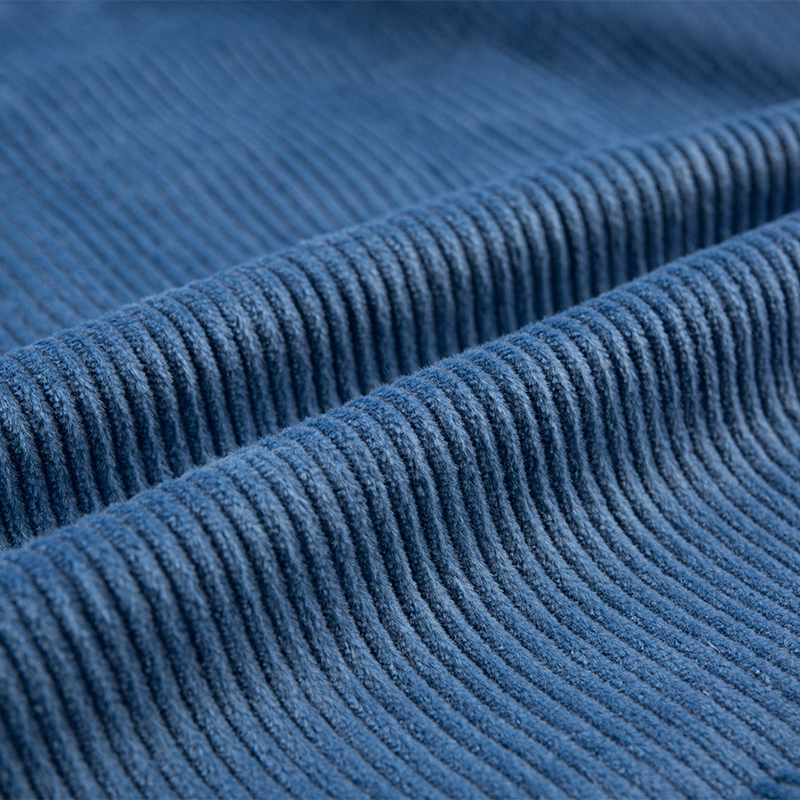
In twill or corduroy construction, polyester and viscose produce soft casual trousers and spring jackets that keep their crease better than cotton. If you need a brushed surface with moisture control, a polyester-viscose corduroy is worth testing against cotton corduroy.
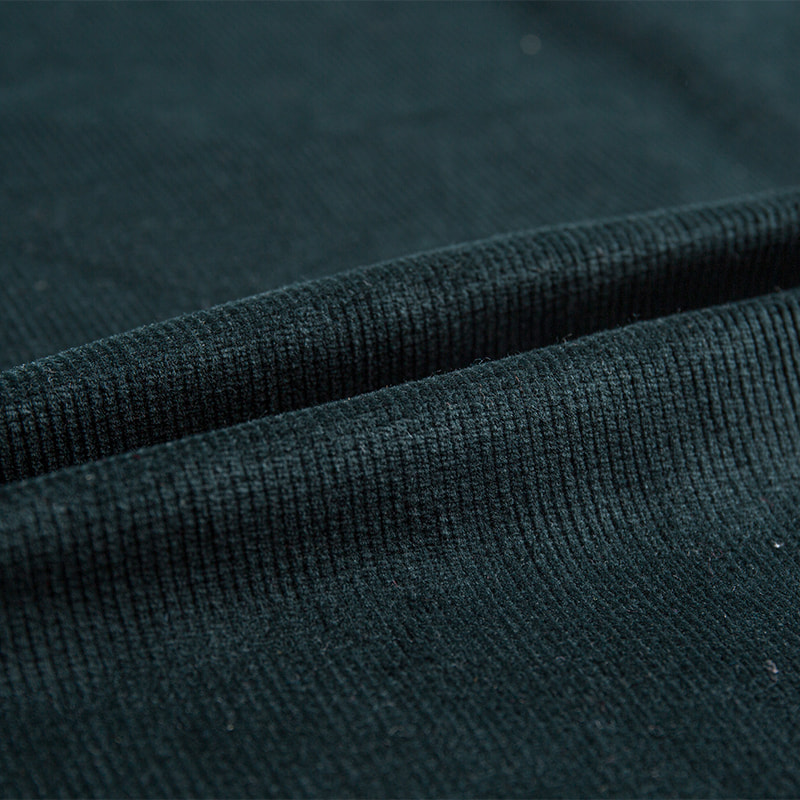 Moisture-Wicking Polyester Viscose Corduroy Fabric for ApparelThis corduroy blend combines moisture wicking and wrinkle resistance, making it suitable for trousers, jackets, and loungewear that remain comfortable and neat during extended wear.View Product →
Here a higher rayon content, around 50/50 or 60/40, feels more comfortable against the skin. Use a satin weave with a softener finish for a subtle sheen, or a brushed back for warmth in winter loungewear.
For uniforms, the blend is chosen at 65/35 or 70/30 polyester-to-rayon with a twill construction and antistatic finish. It dries quickly, resists wrinkles, and holds color in industrial laundering. If flame resistance or tear resistance is required, the base fabric must be treated by a specialist finisher and tested to the relevant standard.
See our separate guide on matching breathable soft fabric blends to the right garment type before you lock the ratio.
Before you move from sample to bulk order, ask the mill for documented answers on these points.
For garment programs that need consistent quality, a transparent supplier should share mill test reports and, if needed, a short production history for the same construction.
These are the questions that apparel buyers usually raise when they evaluate a polyester and rayon blend for the first time.
Untreated rayon shrinks noticeably; the polyester content reduces that risk but does not remove it. A well-finished 65/35 blend should remain within 2–3% washing shrinkage after three cycles. Confirm the finished value with the supplier and request a test on an actual production piece.
It depends on the ratio and weave. For humid heat, a 50/50 or 60/40 rayon-rich construction in a loose weave feels cooler than a high-polyester fabric. For moderate summer weather, the 65/35 blend works because rayon keeps the fabric breathable. If you need intense moisture control, add a sweat-wicking finish or choose a fabric with a higher polyester filament component.
No, not on its own. The fabric has good recovery from creasing but no mechanical stretch. For jeans, fitted pants, or shapewear, ask for a blend containing about 2–5% elastane, as used in stretch twill and stretch denim constructions.
In the lifecycle, a cold or warm machine wash at up to 40 °C with a short spin is safest. Avoid chlorine bleach, high-temperature drying, and very hot ironing. In the bulk production stage, a cooling and final drying step helps stabilize the fabric before cutting.
Polyester and rayon blend is a sensible middle ground between cost-driven performance and consumer comfort. It works especially well for dresses, blouses, trousers, loungewear, and uniforms, provided the blend ratio, weave, and finishing match the end use. Before ordering, verify fiber composition, shrinkage, pilling grade, and care instructions on the actual production sample.
Related Products
Get in Touch
We're here for you when you need us.
Contact Information
Add:
No. 517 Huanzhu Road, High-Tech Zone, Wuxing District, Huzhou City, Zhejiang Province, China.
E-mail:
Product Category
QR Code
Join our community and stay connected
 English
 Español
 عربى
عربى