2026-09-17
Content
If you are choosing between chiffon and georgette for a blouse, dress, overlay, or saree, start here: chiffon gives you the lightest, most airy movement, while georgette gives you a slightly heavier, grainier fabric that holds structure better.
Both fabrics belong to the sheer woven family, but they are not interchangeable in a production context. The exact choice should be made after comparing weight, texture, drape, durability, and care behavior. A wrong choice can affect hem finish, seam allowance, lining requirements, and the silhouette you promised your customer.
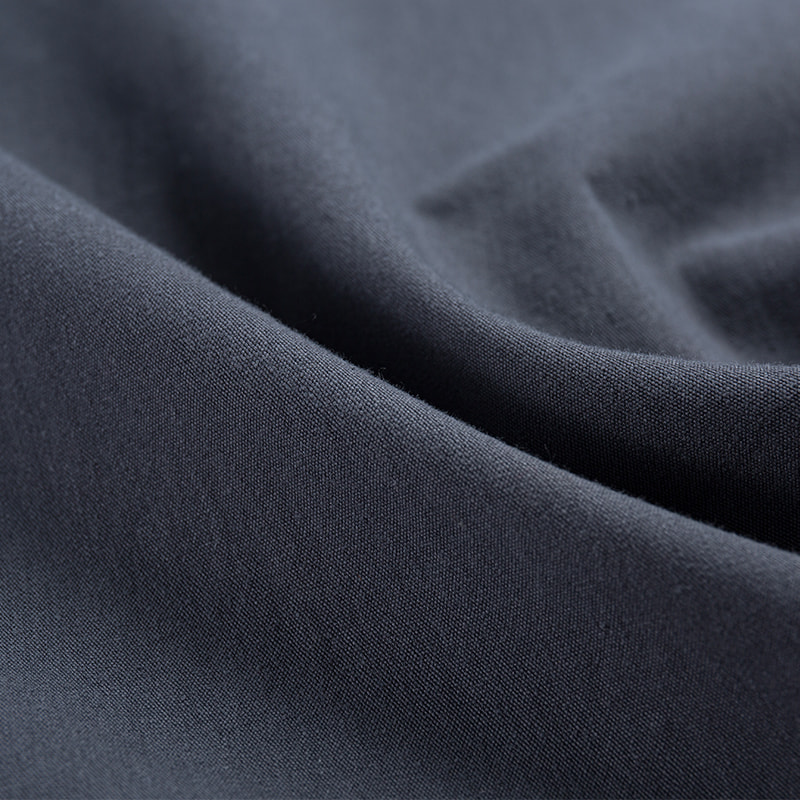
Light, transparent, and soft, with a smooth flat surface. Ideal for layered and floating garments.
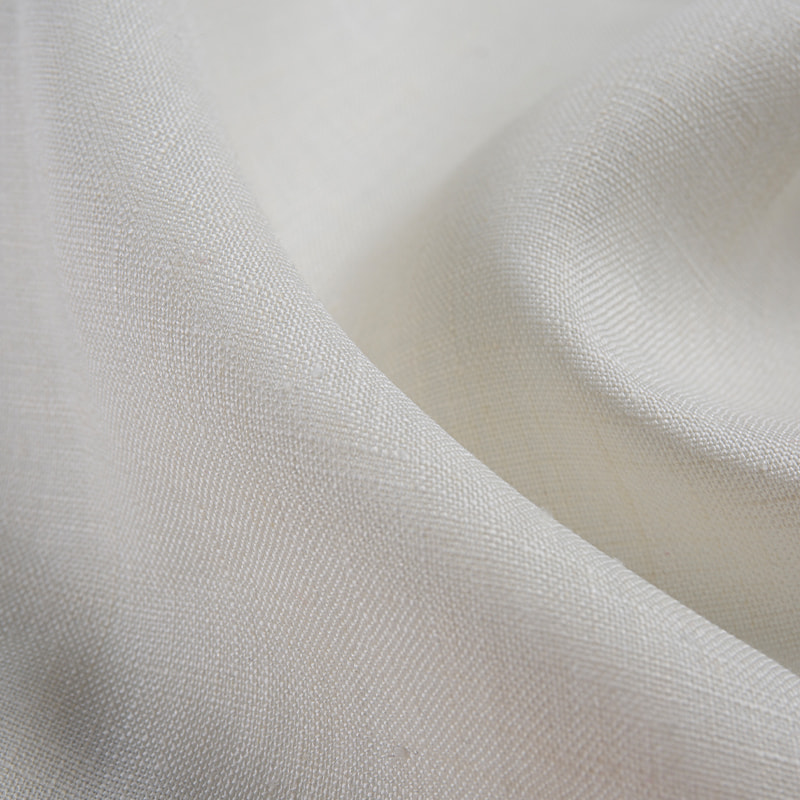
Slightly heavier, with a visible crinkled surface. Ideal for structured blouses, skirts, and formal wear.
If you are a brand owner or a production team, the safest way to use these fabrics is to define the end use first and then match the weight and drape to that use. This article explains how to do that without wasting sampling time.
Chiffon is a lightweight woven fabric made with fine, slightly twisted filament yarns in a plain weave. In traditional silk chiffon, the yarns are silk; in today's commercial production, polyester, nylon, or viscose are common. The result is a fabric that feels almost weightless, has a soft flow, and is often translucent.
From a mill perspective, chiffon's key performance signals are:
Chiffon is commonly used for evening wear, overlays, ruffles, chiffon tops, and any design where a soft, romantic silhouette is required. It also works well when embroidery or printing is applied, but cutting and sewing tolerance must be adjusted because the fabric is delicate.
A production team that treats chiffon like a stable woven fabric will often face seam puckering, slipping, and difficult pattern matching.
Georgette is a woven fabric made with highly twisted yarns, typically in a plain weave. That high twist creates a crinkled, gravel-like, or grainy surface that gives the fabric more body than chiffon. It is still sheer or semi-sheer, but it feels more substantial and does not cling as easily.
Georgette can be found in silk, polyester, viscose, and cotton blends. The weight typically ranges from 60 to 110 g/m2. Because the surface has more texture, georgette holds seams, pleats, and dart lines better than chiffon. It is also easier to embroider, because the yarn structure offers more resistance and body.
If you are looking for a cotton-based fabric with a similar crepe texture for blouses and camisoles, our lightweight breathable cotton crepe fabric for blouses and camisoles is a useful option to place next to a georgette sample in your development lab.
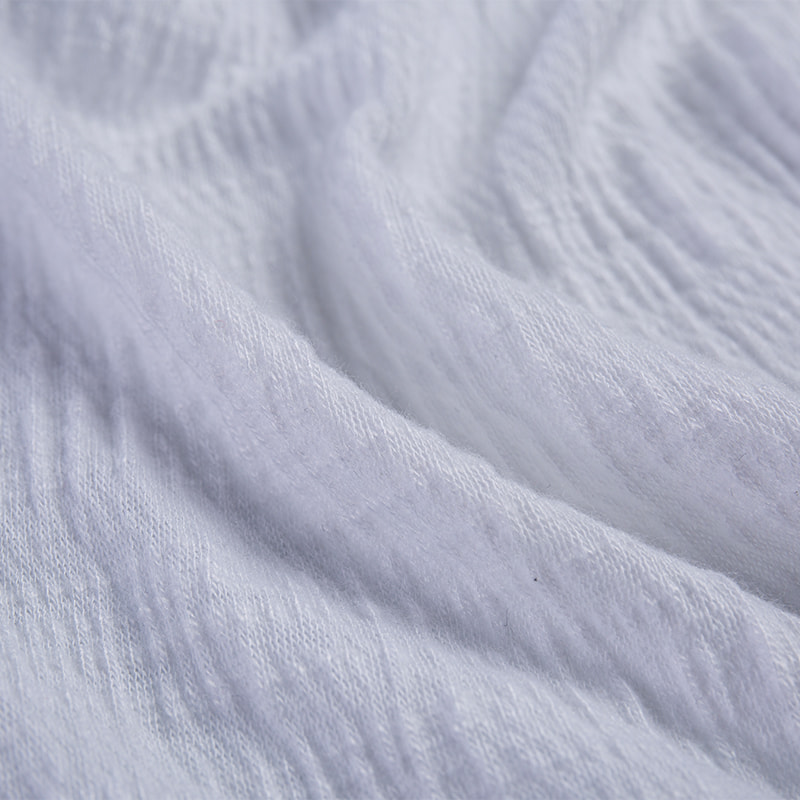 Lightweight Breathable Cotton Crepe for Blouses and CamisolesThis pure cotton crepe offers a soft, breathable hand with a classic textured surface, making it a practical alternative to georgette for light summer tops and casual wear.View Product →
Georgette's key performance signals:
Use the following sequence when you are selecting between chiffon and georgette for a new production run.
For a garment that needs the fluid drape of chiffon with less transparency, our lightweight drapey antiwrinkle dull satin fabric for blouses and skirts is designed to give a soft hand and added opacity in a woven construction.
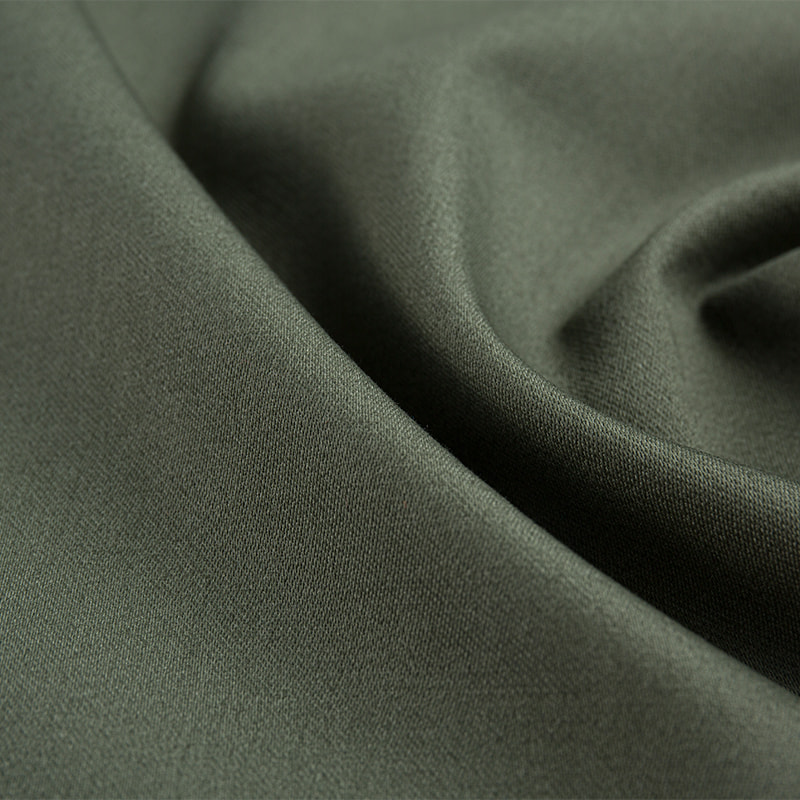 Lightweight Drapey Dull Satin for Blouses and SkirtsWith a matte finish and anti-wrinkle properties, this woven fabric provides a fluid drape and added opacity, suiting designs that need less transparency than chiffon.View Product →
If you are facing a design that needs more body, georgette is usually the better choice. The fabric also responds well to draping over formalwear and separates where movement must be controlled. Use chiffon when you want the fabric to feel like a second skin, and georgette when you want a visible texture that supports the construction.
Weight is the most important number for many garment brands because it determines lining, needle size, and seam finish. Chiffon is usually in the 30-60 g/m2 range. That means you can use it as a thin layer without changing the design pattern. Georgette is usually 60-110 g/m2. Even at 60 g/m2, georgette tends to feel heavier because of its twisted yarns.
The weave structure also changes how light passes through the fabric. Chiffon uses a plain weave with low twist, so light reaches the skin more directly. Georgette uses high-twist yarns, which creates irregular spaces that absorb or diffuse light, making the fabric look more textured and less transparent.
The same reasoning applies when you look at the defining weave structure of a viscose-cotton blend.
If your customer wants a smooth surface, a subtle sheen, and a tiny amount of stretch, satin or tencel blends can provide a different route. In our range, our silky soft washable satin weave tencel fabric is worth testing when the design needs a cleaner dry hand and more washability.
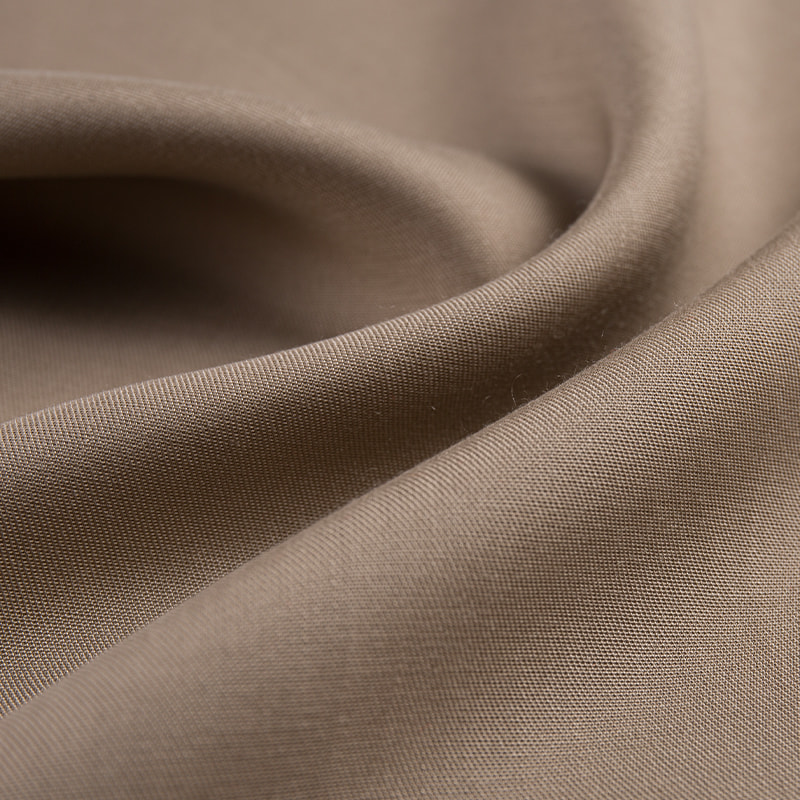 Silky Soft Washable Tencel Satin Weave FabricThis Tencel satin features a smooth, silky touch and improved washability, offering a clean dry hand and moisture-wicking comfort for garments and home textiles.View Product →
At Xinding, we are a woven fabric supplier serving European and American garment brands. When a chiffon-versus-georgette question reaches us, we do not simply label fabrics by name. We look at the target garment, the mill finish, the color, the print method, and the tolerance your factory can handle.
Our production setup includes dyeing and printing workshops, a finishing workshop, and an internal lab testing room. This is important because the difference between chiffon and georgette can be created or removed during finishing. A softer chemical finish can calm a crepe edge, while a stiff finish can make chiffon feel more like organza. In a mill, the final hand is a variable you need to control.
For more detail on how silk chiffon, satin, and charmeuse compare, see our article on what makes silk chiffon, satin, and charmeuse different.
We ask our clients to send a mock-up, a block pattern, or a defined end use. Then we confirm the available construction, weight, and finish. The goal is to avoid a fabric that looks perfect in the hand but fails in production because it is too weak to hold a seam or too heavy to maintain the intended silhouette.
Yes. Most commercial chiffon and georgette today are polyester or viscose blends. Polyester offers better durability and washability, while viscose provides a softer hand. The weave and twist remain the main distinguishing factors.
Georgette is generally more durable because the high-twist yarns create a denser, more textured structure that resists tearing. Chiffon is lighter and more delicate, so it should be used carefully in areas with high abrasion or seam tension.
Silk versions normally need dry cleaning. Polyester versions can be hand-washed or machine-washed on a gentle cycle. We recommend a wash and shrinkage test on a bulk sample before approval.
Hold the fabric against a light source. Chiffon will feel smoother and more transparent. Georgette will show a crinkled or grainy texture and will feel slightly stronger in the hand.
Related Products
Get in Touch
We're here for you when you need us.
Contact Information
Add:
No. 517 Huanzhu Road, High-Tech Zone, Wuxing District, Huzhou City, Zhejiang Province, China.
E-mail:
Product Category
QR Code
Join our community and stay connected
 English
 Español
 عربى
عربى