2026-09-10
Content
When a garment factory sends over a request for a woven fabric that is wear-resistant, low-moisture, and easy to dye, the first fiber to be eliminated is usually polypropylene. Polyester, by contrast, keeps appearing as the default choice. That pattern reflects the operational realities of apparel production.
For cut-and-sew clothing, polyester is more often the right answer. For nonwoven geotextiles, ropes, or molded components, polypropylene can be perfectly suitable. The difference is not about one being universally superior; it is about which properties a sourcing decision can actually rely on.
At a fabric supplier like Huzhou Xinding Import & Export Co., we work with woven fabrics daily. The selection criteria that matter in practice are not abstract polymer science but how a fabric behaves after dyeing, cutting, washing, and exposure to the sun.
Polyester is a synthetic fiber derived from polyethylene terephthalate. It is available as filament yarn or spun staple fiber and is widely blended with cotton, viscose, Tencel, and nylon. The fiber can achieve high color saturation, dimensional stability, and a wide range of hand feels through weaving and finishing.
Polypropylene is an isotactic polymer that is commonly extruded as monofilament, film tape, or spunbond nonwoven. In woven textile production, it is less common than polyester because it has poor dye affinity and a low softening point. Its key advantage is extreme hydrophobicity and outstanding chemical inertness.
The table below summarizes how the two materials behave on the properties that matter most to apparel fabric buyers.
| Property | Polyester | Polypropylene |
|---|---|---|
| Tensile strength | Higher stiffness and strength | Lower strength under load |
| Melting point | Around 260°C | Around 165°C |
| Moisture absorption | Low but breathable when finished | Extremely low, almost hydrophobic |
| UV resistance | Good with stabilizers | Poor, degrades in sunlight |
| Density | Higher specific gravity | Lighter, floats in water |
| Dyeability | Excellent with disperse dyes | Very difficult to dye |
| Relative cost | Higher resin cost, more supply options | Lower resin cost, limited textile use |
The table shows that polyester dominates in most textile properties, except that polypropylene is lighter. In woven apparel fabric, the benefits of polyester can be used without the cost penalty that often comes with high-performance synthetic alternatives.
Tensile strength is the first factor buyers check. Polyester has a higher tensile strength than polypropylene, and it is more elastic under repeated stress. In professional workwear, where seams, zippers, and abrasion points face constant movement, polyester twill or canvas holds shape better.
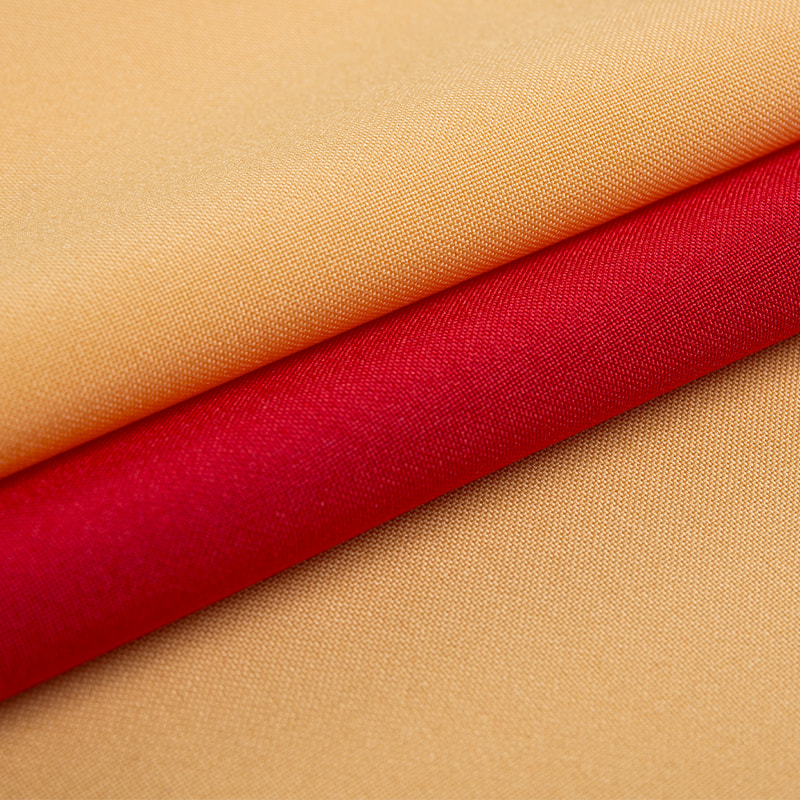
For workwear collections with flame-retardant requirements, waterproof and fire-resistant technical canvas fabric for workwear makes the heat tolerance and mechanical stability of polyester especially valuable. This kind of woven fabric is a far more practical candidate than polypropylene in a woven structure.
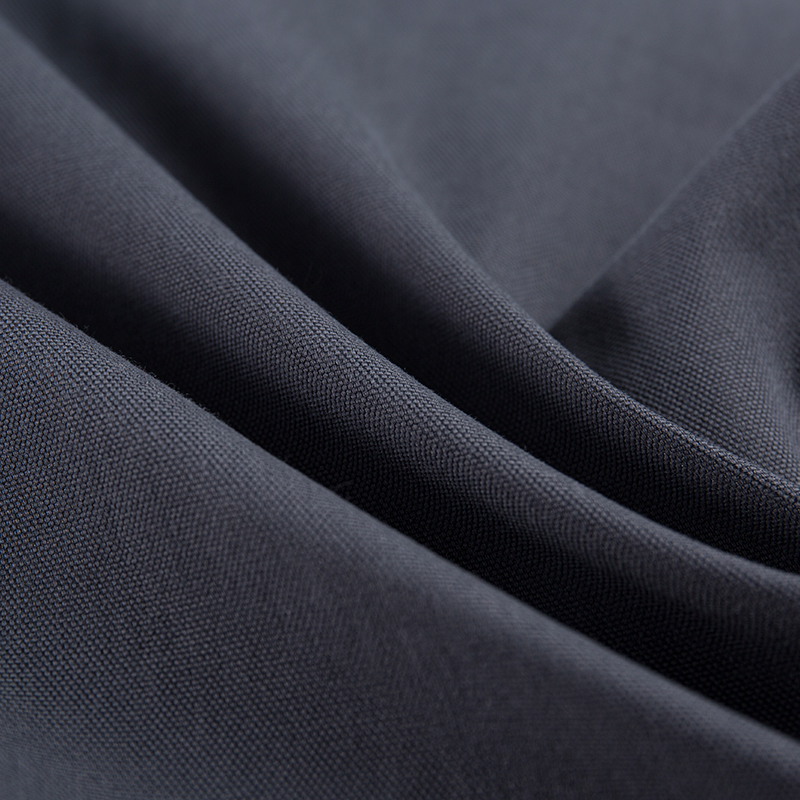 Waterproof Fire-Resistant Technical Canvas Fabric for Protective WorkwearThis woven fabric combines high-performance synthetic fibers with a special coating to resist water, fire, oil, and chemicals, making it ideal for demanding industrial workwear such as construction, metallurgy, and chemical protective clothing.View Product →
Polyester also recovers from stretching better than polypropylene. After repeated machine washing and drying, garments made with polypropylene tend to sag or deform, while polyester retains its original fit.
Polyester has a melting point near 260°C, while polypropylene softens and melts around 165°C. In real production, this means a polypropylene garment can deform during steam pressing, tumble drying, or even when left in a hot car. Polyester, on the other hand, handles these conditions comfortably.
UV resistance is another dividing line. Polyester is inherently more stable when exposed to sunlight, while polypropylene degrades and becomes brittle over time. For outdoor jackets and sun-protective clothing, this difference directly affects the useful life of a finished product.
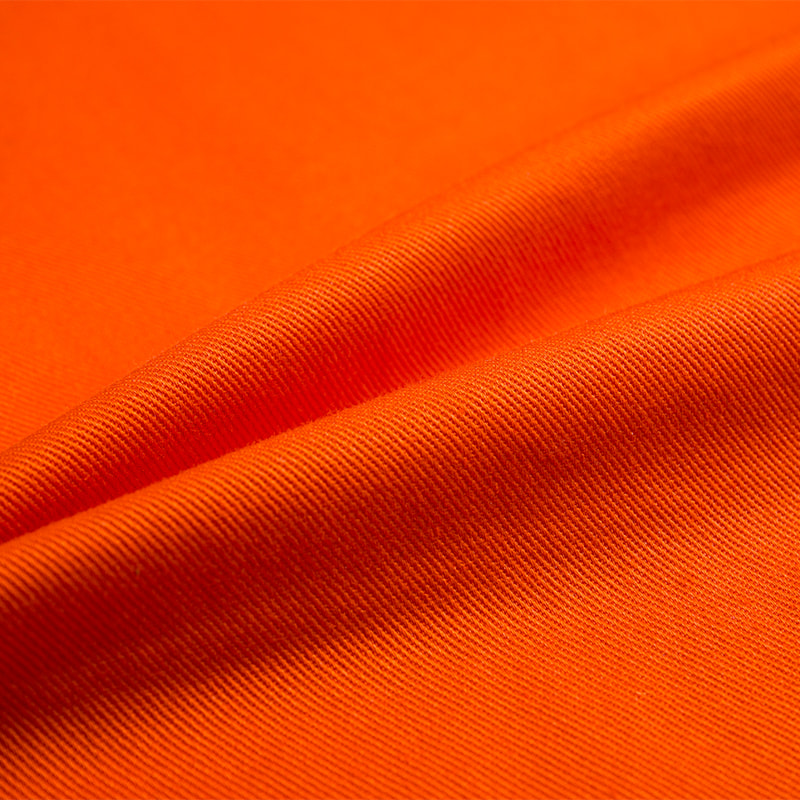
An example from our own fabric range is UV-protection quick-dry outdoor polyester twill drill fabric, which is designed for outdoor garments that need to withstand sun exposure and repeated drying cycles. The same fabric in polypropylene would not hold up to that level of environmental stress.
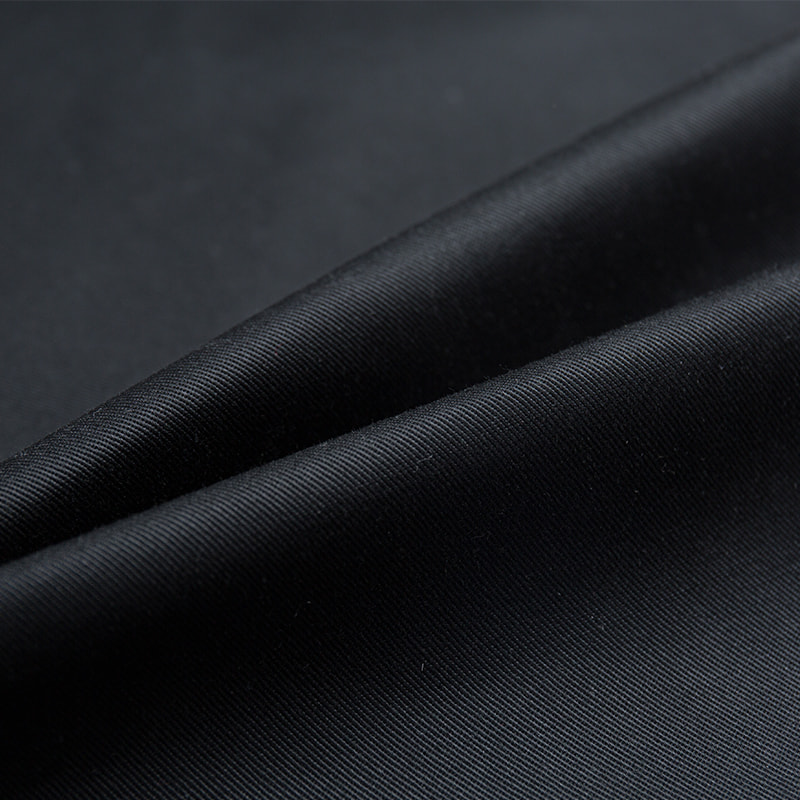 UV-Protection Quick-Dry Outdoor Polyester Twill Drill FabricEngineered with a high-density twill weave, this polyester fabric blocks UV rays, wicks moisture, and withstands tear and abrasion, making it a durable choice for outdoor apparel exposed to sun and repeated drying.View Product →
Polypropylene is nearly water-absorbent, which sounds like a benefit until you consider how apparel fabrics actually work. A fabric that cannot absorb moisture will trap sweat against the skin and leave the wearer feeling clammy. Synthetic fibers need sufficient moisture transfer to the outer layer so that evaporation can create a cooling effect.
Polyester has a moisture regain of about 0.4%, but it can be modified through knitting structure, yarn construction, and finishing to perform as a true moisture-wicking fabric. Blending polyester with viscose or Tencel further improves the balance between breathability and a dry hand feel.
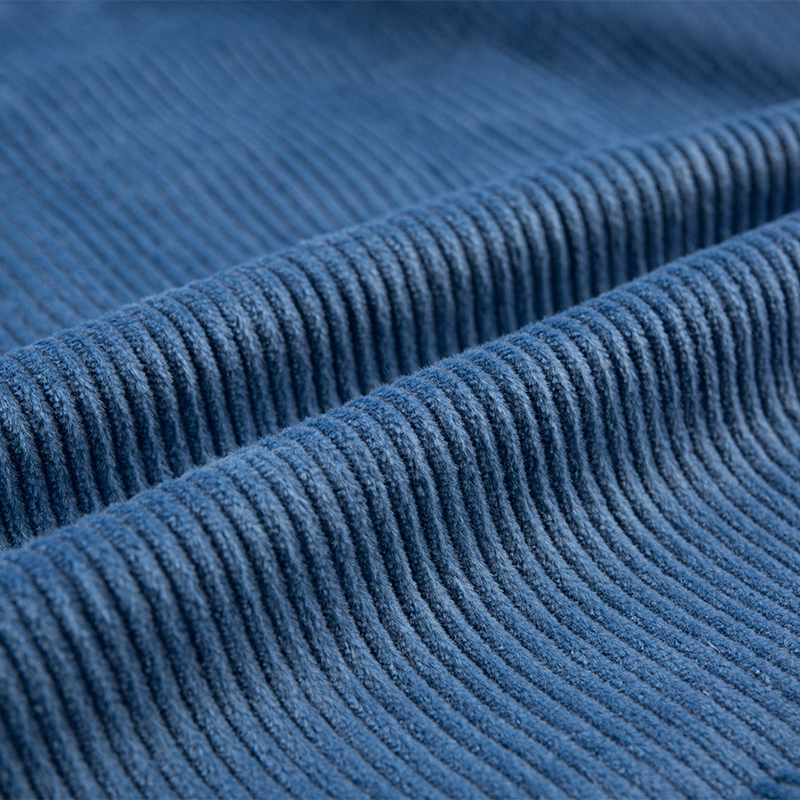
For garments where a soft, comfortable finish is required, moisture-wicking breathable polyester viscose corduroy fabric combines the ease of care of polyester with a natural, skin-friendly feel. This is not achievable with polypropylene in a woven apparel context.
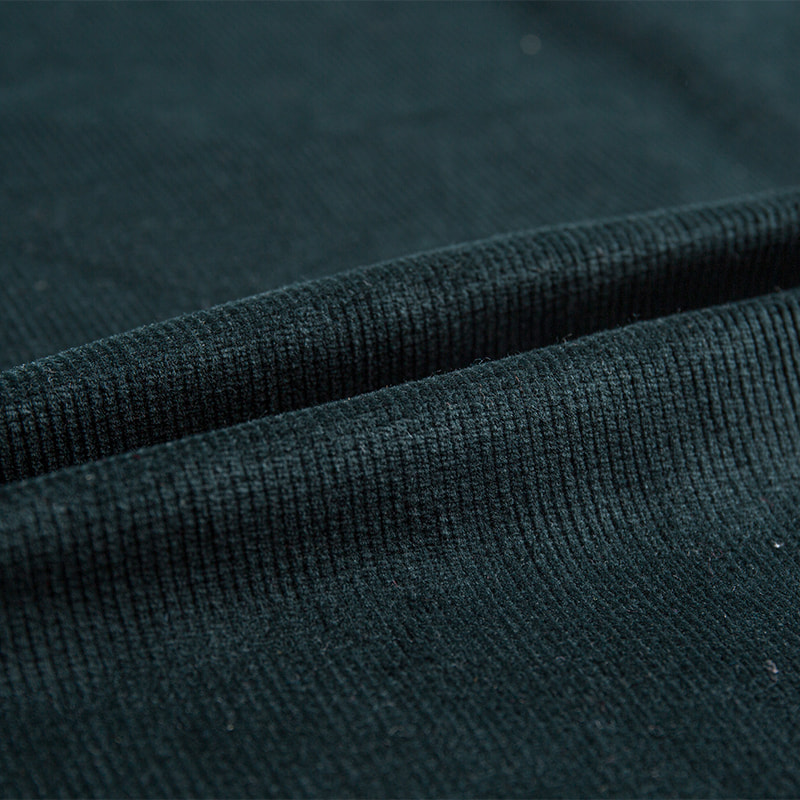 Moisture-Wicking Breathable Polyester Viscose Corduroy FabricThis blend of polyester and viscose offers a soft touch, excellent moisture absorption, and wrinkle resistance, while its classic corduroy texture adds retro style to autumn and winter garments and accessories.View Product →
Polypropylene lacks the chemical sites required for disperse dyes to bond effectively. As a result, colored polypropylene fabrics are produced through mass pigmentation, which limits the palette and makes custom color matching and small-lot production expensive. Polyester, in contrast, accepts a broad range of dye systems, including high-temperature disperse dyeing, digital printing, and yarn-dyed weaving.
Color fastness is critical for apparel buyers who need to run frequent shade checks and reorder stable color lots. Polyester fabrics deliver consistent results across weaving, dyeing, and finishing, which makes them a reliable choice for workwear, outerwear, and fashion trousers.
Polypropylene resin is typically cheaper per kilogram than polyester resin. However, the finished fabric cost depends on the entire supply chain: yarn spinning, weaving, dyeing, finishing, and cutting. Because polypropylene is so difficult to dye and has limited woven textile applications, these process costs usually dominate the initial resin savings.
Polyester also has a stronger recycling ecosystem. Many apparel brands now prefer recycled polyester because it meets their sustainability targets without sacrificing performance. This is one of the main reasons why sustainable fashion fabrics reduce environmental impact through the use of regenerated polyester in woven apparel.
For a supplier that manages a wide product range, the decision often comes down to reproducibility and customer acceptance. Polyester is easier to source in consistent quality, easier to reorder, and easier to match across seasons.
Follow this simple rule for most apparel applications: if the product needs printing, color fastness, UV resistance, workwear durability, or a soft drape, choose polyester. If the product is meant to handle extreme moisture without absorbing water, and does not require dyeing or color matching, polypropylene may be considered.
In practice, the woven fabric selection at a trading company like ours is driven by the final garment category. TC canvas for uniforms, polyester twill drill for outdoor jackets, TC poplin for shirts, and polyester-cotton satin for loungewear all use the practical advantages of polyester to meet brand requirements.
Technically, yes. But blending them in a woven fabric is rarely practical because the two fibers have different dyeing and heat behavior. Polypropylene cannot be dyed with disperse dyes, which makes mixed-color garments difficult to produce consistently.
Polyester performs better outdoors. It has stronger UV resistance, a higher melting point, and better dimensional stability when exposed to rain, sun, and wind over a long period.
The resin is cheaper, but the total production cost is usually not. Extra costs for pigmenting, limited color options, and unstable finishing processes erase the initial savings for most garment fabrics.
Polyester has a more mature recycling path, especially through mechanically recycled PET. Polypropylene can be reused, but it is less common in textile-to-textile recycling. For most apparel brands, recycled polyester is the more practical sustainability choice.
Related Products
Get in Touch
We're here for you when you need us.
Contact Information
Add:
No. 517 Huanzhu Road, High-Tech Zone, Wuxing District, Huzhou City, Zhejiang Province, China.
E-mail:
Product Category
QR Code
Join our community and stay connected
 English
 Español
 عربى
عربى