Company Profile
Latest Updates
Provide you with the latest enterprise and industry news
2026-07-16
Why Ground Fabric Choice Determines Embroidery Longevity Every embroidered surface begins as a negotiation between fiber, weave, and needle. The ground fabric is not a passive backdrop; it actively governs how thread sits, how tension behaves, and how long a design survives handling, washing, and light exposure. Selec...
2026-07-09
Why Stretch Engineering Has Reshaped Modern Textile Standards Apparel buyers no longer accept fabrics that look good on a hanger but restrict movement on the body. Over the past decade, garment mills shifted from rigid woven cloth toward blended constructions that combine a structural fiber with a small percentage of ...
2026-07-02
Why Breathability Defines Modern Casualwear In warm climates and seasonal transitions, fabric choice directly dictates comfort. Two textiles consistently outperform others: poplin fabric and linen fabric. While both offer superior air permeability, their structural differences serve distinct casual wear needs. Poplin...
Industry Knowledge
In today's world, where fashion and function go hand in hand, denim is no longer limited to its traditional, single visual appeal and feel. As consumers increasingly demand personalization and quality, Textured Denim Fabric has gradually entered the public eye. So, why has this fabric, which combines visual depth and structural beauty, become so popular in the market?
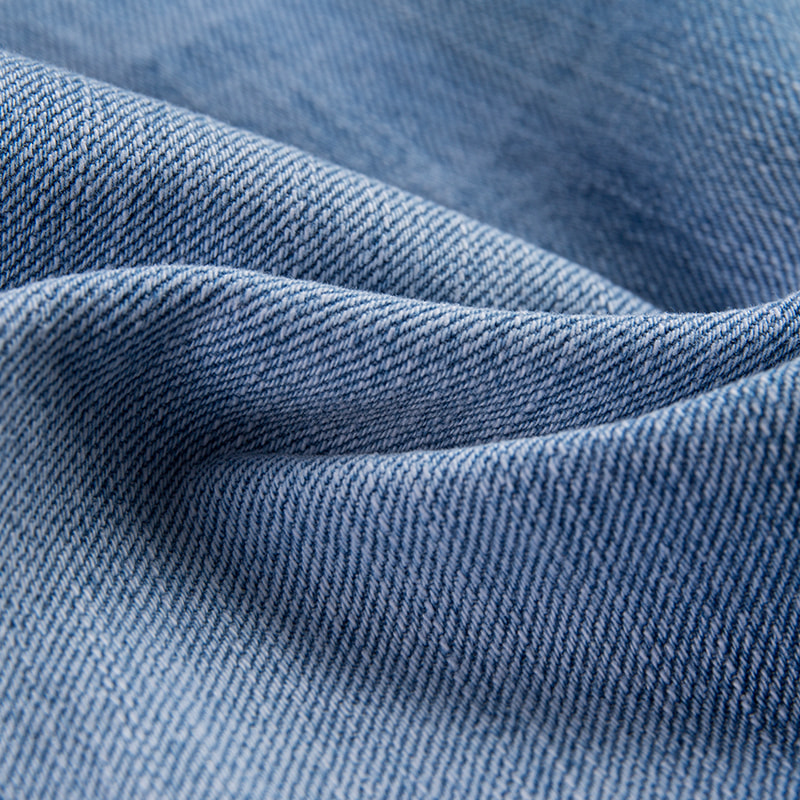
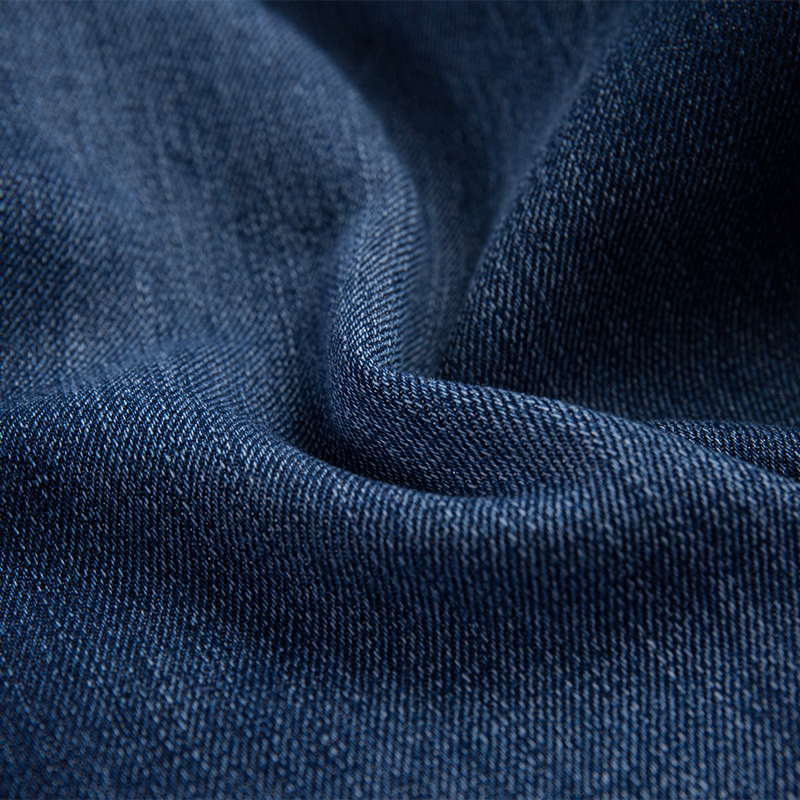
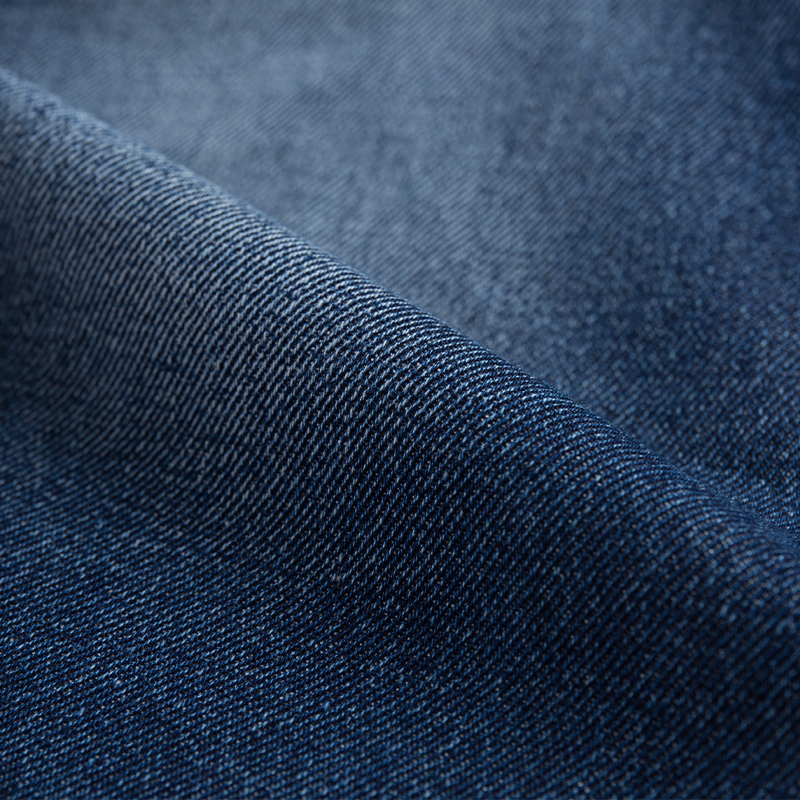
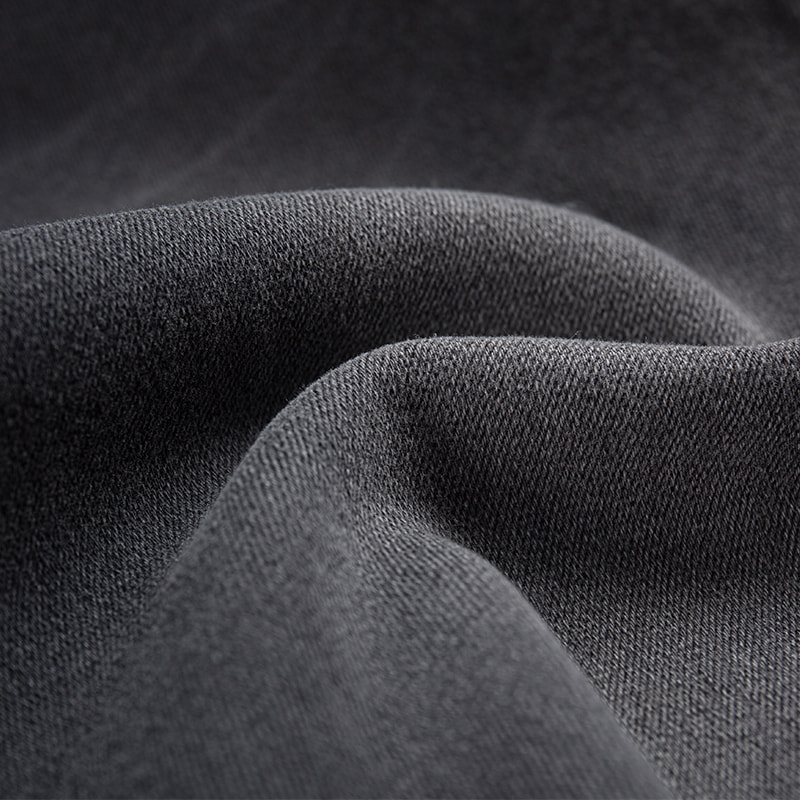
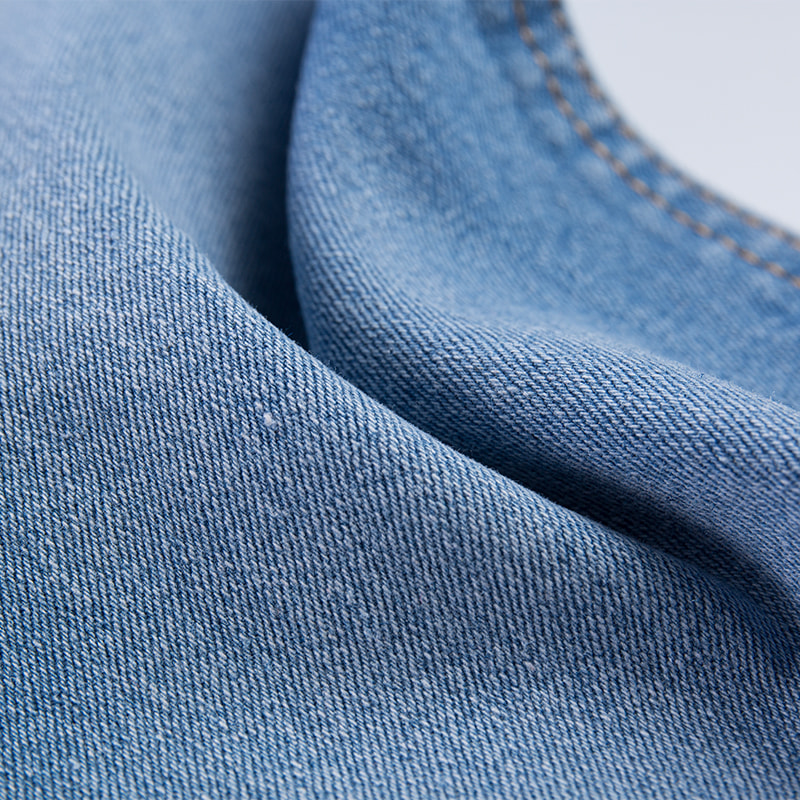
Traditional denim is known for its durability, crispness, and classic indigo blue, while textured denim represents a significant upgrade. By altering the weaving structure, yarn combination, and finishing processes, the fabric surface exhibits a textured feel and rich visual layers.
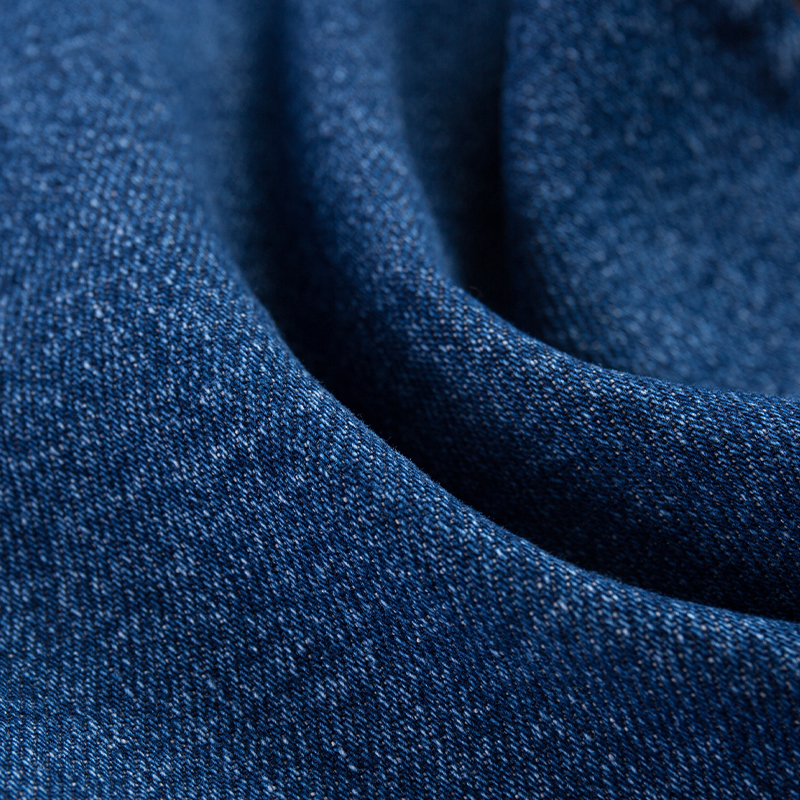
This textured effect can be achieved through various methods, such as jacquard weaving, the application of slub yarn, or special washing treatments. Compared to ordinary denim, textured denim not only enhances the design of the fabric but also strengthens the three-dimensional expression of clothing, making it more recognizable in the ready-to-wear market.
For brands, this means greater market differentiation; for consumers, it means a more personalized wearing experience.
The formation of textured denim is not a simple surface treatment, but the result of the synergistic effect of weaving and finishing. In the weaving stage, the basic texture is created by combining yarns of different thicknesses or adjusting warp and weft densities. In the finishing stage, enzyme washing, stone washing, or coating treatments further enhance the fabric's texture.
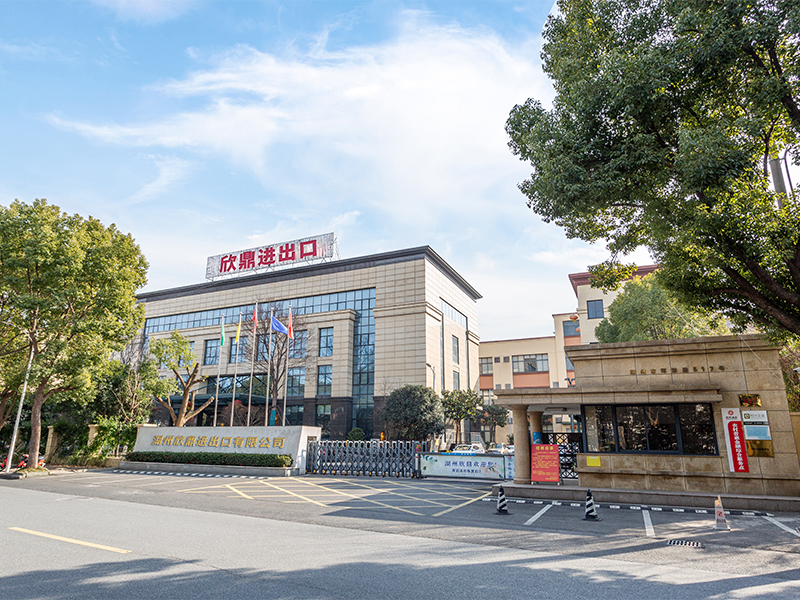
This process places high demands on the technical capabilities of manufacturing companies. HUZHOU XINDING IMPORT & EXPORT CO., LTD. has always focused on the research and development and supply of woven fabrics, accumulating rich experience, especially in the denim field. The company's clients include many internationally renowned brands such as GAP, H&M, and TARGET, who have extremely strict requirements for quality and stability, which in turn drives the company's continuous improvement in its processes.
Through a rigorous quality control system, the company can ensure the consistency of appearance and performance in every batch of textured denim.
The advantages of textured denim are not only reflected in its visual appeal but also in its wide range of application potential. From jackets and jeans to shirts and dresses, this fabric can give products a stronger design expression.
In casual wear, rugged textures enhance the street style, while in light business or fashionable women's wear, delicate textures offer a more refined visual effect. With the development of stretch blend technology, the emergence of stretch blend denim fabric has significantly improved the comfort of textured denim.
HUZHOU XINDING IMPORT & EXPORT CO., LTD. offers a variety of stretch blend denim fabrics to meet both design needs and wearing comfort, providing brands with more flexibility in development.
With the increasing popularity of environmental protection concepts, the fabric industry is facing new transformation requirements. Textured denim aligns with this trend to some extent. By optimizing the weaving structure and reducing reliance on heavy washing processes, it is possible to reduce resource consumption while maintaining visual appeal.
HUZHOU XINDING IMPORT & EXPORT CO., LTD. adheres to the principles of mutual benefit and win-win cooperation, and is committed to building a transparent and sustainable supply chain system. During the production process, the company continuously explores more environmentally friendly technological pathways to meet the sustainability requirements of international brands.
This dual focus on responsibility and quality has enabled the company to maintain strong partnerships in the global market.
From a market trend perspective, consumer demand for differentiated products continues to grow, and textured denim perfectly meets this need. It not only provides visual novelty but also enhances product added value through technological innovation.
For brands, this fabric strengthens design language and helps shape brand image. At the same time, a stable supply chain and mature production capabilities are also key factors. HUZHOU XINDING IMPORT & EXPORT CO., LTD., with years of experience serving European and American brands, possesses significant advantages in delivery time control, quality stability, and customized development.
This allows the company to provide reliable support to its customers in a rapidly changing market environment.
Textured denim has a distinct three-dimensional feel and layered variations on its surface, while regular denim is relatively flat and has a more basic visual effect.
It is suitable for a variety of categories, including jeans, jackets, shirts, and fashionable women's wear, enhancing the overall design.
No. Through stretch blending technology, textured denim maintains its structure while also possessing good softness and comfort.
Professional suppliers like HUZHOU XINDING IMPORT & EXPORT CO., LTD. can provide customized fabric solutions based on brand needs, including texture design and functional adjustments.
With optimized processes, some energy-intensive processing steps can be reduced, thus improving its environmental performance to some extent.
Contact Information
Add:
No. 517 Huanzhu Road, High-Tech Zone, Wuxing District, Huzhou City, Zhejiang Province, China.
E-mail:
Product Category
QR Code
Join our community and stay connected

 English
 Español
 عربى
عربى