2026-07-09
Content
Apparel buyers no longer accept fabrics that look good on a hanger but restrict movement on the body. Over the past decade, garment mills shifted from rigid woven cloth toward blended constructions that combine a structural fiber with a small percentage of elastane. This change did not happen because stretch is trendy. It happened because garments made this way survive more wash cycles, hold their shape through repeated wear, and reduce returns caused by poor fit.
Two fiber families sit at the center of this shift: regenerated cellulosic fibers known for softness and drape, and tightly woven cotton-based twill known for structure and abrasion resistance. When either is combined with a controlled ratio of spandex, the resulting cloth keeps its original character while gaining recovery, comfort stretch, and a longer functional life. The sections below break down how this blending works, what ratios matter, and where each construction performs best.
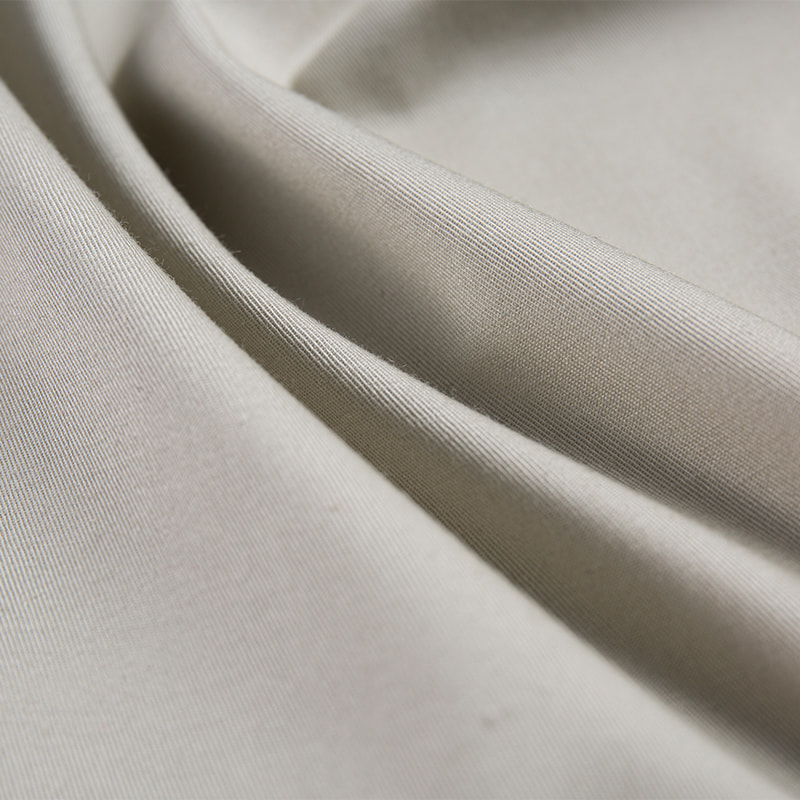
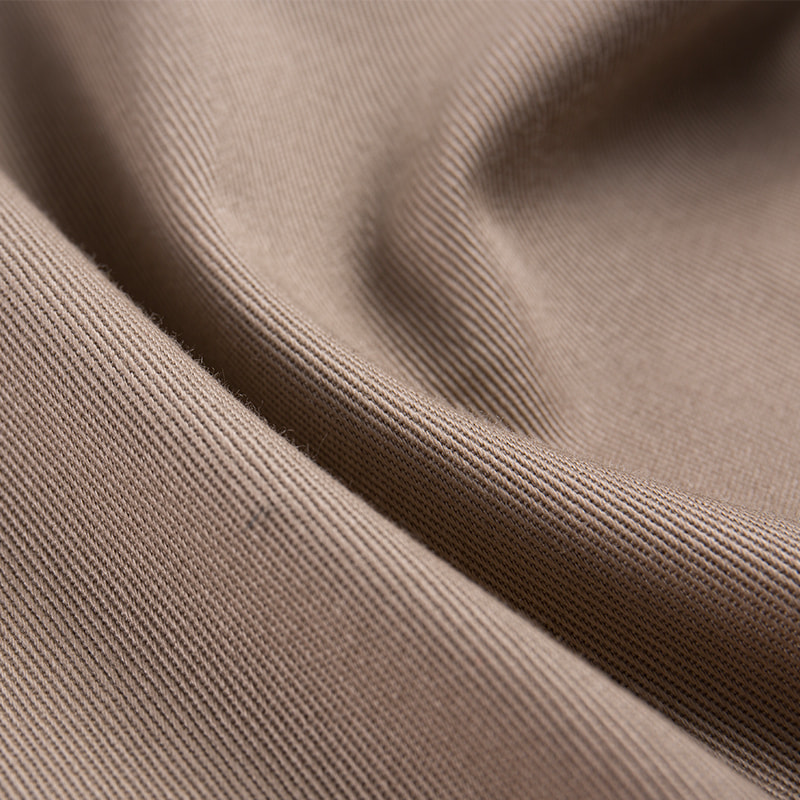
tencel fabric is produced from wood pulp through a closed loop spinning process that yields a smooth, uniform filament with a naturally soft hand feel. Unlike standard cellulosic fibers, it has a consistent cross-sectional shape, which reduces surface friction and gives finished cloth a silk-like drape without added chemical softening.
Because the base fiber is already soft and absorbent, blending it with a small percentage of spandex does not compete with comfort. Instead, the elastane component adds recovery in the weft or warp direction while the cellulosic fiber continues to manage moisture and maintain a cool surface feel against skin. This combination is common in shirting, lightweight dresses, and structured loungewear where drape matters as much as stretch.
| Property | Pure Tencel | Tencel with 3 to 5 Percent Spandex |
|---|---|---|
| Moisture absorption | High | High |
| Surface smoothness | Very smooth | Smooth with slight compression |
| Wrinkle recovery | Moderate | Improved |
| Shape retention after wash | Fair | Strong |
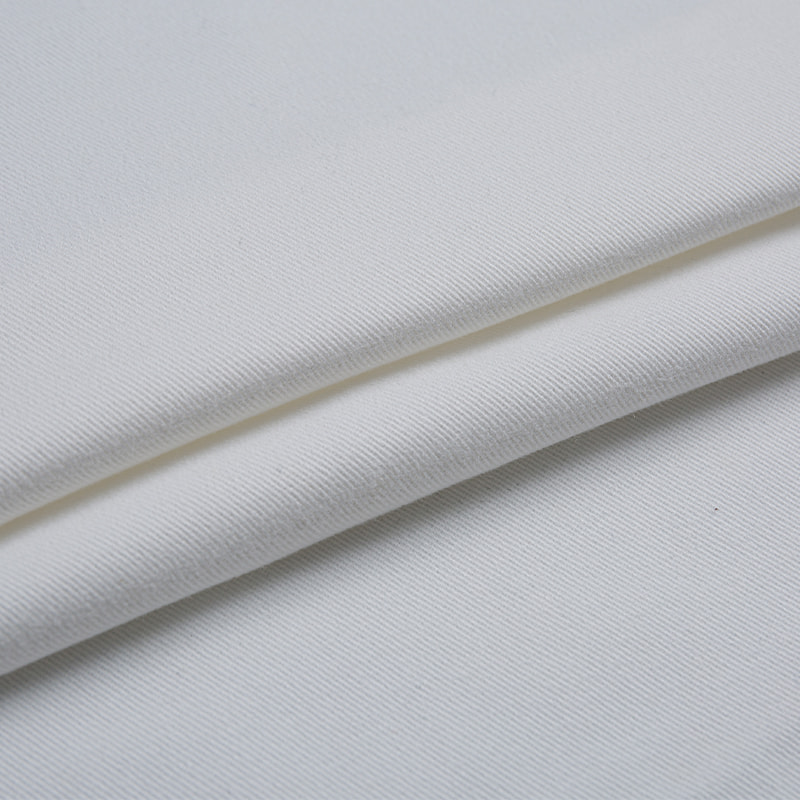
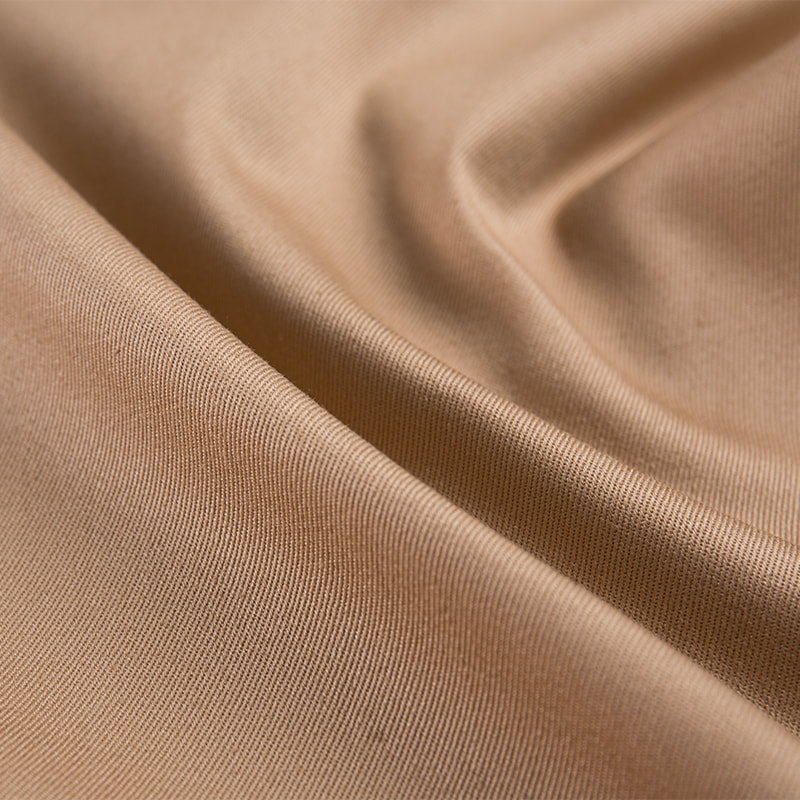
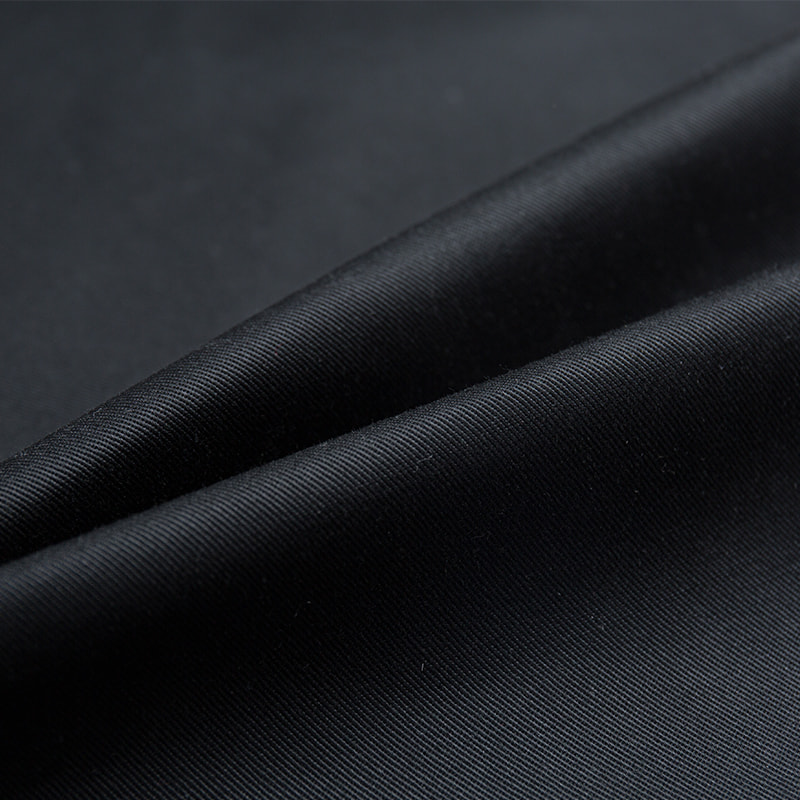
twill drill fabric is built on a diagonal weave pattern that interlaces yarns in a staggered sequence rather than the simple over-under structure used in plain weave. This diagonal float structure gives the cloth higher abrasion resistance and a denser, more durable surface, which is why it remains the standard base for workwear, uniforms, and structured denim.
The tradeoff of this density is reduced natural give. A cotton drill fabric with no added elastane resists stretching almost entirely along the warp direction, which can feel restrictive at the waist, knee, and shoulder during active movement. Introducing spandex into the weft yarn, typically wrapped around a cotton or polyester core, allows the diagonal structure to flex under motion and return to its original dimension once the load is released.
Polyester spandex fabric is described by the percentage of each fiber in the yarn blend, and this ratio directly determines how the cloth behaves under tension. A common configuration used across activewear and fitted garments is 92 polyester 8 spandex, which keeps the majority structural fiber as polyester while allocating a smaller but functionally significant share to elastane for four-way stretch.
A higher spandex percentage does not always mean better performance. Beyond roughly ten to twelve percent, garments often lose dimensional stability and become prone to sagging at stress points such as knees and elbows after repeated wear.
| Ratio | Stretch Range | Typical Application |
|---|---|---|
| 95 percent polyester, 5 percent spandex | Two to four percent | Light woven shirting, uniform trousers |
| 92 polyester 8 spandex | Six to nine percent | Leggings, fitted activewear, stretch trousers |
| 88 percent polyester, 12 percent spandex | Ten to fifteen percent | Compression wear, cycling apparel |
Nylon elastane blends follow a similar logic but swap the base fiber for nylon, which offers a slightly softer surface hand and better recovery in warm and humid conditions. Nylon elastane is frequently chosen for swimwear and intimate apparel where surface smoothness against skin outweighs the higher abrasion resistance that polyester provides.
Buyers sourcing stretch fabric often need to choose between a cotton with spandex fabric, a polyester spandex fabric, and a nylon elastane construction. Each performs differently once real wear conditions are factored in.
| Fiber Blend | Breathability | Recovery After Wash | Best Fit |
|---|---|---|---|
| Cotton with spandex fabric | High | Moderate | Denim, casual trousers, shirting |
| Polyester spandex fabric | Moderate | High | Activewear, leggings, uniforms |
| Nylon elastane | Moderate to high | High | Swimwear, intimates, compression garments |
Cotton with spandex fabric remains the preferred choice where natural fiber comfort is the priority, since cotton manages temperature well and softens with wear. However, it tends to lose a portion of its recovery after twenty to thirty industrial wash cycles, which is why heavy-use garments such as fitted uniform trousers increasingly shift toward polyester spandex fabric for its more consistent long-term recovery.
Stretch waistband jeans depend on a specific mechanical behavior called recovery, which is the fabric's ability to return to its original measurement after being stretched. A waistband that stretches well but does not recover leaves visible sagging within weeks. Getting this right requires controlling yarn tension during knitting or weaving and selecting an elastane denier suited to the garment's expected load.
For waistbands specifically, mills typically blend a core-spun elastane yarn directly into the woven structure rather than adding stretch only through a knit panel. This keeps the visual finish of the denim consistent while allowing the waist to expand comfortably during sitting or bending and settle back to its set measurement afterward.
Pilling occurs when short broken fibers migrate to the fabric surface and tangle into small balls under friction. Blended synthetics are more prone to this than pure natural fiber cloth because polyester filaments are stronger and do not break away from the tangled ball as easily during wear. An anti pilling fabric addresses this at the yarn and finishing stage rather than trying to fix it after the fact.
Industrial testing typically scores pilling resistance on a five point scale after a set number of abrasion cycles. Garments intended for daily athleisure wear or workwear should target a grade of 4 or higher to remain presentable after repeated washing and mechanical drying.
Athleisure wear sits at the intersection of comfort and function, which means moisture handling matters as much as stretch. Polyester spandex fabric moves moisture away from skin through capillary action along the filament surface, spreading sweat across a wider area so it evaporates faster. Tencel fabric approaches the same problem differently, absorbing moisture directly into the fiber core, which keeps the surface feeling dry longer before saturation.
| Fabric Type | Moisture Handling Method | Dry Time |
|---|---|---|
| Polyester spandex fabric | Surface wicking | Fast |
| Tencel blend | Fiber core absorption | Moderate |
| Cotton with spandex fabric | Absorption, slow release | Slow |
For high output activewear such as running gear, a polyester spandex base is generally favored for its fast dry time. For lower intensity athleisure wear such as studio clothing or travel pieces, a Tencel blend offers a cooler and softer surface feel that many wearers prefer for extended sitting or lounging.
Sustainable synthetics have become a real procurement requirement rather than a marketing add-on. Two developments are shaping this space. First, recycled polyester derived from post-consumer plastic is now blended with spandex at ratios similar to virgin polyester, giving mills a lower impact base fiber without changing the stretch behavior of the finished cloth. Second, closed loop cellulosic production, the same process used to make Tencel fabric, recovers and reuses the majority of its processing solvent, reducing water and chemical discharge compared to older cellulosic methods.
The practical challenge is that recycled polyester filament can vary slightly in strength between production batches, so mills blending it with spandex need tighter quality control on yarn tension to keep recovery performance consistent. Buyers evaluating sustainable synthetic options should request batch-level testing data rather than relying on a single certification claim.
Most stretch waistband jeans use between two and four percent spandex woven into the waistband panel, which is enough to provide comfort stretch and recovery without softening the overall denim structure.
Tencel fabric generally pills less on its own because its filament structure is smooth and continuous. When blended with a small percentage of spandex, its pilling resistance stays similar, while pure polyester spandex fabric requires additional anti pilling finishing to reach the same surface stability.
Neither is universally better. Nylon elastane offers a softer surface feel and strong recovery in humid conditions, making it common in swimwear, while polyester spandex fabric dries faster and holds color better under repeated sun exposure, making it more common in general activewear.
Under normal home laundering, a well-constructed cotton with spandex fabric typically maintains good recovery for twenty to thirty wash cycles before a noticeable reduction in elasticity appears, depending on spandex denier and finishing quality.
Even a well-finished anti pilling fabric can pill if it experiences unusually high friction, such as constant contact with rough surfaces or aggressive machine drying, since the finishing treatment reduces but does not eliminate fiber migration under extreme wear conditions.
Related Products
Get in Touch
We're here for you when you need us.
Contact Information
Add:
No. 517 Huanzhu Road, High-Tech Zone, Wuxing District, Huzhou City, Zhejiang Province, China.
E-mail:
Product Category
QR Code
Join our community and stay connected
 English
 Español
 عربى
عربى