Digital Printing Technology on Crepe Substrates
HUZHOU XINDING IMPORT & EXPORT CO., LTD. has observed that Digital Printed Crepe Fabric production requires precise control over substrate preparation. The distinctive pebbled surface texture of crepe—created through high-twist yarn weaving and subsequent heat-setting—presents unique challenges for ink adhesion and color penetration. Pre-treatment processes involving cationic agents or plasma surface modification become essential to achieve color fastness ratings of 4+ on the grayscale for wet rubbing tests.
Reactive dye-based digital printing on crepe fabrics demands specific viscosity adjustments (typically 8-12 cP) to prevent excessive wicking along the fabric's irregular surface contours. Printheads operating at 600×600 dpi minimum resolution capture the subtle dimensional quality of crepe textures without appearing pixelated or flat. For fashion-forward applications, pigment inks offer broader color gamuts and simplified post-printing workflows, though they may sacrifice some hand-feel softness compared to reactive-dyed alternatives.
Natural Fiber Integrity in Crepe Construction
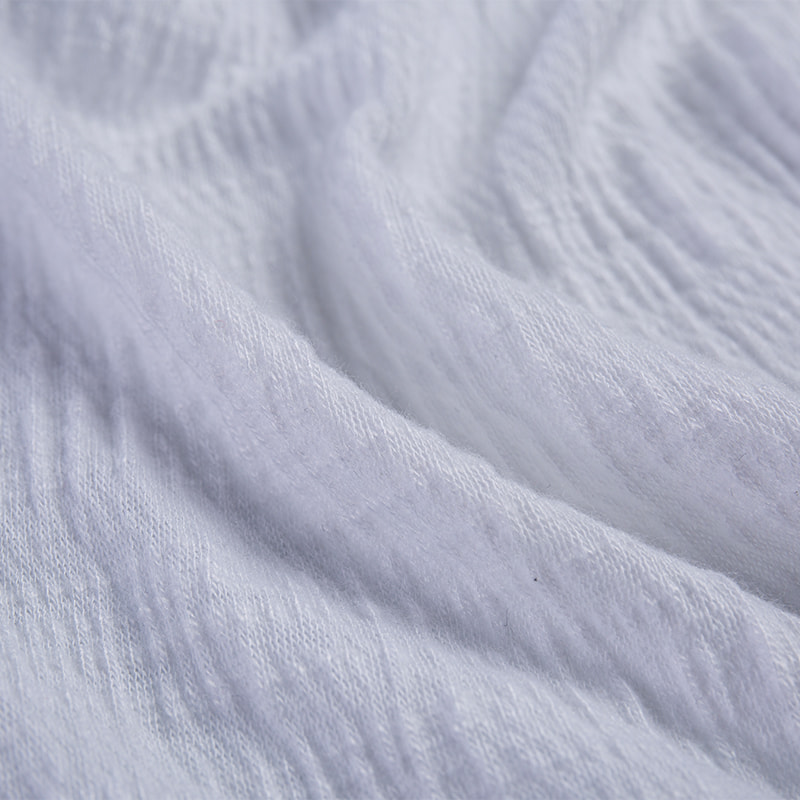
The structural integrity of Pure Cotton Crepe Fabric depends entirely on yarn twist coefficients and weaving tensions. Unlike synthetic crepe alternatives that rely on heat-set thermoplastic memory, cotton crepe achieves its characteristic crinkle through yarn twist levels exceeding 1,200 turns per meter in the weft direction. This mechanical deformation creates the fabric's signature elasticity and fluid drape without chemical finishing agents.
However, pure cotton crepe exhibits pronounced dimensional instability during initial wet processing—shrinkage rates of 8-12% are common unless controlled through sanforization or compacting treatments prior to cutting. For garment manufacturers, accounting for this relaxation behavior in pattern grading prevents fit inconsistencies in finished apparel. HUZHOU XINDING IMPORT & EXPORT CO., LTD. recommends specifying pre-shrunk cotton crepe for clients requiring precise size consistency across production batches.
Hybrid Fabric Performance and Print Compatibility
Cotton Printed Crepe Fabric represents an intersection of natural fiber comfort and engineered surface aesthetics. The combination of cotton's moisture absorbency with crepe's textural interest creates substrates particularly suited for resort wear and transitional seasonal collections. Print design considerations must account for the fabric's directional light reflectance—patterns appear subtly altered when viewed from different angles due to the irregular surface topography.
Critical quality indicators for printed cotton crepe include:
- Color penetration depth: Minimum 80% penetration ensures pattern visibility on fabric reverse, critical for unlined garments
- Crocking resistance: Dry crocking ratings below 3.5 indicate inadequate binder fixation or excessive surface dye deposition
- Crepe retention after printing: Steam or heat exposure during fixation must not flatten the characteristic surface texture
Botanical Design Applications and Market Positioning
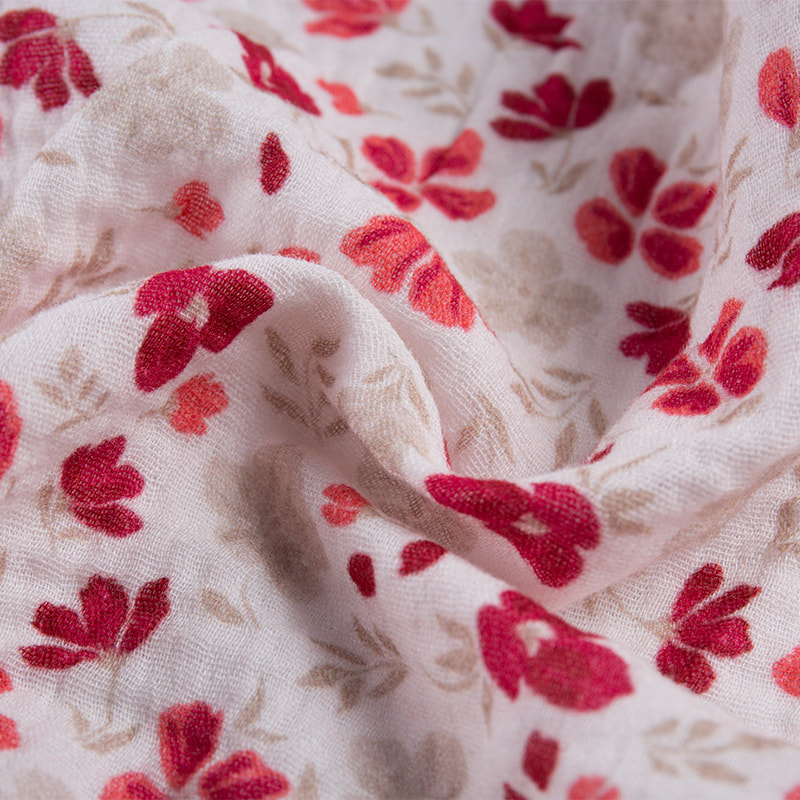
Floral Crepe Fabric dominates spring-summer fashion cycles, with design trends cycling between photorealistic botanicals and stylized vintage interpretations. The crepe substrate's natural movement and shadow-play enhance floral motifs by creating dimensionality that flat woven fabrics cannot replicate. Scale considerations become paramount—oversized botanicals (repeat sizes exceeding 60cm) require careful registration control during printing to prevent motif distortion across the fabric's textured surface.
Market analysis indicates that floral crepe fabrics with muted, desaturated color palettes currently outperform high-contrast alternatives in premium market segments, aligning with broader trends toward understated elegance. For mass-market positioning, smaller-scale ditzy florals on crepe bases offer versatility across multiple garment categories from blouses to midi skirts, maximizing fabric yield and reducing inventory risk for seasonal collections.
HUZHOU XINDING IMPORT & EXPORT CO., LTD. maintains that successful floral crepe sourcing requires balancing aesthetic trends with technical performance specifications—ensuring that visual appeal translates into durable, wearable garments that withstand repeated consumer use and care cycles.


 English
 Español
 عربى
عربى