2026-08-25
Content
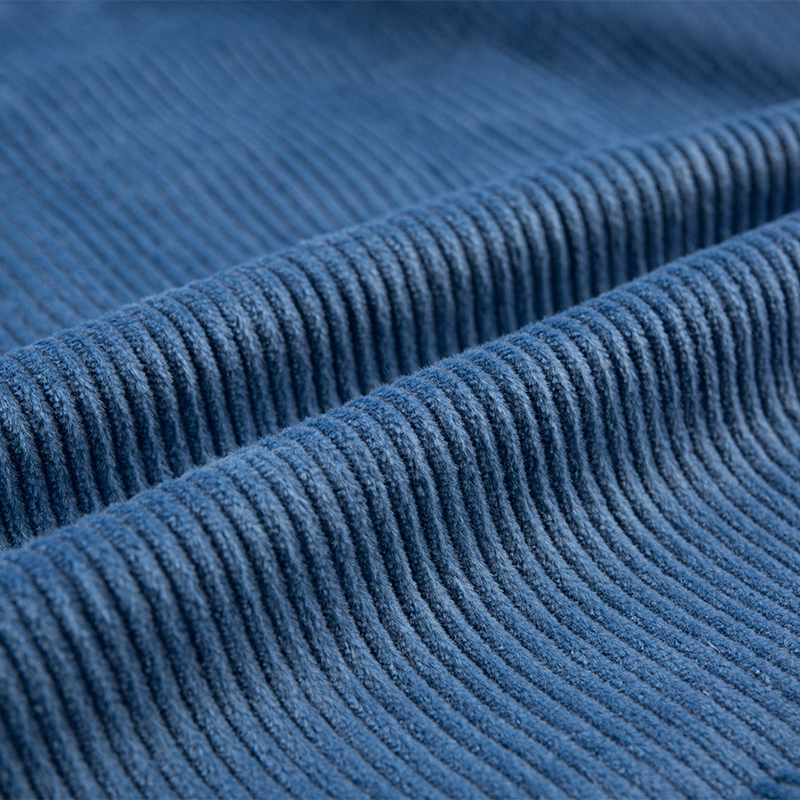
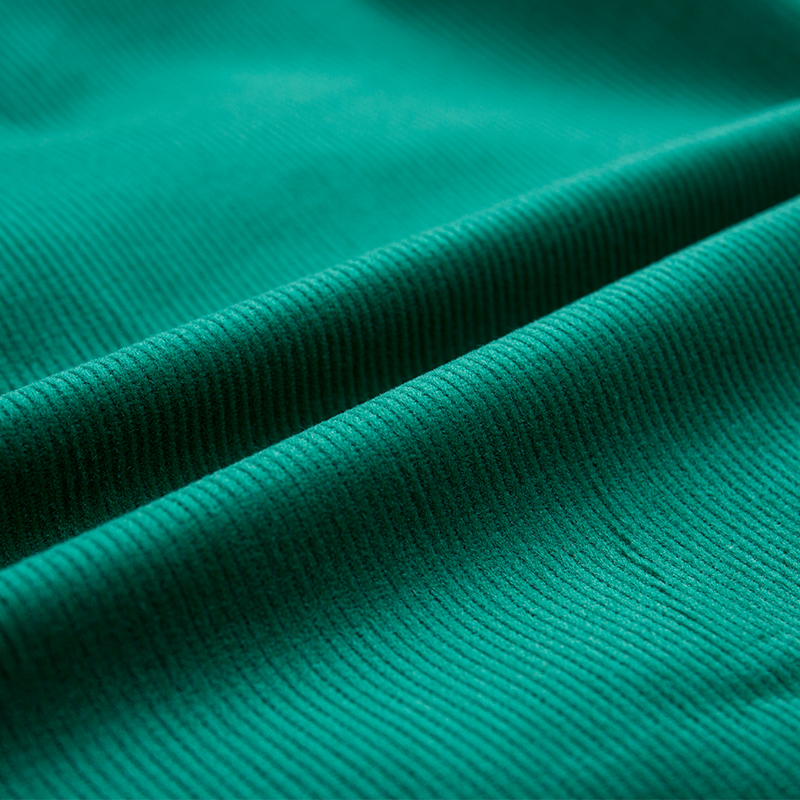
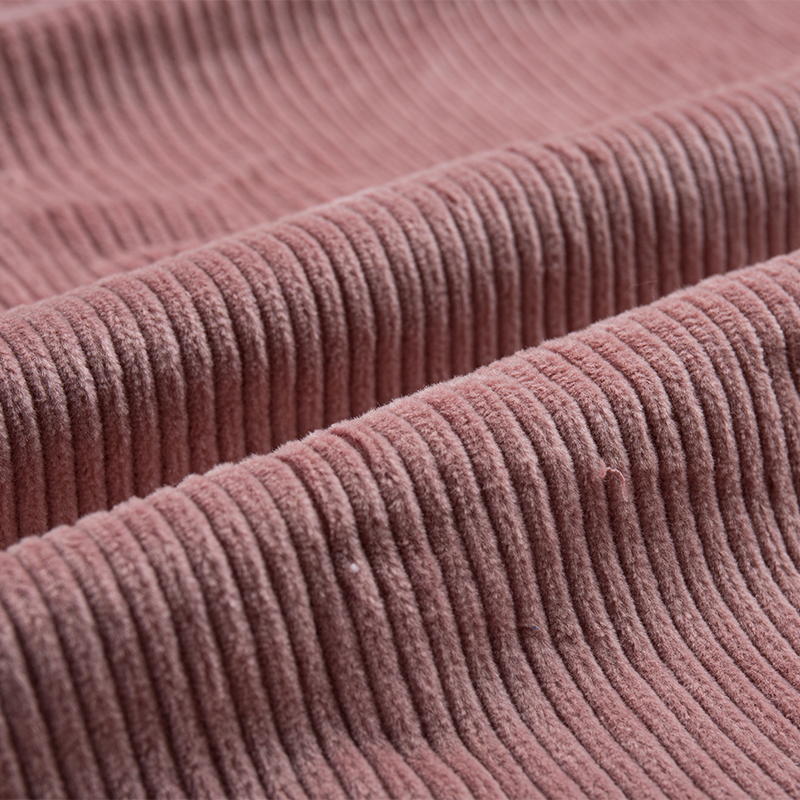
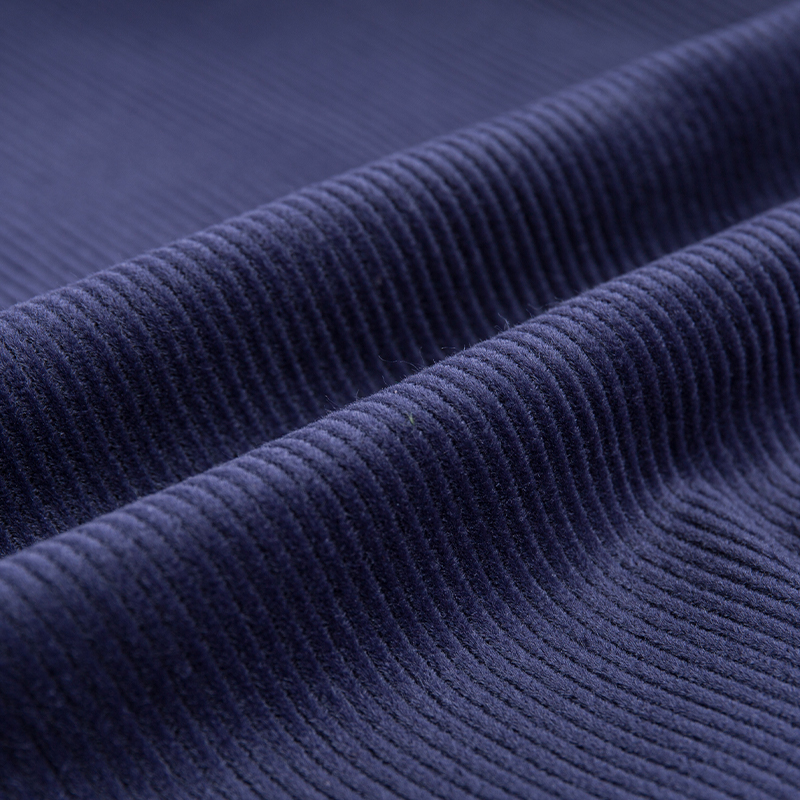
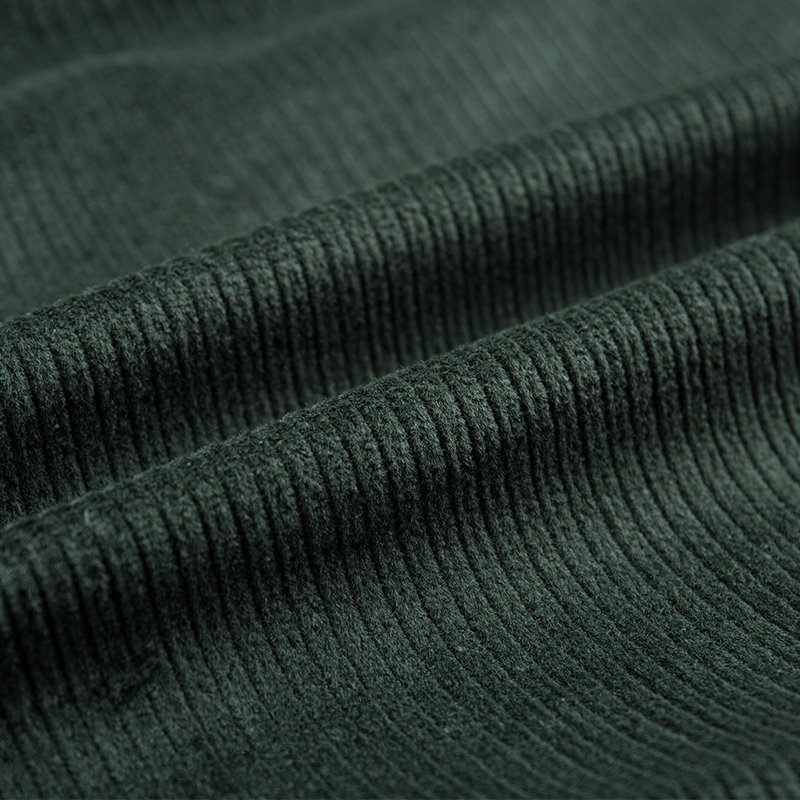
A corduroy fabric is defined less by fiber content than by the way its surface is built. The material starts as a base weave with extra filling yarns floated across the back, then those floats are cut down the middle to raise vertical tufts of fiber. Once the tufts are brushed and set, they stand up as the parallel ridges known as wales, and the valleys between them are called the ground. This cut pile method is what separates corduroy from a flat weave or a simple ribbed knit, and it is why the fabric reads as three dimensional even under low light.
Wale count, meaning the number of ridges per inch, is the single measurement that tells a buyer more about a corduroy roll than almost anything else. A narrow wale count in the range of 14 to 21 produces a fine, almost velvet-like hand that suits shirting and lightweight apparel. A medium wale count between 8 and 11 is the most common commercial grade, balancing drape with visible texture. A wide wale count of 3 to 6 produces a chunky, sculptural ridge that reads more like upholstery than clothing. Mills typically list wale count on the selvedge or in the technical data sheet, and specifying it precisely avoids mismatched expectations when ordering.
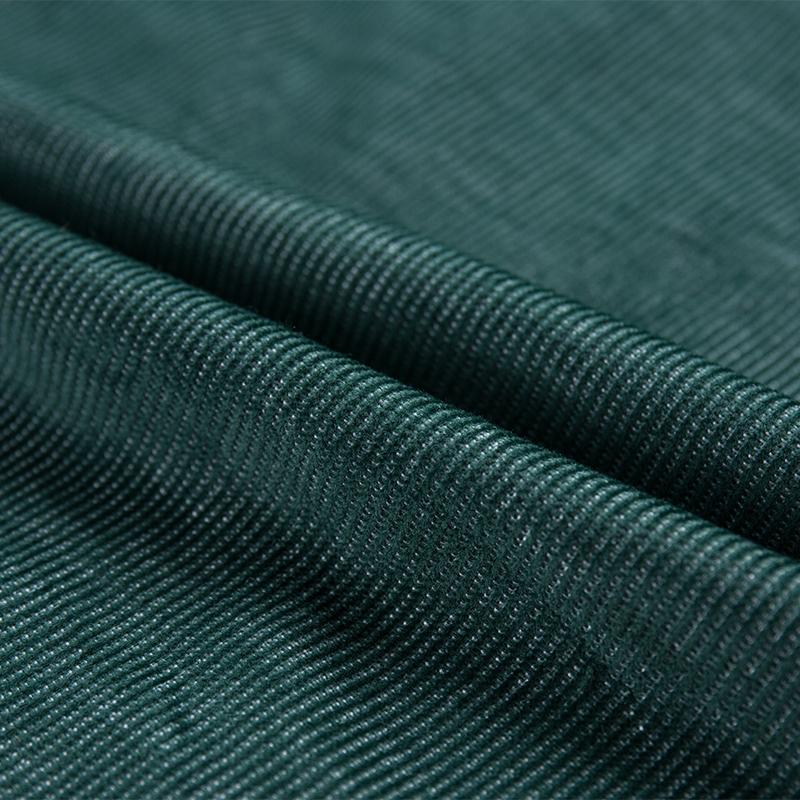
Because the pile is cut rather than woven flat, corduroy also behaves differently in cutting and sewing. Directional nap means every panel of a garment or cushion cover has to be cut with the wales running the same way, or the finished piece will show inconsistent shading under changing light angles. This single detail accounts for a meaningful share of the extra yardage that pattern makers budget when working with cut pile goods compared to plain weave alternatives.
The ground weave underneath the pile also deserves attention when a buyer is comparing rolls that look similar on the surface. Plain weave grounds are common in lighter apparel-grade corduroy because they keep the base cloth soft and flexible. Twill weave grounds show up more often in mid to heavy weight rolls, since the diagonal interlacing gives the base extra tear strength without adding stiffness. A supplier that can state the ground construction alongside the wale count and weight is generally offering a more complete technical picture than one that lists appearance alone.
Sourcing teams evaluating a new mill or a new lot should also request a hand feel sample rather than relying on a photograph or a swatch card image. Cut pile fabric photographs poorly under studio lighting, since the wales can appear deeper or shallower than they actually are depending on the angle of the light source. A physical swatch, checked under natural light and run through a simple rub test with a fingertip, remains the fastest way to confirm pile density and finishing quality before committing to a bulk order.
Cotton corduroy remains the reference point for the category because cotton fiber takes the cutting and brushing process cleanly, holds dye well, and softens with washing rather than degrading. Pure cotton constructions are common in apparel, but they are rarely the only option once weight and end use are considered.
Heavy corduroy in particular is worth separating out as its own category rather than treating it as simply a thicker version of apparel cloth. The ground weave in heavy corduroy is usually a tighter twill or plain construction, which gives the base more resistance to seam slippage once upholstery tacks or staples are driven through it. Buyers sourcing for furniture frames should ask for the ground fabric specification separately from the pile weight, since two rolls with identical face appearance can have very different long-term seam performance.
Dyeing method is another point worth confirming before an order is placed. Yarn-dyed corduroy, where the fiber is colored before weaving, tends to hold its shade more evenly through repeated cleaning cycles than piece-dyed corduroy, where color is applied after the fabric is already woven and cut. Piece dyeing is generally faster and less expensive, which makes it common for shorter production runs or fast-changing color programs, while yarn dyeing suits longer product lifecycles such as upholstery lines that stay in a catalog for several seasons.
Finishing treatments can also change how a base cloth performs once it leaves the mill. A water repellent finish applied to cotton corduroy reduces staining risk on furniture without altering the visible texture, while a soil release treatment makes routine spot cleaning noticeably easier on high traffic pieces such as dining chairs or entryway benches. These finishes are usually optional add-ons rather than standard, so it is worth asking a supplier directly whether a given roll has been treated or left in its natural state.
| Weight Range | Typical Wale | Common Application |
|---|---|---|
| 160 to 220 gsm | Narrow | Shirts, dresses, lightweight jackets |
| 220 to 320 gsm | Medium | Trousers, skirts, soft furnishings |
| 320 to 420 gsm | Wide | Cushion covers, curtains, accent chairs |
| 420 gsm and above | Wide, reinforced | Upholstery, headboards, contract seating |
The heavier end of that range overlaps directly with what buyers usually search for under cord upholstery fabric, since anything intended for a seat cushion or an armrest has to survive far more friction than a garment ever will.
When corduroy moves from apparel to furniture, the performance conversation shifts almost entirely to abrasion resistance, seam strength, and colorfastness under light exposure. Furniture fabric is commonly rated using the Martindale abrasion test, which counts the number of rubbing cycles a swatch withstands before the surface shows visible wear. Domestic upholstery typically calls for a rating in the range of 15,000 to 25,000 rubs, while fabric intended for hospitality or other high traffic settings is often specified above 30,000 rubs.
Practical note: a heavier ground weave and a denser pile do not automatically translate into a higher abrasion rating. The finishing process, particularly how firmly the pile fibers are anchored during brushing and heat setting, has as much influence on long-term durability as the raw weight of the cloth.
Textured upholstery materials in this weight class are also chosen for acoustic and tactile reasons that rarely show up on a technical data sheet. The raised wales trap a thin layer of air near the surface, which softens sound reflection in a room in a way that smooth vinyl or tightly woven flat fabric does not. Designers working on hospitality lounges or home theaters sometimes specify wide wale corduroy for exactly this reason, independent of its visual appeal.
Backcoating is a further consideration that is easy to overlook when comparing fabric samples side by side. A light acrylic or latex backcoating applied to the reverse side of upholstery-grade corduroy helps stabilize the weave, reduces seam slippage during the upholstering process, and can slow the spread of fraying if the fabric is later cut for repairs. This backing is invisible from the face side, so it has to be confirmed by checking the reverse of the swatch or asking the supplier directly, since it will not show up in a product photograph.
Cushion fill compatibility is another practical factor. Because corduroy has more surface friction than a smooth weave, it grips foam and fiber fill slightly better during upholstering, which can reduce shifting inside a cushion cover over time. This same friction, however, means that removable slipcovers made from corduroy can be more effort to fit and remove than covers made from a slicker fabric, a tradeoff worth mentioning to end customers who plan to launder covers frequently.
Embroidered cord refers to corduroy that has been further decorated with stitched patterns run across or along the existing wale structure. Because the base fabric already carries a strong directional texture, embroidery on corduroy tends to read best when the stitch pattern either follows the wale direction closely or deliberately contrasts with it at a clear angle. Random or shallow-angle stitching often gets visually lost in the ridges, so pattern makers usually test a swatch before committing to a full production run.
In practice, embroidered cord shows up most often in three settings: statement cushions where the embroidery becomes the focal point rather than a background detail, accent chairs where a subtle repeating motif adds depth without overwhelming the room, and headboards where a larger scale pattern benefits from the extra shadow depth that the pile already provides.
Rooms that lean entirely on one texture can feel flat regardless of color choice. A common approach among interior specifiers is to pair a wide wale corduroy on a primary seating piece with a smoother woven or leather-look material on secondary furniture, letting the ridge structure act as the tactile anchor of the space rather than the only texture present. Layering a narrow wale cushion cover against a wide wale sofa body is another frequently used technique, since the contrast in ridge scale reads clearly even when the color palette stays neutral.
Lighting placement matters more with corduroy than with most other upholstery fabrics because the wale structure creates real shadow lines rather than a printed illusion of texture. A piece placed under a downlight will show much stronger ridge definition than the same piece under diffuse ambient light, so specifiers working on show rooms or photography sets often test a sample under the exact lighting the finished space will use before finalizing a fabric choice. This step is inexpensive compared to reupholstering a piece after installation and catches most surprises before they become costly.
| Pairing Element | Effect Achieved |
|---|---|
| Wide wale sofa with narrow wale cushions | Scaled texture contrast within one color family |
| Corduroy seating with smooth leather-look accents | Balance between tactile warmth and clean lines |
| Embroidered cord panel with plain corduroy body | Focused decorative moment without pattern overload |
Ribbed fabric is a broad category, and corduroy is only one member of it. Knit ribs, woven pinstripe wovens, and cut pile corduroy all produce a linear surface texture, but they behave very differently once cut, sewn, and put into service. The table below separates these by construction method and typical performance profile.
| Construction | Stretch Behavior | Best Suited For |
|---|---|---|
| Cut pile corduroy | Minimal unless blended with elastane | Structured garments, upholstery, cushions |
| Knit rib fabric | High, recovers well | Cuffs, hems, fitted apparel |
| Woven pinstripe or bedford cord | Low | Tailored jackets, lightweight furnishings |
Specifying corduroy over a knit rib alternative usually comes down to one factor: the need for a fabric that holds its shape under structural stress, whether that stress comes from a garment seam or the frame of a chair. Knit ribs recover well from stretching but do not offer the same dimensional stability, which is why upholstery specifications rarely call for knit rib construction even though it shares a similar surface appearance.
The diagram below summarizes the core stages a cut pile fabric passes through before it reaches a finished roll, from base weaving to the final brushing and quality inspection.
Corduroy holds up well over time, but the pile structure does require slightly different handling than a flat weave. Ignoring the nap direction during cleaning is the most common cause of a dull or crushed appearance in fabric that is otherwise structurally sound.
For upholstered furniture specifically, a light steaming session every few months helps the pile recover its lift without the moisture load of a full wet clean. This is a lower-risk maintenance step than shampooing and is often enough to keep a heavily used piece looking consistent between deeper cleaning cycles.
Corduroy is a cut pile woven construction, meaning extra yarns are floated and then physically cut to raise the wales. A ribbed knit produces its texture through loop structure alone, without any cutting, which gives it more stretch but less dimensional stability.
Narrower wale counts suit garments where drape and a finer hand matter, while wider wale counts are chosen for upholstery and home textiles where visual scale and surface durability take priority over softness.
Yes, provided the ground weave and finishing process are specified for upholstery use. Heavy corduroy built with a reinforced backing and appropriate abrasion rating performs well under the repeated contact stress that everyday seating produces.
Standard industrial embroidery machines can work with corduroy, but tension settings and stitch density typically need adjustment to account for the pile height, and a test swatch is recommended before a full production run.
Mixing wale scale, such as combining a wide wale seating piece with narrow wale accessories, tends to create depth without requiring a change in color palette, keeping the overall scheme cohesive while still adding tactile variety.
Related Products
Get in Touch
We're here for you when you need us.
Contact Information
Add:
No. 517 Huanzhu Road, High-Tech Zone, Wuxing District, Huzhou City, Zhejiang Province, China.
E-mail:
Product Category
QR Code
Join our community and stay connected
 English
 Español
 عربى
عربى