2026-11-05
Content
A spec sheet lands with three lines that look settled: 90% polyester, 10% spandex, 180 gsm, four-way stretch. Three mills quote it, and three different fabrics come back — one at 105% elongation, one at 145%, and one that loses its recovery after three washes. The blend percentage alone tells you very little until you also know the finished weight, the stretch direction, and how the mill heat-set the elastane.
The short version: polyester 90 spandex 10 is a stretch-forward knit that delivers durable structure, fast drying, and predictable pricing, with less compression and a lower stretch ceiling than the 85/15 blends used in sports bras and swim. It is the right base for leggings, joggers, and light compression tops. It is the wrong base for structured trousers, and it is rare in wovens, where elastane normally sits between 2% and 5%.
Polyester carries the structure. It resists abrasion, holds dye, dries quickly, and keeps the cost predictable. Spandex, also called elastane, is the fiber that stretches and springs back. At 10% in a circular knit, you can expect roughly 100% to 140% elongation and recovery above 90% — provided the fabric has been heat-set at about 185 to 195 °C. Skip that step and the roll stretches beautifully on day one, then grows at the knees and elbows by week three.
Weight matters as much as the blend. A 150 gsm jersey behaves like a light liner, a 180 to 200 gsm fabric is the workhorse weight for leggings, and a 260 to 300 gsm knit reads as a matte, more compressive bottom weight with far less show-through under stretch.
In knits, 10% spandex is normal for performance programs and 5% is normal for everyday jersey. Wovens run the other way: a four-way stretch twill drill or a cotton spandex work jacket fabric typically carries 2% to 4% elastane, because a woven construction holds tension differently and higher elastane content is harder to control on the loom. If a supplier quotes a true 90/10 woven, ask for the fiber composition on the lab report and the finished width before you build a costing around it.
The blend shows up most often in garments that move with the body and get washed every week:
LeggingsJoggersBase layersCycling shortsSublimation topsAthleisure
Where it struggles: tailored trousers, structured jackets, and anything that needs a crisp drape. Those need a woven base, and a woven carrying more than 5% elastane usually bags at the knee instead of springing back.
Buyers usually compare these blends on price per kilogram. The differences that appear after ten washes are stretch ceiling, recovery, and hand feel.
| Blend | Stretch and recovery | Hand and structure | Relative cost | Typical programs |
|---|---|---|---|---|
| 90/10 | 100–140% elongation, strong recovery when heat-set | Balanced: soft but supportive, matte to semi-gloss | Baseline | Leggings, joggers, base layers |
| 88/12 | 120–160% elongation, very good recovery | Between 90/10 and 85/15, less common in stock | Medium-high | High-intensity activewear, shaping tops |
| 85/15 | 150–180% elongation, highest compression | Softer and more elastic, can feel rubbery | Higher | Sports bras, compression tights, swim |
| 92/8 | 70–100% elongation, adequate recovery | Firmer, closer to a plain jersey hand | Lower | Casual tops, light athleisure, linings |
The practical rule: choose the lowest spandex content that still passes your fit and recovery tests. Every extra point adds cost, adds heat sensitivity, and can make the finished garment feel rubbery.
Blend percentages belong in the marketing copy; tolerances belong in the purchase order. Put these on the spec sheet and ask for test data against them, not verbal confirmation.
Specification anchors for a 180 gsm knit: weight 180 gsm ± 5%; usable width 160 cm ± 2%; elongation 110% ± 15% in the width direction; growth after 5 minutes recovery ≤ 10%; shrinkage after 3 washes at 40 °C ≤ 5% in both directions; pilling rating ≥ 4; colorfastness to washing and crocking ≥ 4.
Spandex rarely fails from wear. It fails from heat, chlorine, and chemistry — three things that sit inside ordinary consumer habits.
The sourcing implication is simple: write care instructions at the same time as the composition. If a garment needs cold wash and low dry, say so on the spec sheet, or the returns will arrive at the fabric supplier's door.
If the end product is a pair of casual trousers, a work jacket, a bag panel, or a structured dress, a 90/10 knit is the wrong base. The recovery that makes leggings work is exactly what makes a trouser bag at the knee and a jacket collapse at the shoulder. Woven stretch constructions solve this with a lower elastane content and a tighter structure.
For casual pants, a four-way stretch twill drill keeps the clean surface of a woven while allowing movement through the seat and thigh.
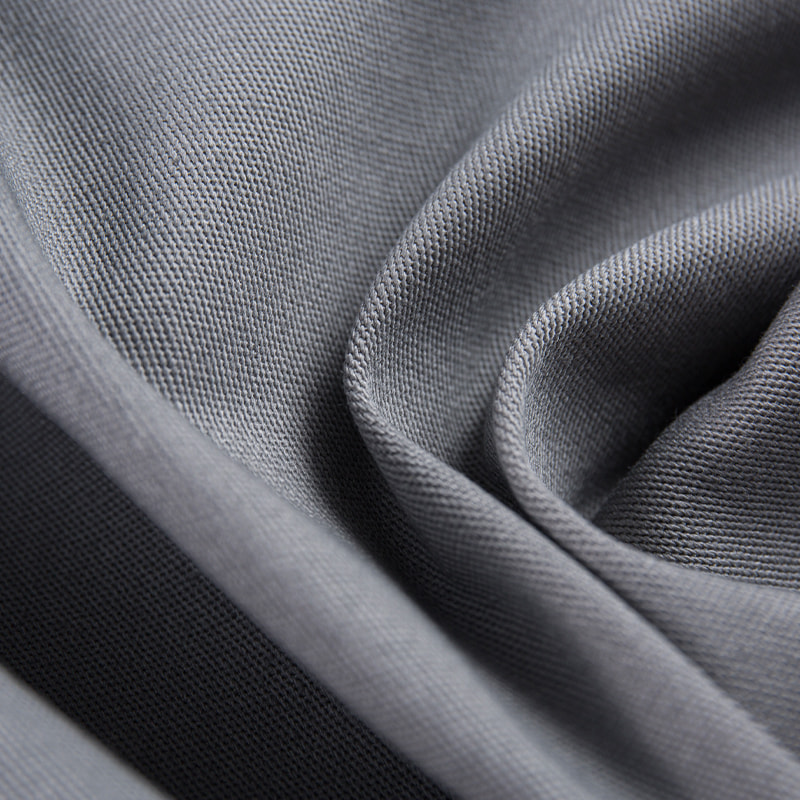 Four-Way Stretch Twill Drill for Casual PantsCotton-spandex twill drill with four-way stretch, suited to casual trousers and workwear; the woven surface supports movement through the seat and thigh.View Product →
For denim programs, a stretch soft denim with 2% to 3% elastane delivers the familiar hand while surviving repeated wash-downs.
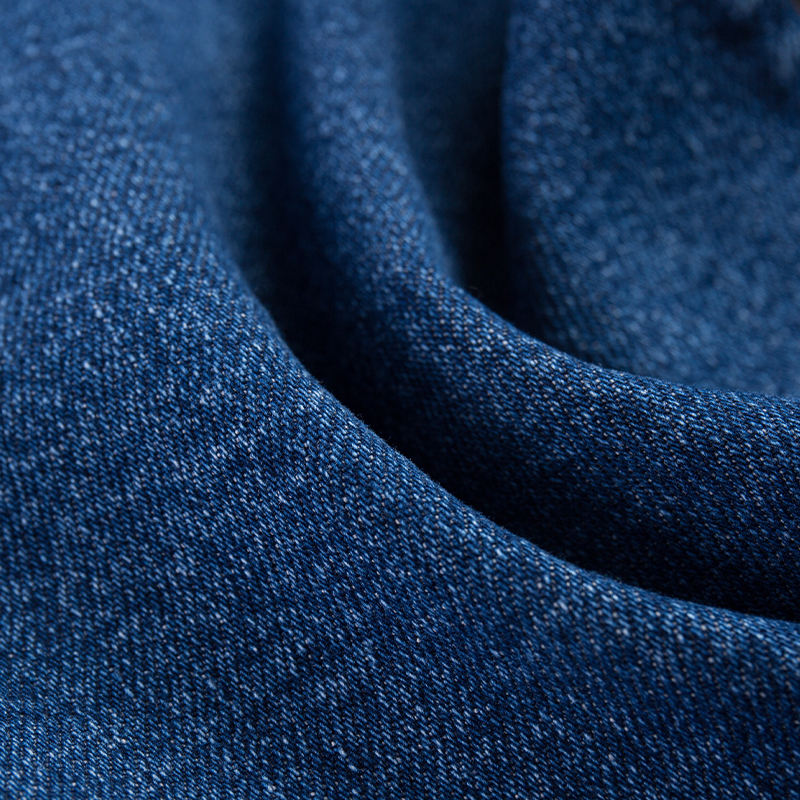 Stretch Soft Denim Fabric for Jeans and JacketsHigh-cotton stretch denim with soft hand and elastic comfort, suited for jeans, jackets, skirts, and overalls that must withstand repeated washing.View Product →
For outerwear and bag panels, a waterproof, tear-resistant stretch canvas holds its shape under load, which is where a knit gives up.
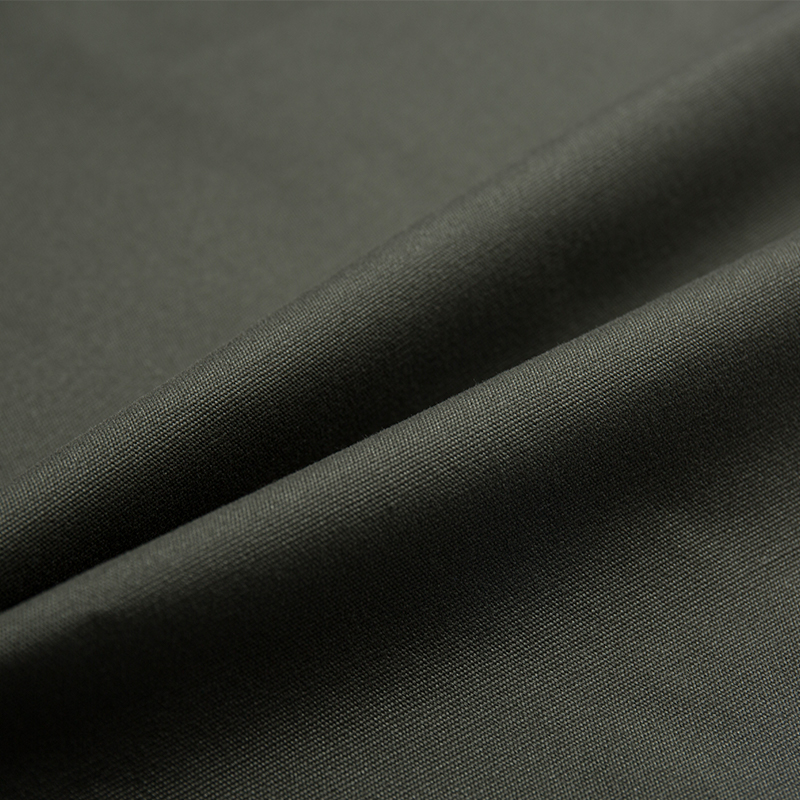 Eco-Friendly Waterproof Tear-Resistant Stretch Canvas FabricSustainable canvas with waterproof coating, tear resistance, and stretch for outdoor gear, home decor, and industrial uses where durability and shape retention matter.View Product →
The blending logic does not stay inside one construction, either. The same way elastane changes a knit, it changes how a twill drill or Tencel base behaves once it reaches the cutting table. When the end use is still open, it is worth reviewing the woven stretch range next to the knit options before the first sample is cut.
Mainly leggings, joggers, base layers, cycling shorts, sublimated sportswear, and shapewear. It suits garments that need repeated stretch and recovery, regular washing, and a matte or semi-gloss surface rather than a crisp drape.
For everyday leggings, 90/10 usually passes fit and opacity tests at a lower cost and lasts longer. Move to 85/15 when the product promises high compression, heavy sweat sessions, or a second-skin fit, and accept the higher price and softer hand.
Typical circular knits land between 100% and 140% elongation, depending on yarn, knit structure, and weight. Ask for the finished-fabric figure, not the greige figure, because heat-setting and finishing shift the number.
Spandex is rarely the shrink driver; residual finishing stress is. Specify shrinkage below 5% after three washes at 40 °C. Excessive heat relaxes the elastane instead, and the garment grows in length rather than shrinking.
Yes. Polyester accepts disperse and sublimation printing well. Keep press temperature within the elastane's tolerance, usually around 190 °C or below with short dwell, and re-test shade and recovery after pressing before approving bulk.
Treat the composition as the starting point rather than the specification. Confirm the weight, stretch direction, elongation, growth, and wash performance in writing, and a 90/10 program becomes a predictable fabric instead of a repeat complaint.
Related Products
Get in Touch
We're here for you when you need us.
Contact Information
Add:
No. 517 Huanzhu Road, High-Tech Zone, Wuxing District, Huzhou City, Zhejiang Province, China.
E-mail:
Product Category
QR Code
Join our community and stay connected
 English
 Español
 عربى