2026-11-12
Content
A buyer once returned a sample of 100% polyester jacket shell with one line of feedback: wearers say it feels like a tarp. The fabric had already passed abrasion, colourfastness and shrinkage testing, so nothing in the test report explained the complaint. The cause was in the construction: coarse filament yarn, a dense plain weave, and a hard heat set.
Polyester softness is decided in a fixed order. Fibre and yarn come first, then weave and finishing, and only then the wash cycle. Home care removes what is sitting on the surface of the fibre and relaxes the cloth a little; it cannot change denier or undo a tight construction.
Buying fabric: specify lower denier, textured or spun yarn, a looser weave and a softening finish. Owning the garment: half a cup of white vinegar in the rinse, low-heat drying, and three to five wash-and-dry cycles is the highest-yield routine available.
Polyester is a thermoplastic, hydrophobic fibre with a smooth, glass-like surface. Water does not swell it the way it swells cotton, so softener molecules cannot penetrate the fibre and can only sit on top of it. Five factors decide how it feels in the hand.
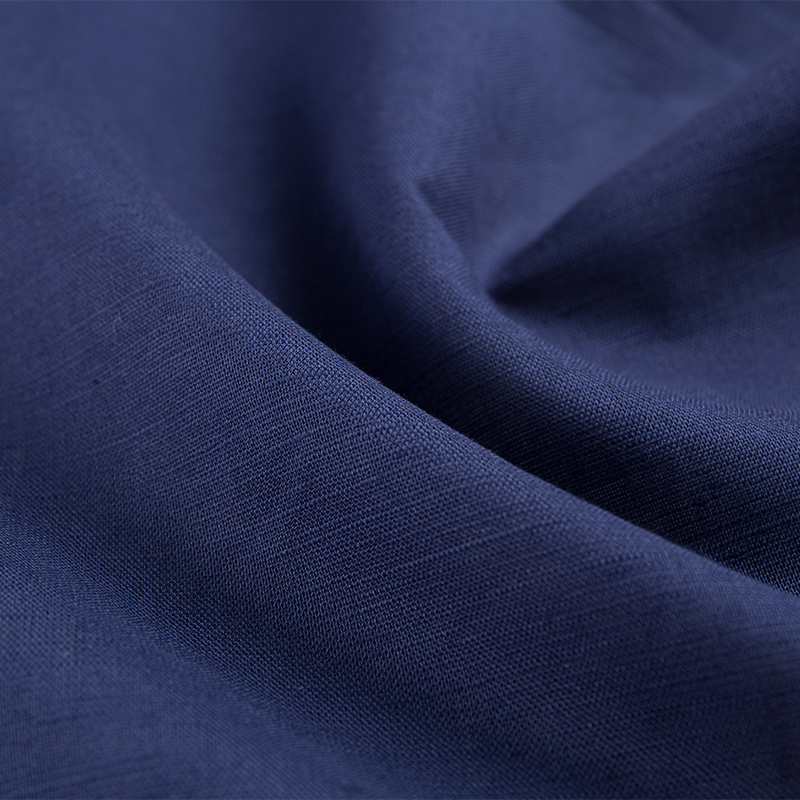
Strength and softness pull in opposite directions. Our heavy-duty durable polyester canvas is a clear example: coarse denier, dense plain weave, built for abrasion resistance and load-bearing use rather than drape.
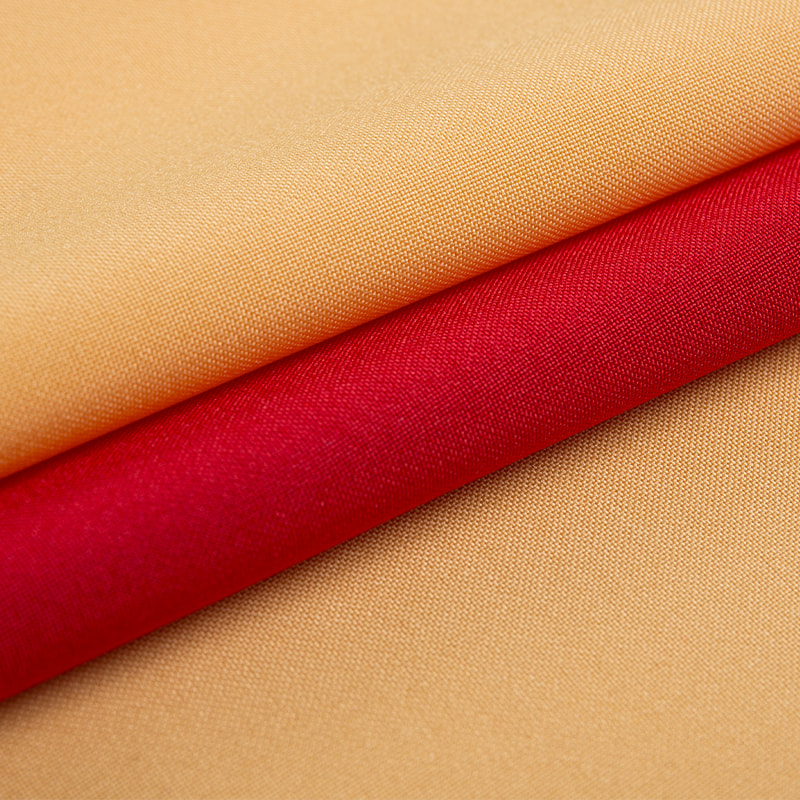 Heavy-Duty Durable Polyester Canvas FabricA 300D polyester canvas with tight weave, water-repellent and UV-protected finishes, suited to workwear, backpacks, tents and load-bearing outdoor gear.View Product →
A polyester filament can be 0.5 denier or 300 denier per filament, and that single number changes the hand more than any softener. Microfibre below 1 dpf packs into a dense, soft surface. Textured DTY yarn adds bulk instead of the slick FDY feel, and spun staple polyester is what makes most cotton-touch polyester possible.
A tight plain weave with high picks per inch feels crisp no matter how fine the yarn inside it. Long floats, as in a satin weave, let the yarn move, which is why satin polyester reads as smooth and fluid rather than papery. A 2/2 twill sits between the two and is usually the safest base for trousers and outerwear.
Three finishing routes do most of the work in a mill. Alkaline weight reduction, often called caustic reduction, hydrolyses the outer skin of the filament and removes roughly 10 to 25 percent of fabric weight, leaving a silkier and more pliable surface. Silicone softeners lubricate the filaments; amino silicones give a rich hand, hydrophilic versions are used where moisture management matters. Mechanical treatments such as brushing, sueding, peaching and rope tumbling raise a fine nap or flex the yarn, and they survive laundering better than any chemical softener.
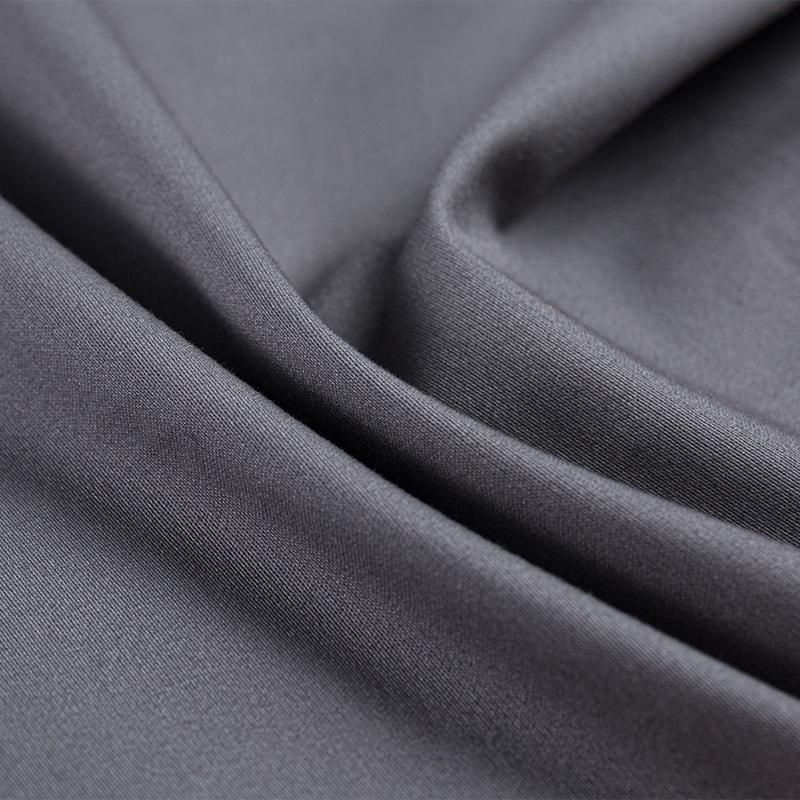
Our wrinkle-resistant silky polyester satin shows how far these levers reach: the satin weave plus a softener system produces a hand that reads closer to silk than to standard polyester.
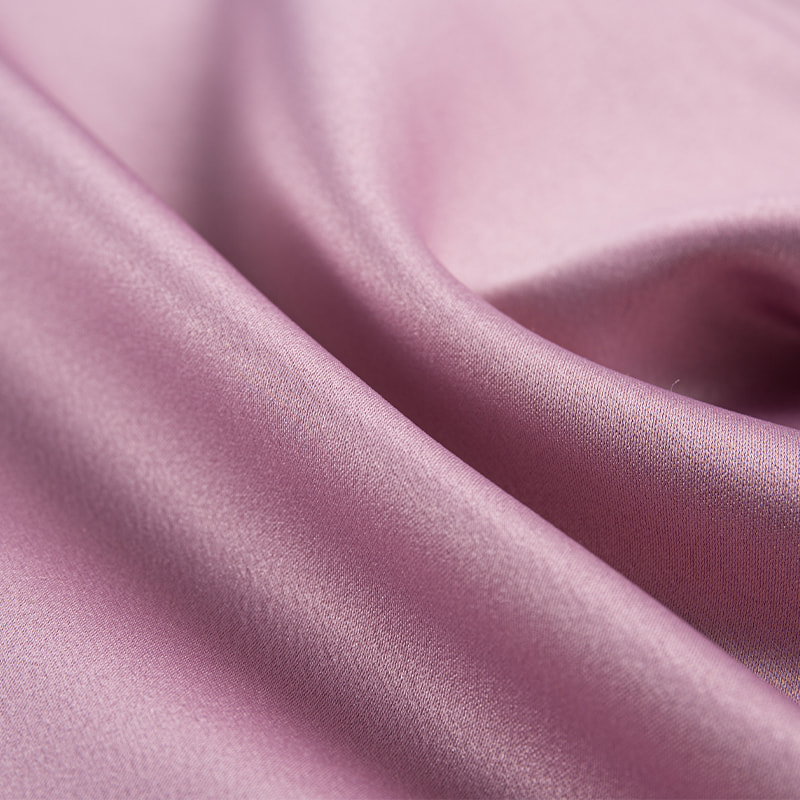 Wrinkle Resistant Silky Polyester Satin FabricA 75D polyester satin with smooth shine and wrinkle-resistant finish, suited to evening gowns, shirts and formal apparel needing low-ironing drape.View Product →
When you are sourcing rather than caring for a garment, blending is the quickest way to make polyester feel softer. Viscose, lyocell, modal and cotton absorb water and swell slightly, adding give and moisture comfort, while polyester keeps the wrinkle recovery, strength and fast drying. Ratios matter: a TC 65/35 construction feels firmer and dries faster than a CVC 60/40, where cotton is the chief value fibre. Expect more shrinkage and pilling as cotton content climbs.
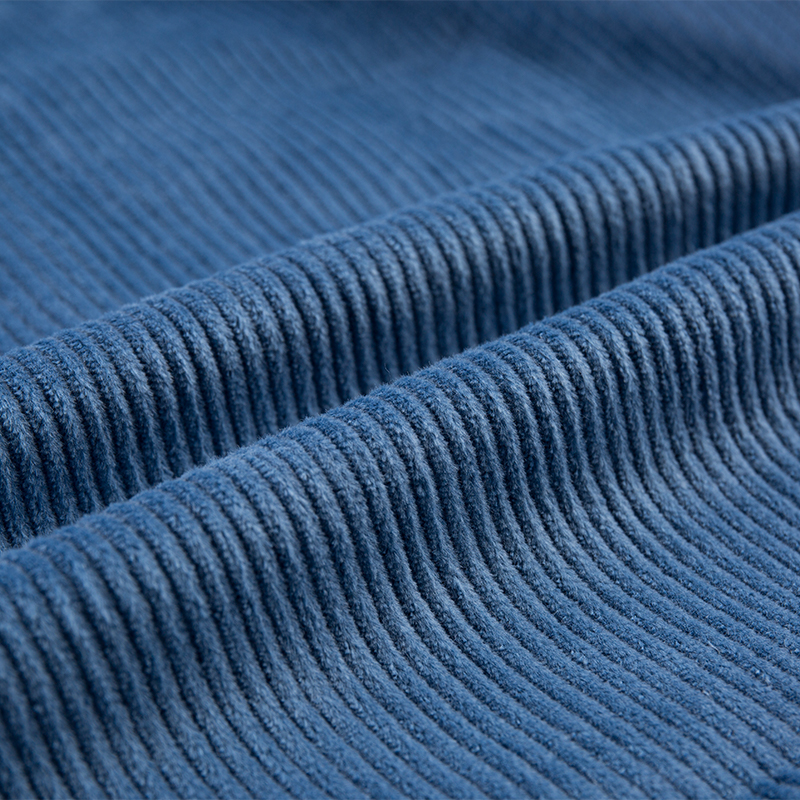
Surface texture does similar work at lower cost. Brushed, peached or napped polyester creates a layer of loose fibre ends that compress under the hand, which is why a brushed easy-care polyester corduroy feels soft even though the base polymer is unchanged.
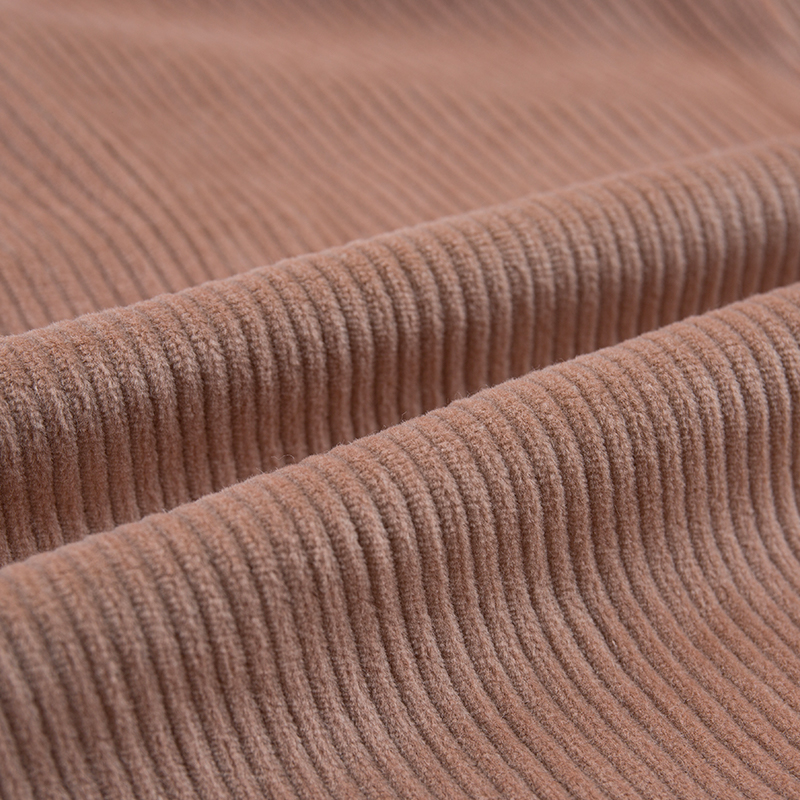 Durable Easy-Care Polyester-Viscose Corduroy for OuterwearA 230GSM polyester-viscose corduroy with soft texture, suited to autumn/winter jackets, casual pants and uniforms where durability and easy care matter.View Product →
For a structured comparison of which blend suits which garment category, see matching breathable soft fabric blends to the right garment.
Expect cumulative results. Most new polyester garments feel noticeably softer after three to five proper wash-and-dry cycles, then the hand plateaus.
When softness is the brief, write it as a specification instead of asking for soft polyester.
| Softness goal | What to specify | What to test |
|---|---|---|
| Cotton-like hand for shirting | Spun staple polyester or TC/CVC blend, finer yarn count | Pilling and shrinkage after five washes |
| Silky drape for blouses | Satin weave, 50 to 75D textured yarn, caustic reduction plus softener | Seam slippage and snag resistance |
| Soft nap for outerwear | Brushed, peached or corduroy construction | Nap flattening and pilling after abrasion |
| Stretch comfort for trousers | 2 to 5 percent spandex on a four-way stretch twill base | Recovery after repeated extension |
| Next-to-skin sportswear | Microfibre below 1 dpf, hydrophilic finish, no softener | Wicking rate after home laundering |
Not identical, because polyester has no fibre swelling and no natural crimp, but it gets close. Spun staple yarns, microfibre, brushed surfaces and caustic reduction all push the hand toward cotton-like. A blend such as CVC usually reaches that point faster and cheaper.
It does not change the polymer. It removes the alkaline detergent residue and mineral film that make fabric feel rough, and it helps rinse out weaving sizing. The effect is real but limited, so expect improvement rather than transformation.
For sheets, casualwear and home textiles, yes, since it lubricates the surface and reduces static. For anything claiming moisture wicking, quick drying or water repellency, no. The coating that feels soft also blocks the performance the fabric was bought for.
For drape and sheen, caustic-reduced satin. For next-to-skin comfort, microfibre jersey. For warm, matte softness, brushed or napped constructions such as polyester corduroy. Each answers a different garment need, so the useful question is which softness the end use requires.
The short version is this: softness is a specification, not a detergent. Choose the yarn, weave and finish that suit the garment, verify that the finish survives laundering, and keep home care simple with mild detergent, a vinegar rinse, low heat and mechanical agitation. Do that, and polyester stops behaving like plastic and starts behaving like a fabric.
Related Products
Get in Touch
We're here for you when you need us.
Contact Information
Add:
No. 517 Huanzhu Road, High-Tech Zone, Wuxing District, Huzhou City, Zhejiang Province, China.
E-mail:
Product Category
QR Code
Join our community and stay connected
 English
 Español
 عربى