2026-06-18
Content
Upholstery Guide
A practical deep-dive into three of the most versatile sofa and furniture fabrics available today, comparing their real-world durability, tactile qualities, and styling potential.
When people invest in a fabric sofa, they are not simply buying a piece of furniture. They are making a decision that will affect daily comfort, cleaning routines, long-term maintenance costs, and how a living room feels for years ahead. The upholstery fabric is the interface between the human body and the furniture frame, and yet it is frequently chosen last, based on color alone.
Three fabrics consistently appear at the top of interior designers' recommendations for upholstered furniture: canvas fabric, corduroy fabric, and linen fabric. Each has a distinct construction, a different durability profile, and a different relationship with light, texture, and wear. Understanding these differences in practical terms — not just aesthetic ones — gives buyers a genuine advantage when selecting a contemporary sofa design or refreshing existing furniture with slipcovers.
This guide examines all three fabrics through the lens of upholstery performance, covering rub counts, thread behavior, seasonal comfort, stain response, and design flexibility.
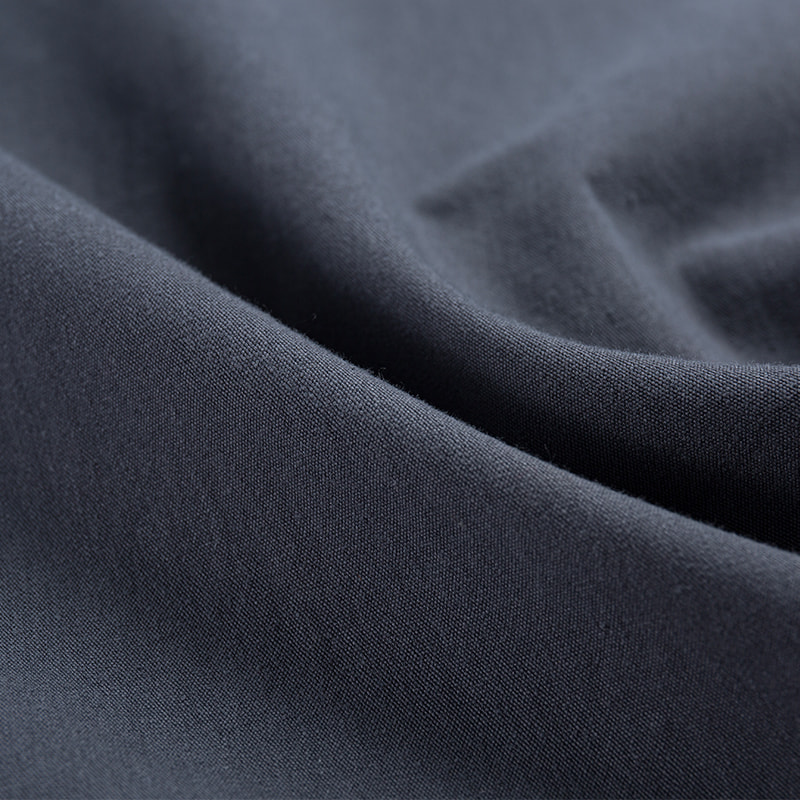
Canvas is a plain-woven textile traditionally constructed from cotton, though modern upholstery versions often blend cotton with synthetic fibers such as polyester to improve dimensional stability. The defining characteristic of canvas is its tight, flat weave. Yarns are interlocked in a simple over-under pattern with high thread counts per square inch, producing a dense, smooth surface without raised texture.
A typical upholstery-grade cotton canvas fabric uses yarns in the range of 10 to 20 counts (Ne), which translates to heavier, thicker threads that resist abrasion more effectively than lighter woven textiles. The result is a fabric that feels solid to the touch, with a subtle grain visible on close inspection but not perceptible to the hand moving across it.
Upholstery fabrics are rated using the Martindale or Wyzenbeek abrasion test, both of which measure how many rub cycles a fabric withstands before showing visible wear. For domestic use, 15,000 Martindale rubs is considered the minimum acceptable threshold. For heavy-use environments, 30,000 or above is recommended.
The cotton canvas fabric sofa feel is distinctly firm at first. Canvas does not have the immediate plush softness of velvet or microfiber, but it softens noticeably with use. The initial stiffness — especially in heavier weights — breaks down after several weeks of regular sitting, creating what experienced upholsterers describe as a "working in" period. After this stage, canvas offers a satisfying, supportive texture that is especially well-suited for sitting upright and for warm climates, since the flat weave allows air circulation that pile fabrics cannot match.
Canvas also performs well under pets and children. Its smooth, tight surface does not trap hair the way velvet or corduroy does, and it can tolerate the kind of repeated friction that damages lighter upholstery within a few years.
Most upholstery-grade canvas accepts spot cleaning with mild soap and water. The flat weave resists liquid penetration to a degree, meaning spills bead slightly before soaking in, giving a few seconds for blotting. Canvas treated with a water-repellent finish extends this window considerably. When stained deeply, canvas is one of the more forgiving fabrics to launder in slipcover form, since it tolerates machine washing at moderate temperatures without significant shrinkage if pre-shrunk before construction.
Canvas accepts dye evenly and holds color well over time, making it available in the full spectrum from neutral naturals to deep, saturated tones. In contemporary sofa design, canvas upholstery reads as clean, utilitarian, and unfussy. It pairs well with industrial-influenced interiors, Scandinavian minimalism, and relaxed coastal schemes.
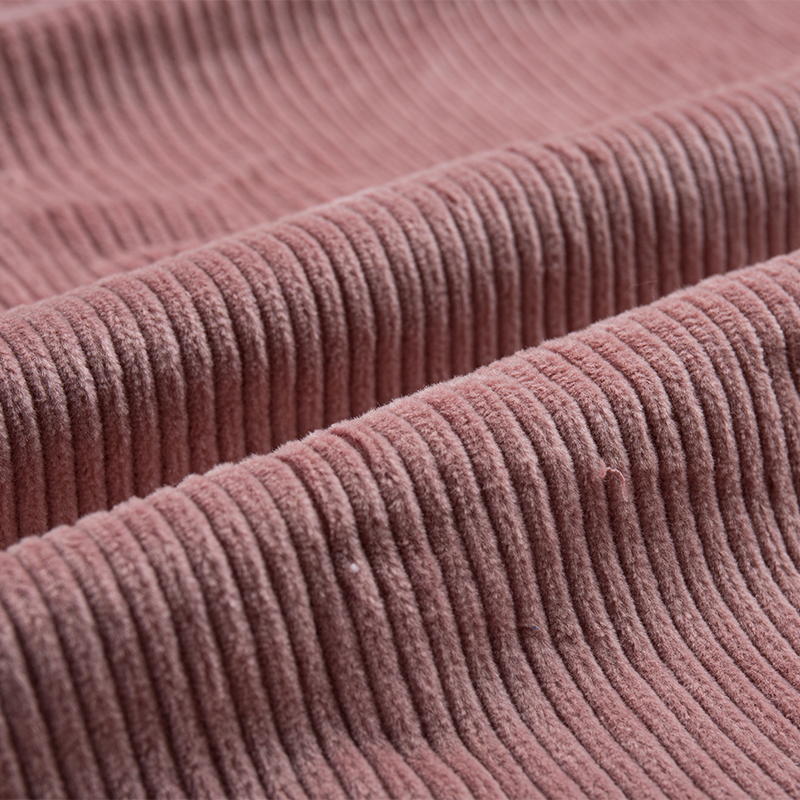
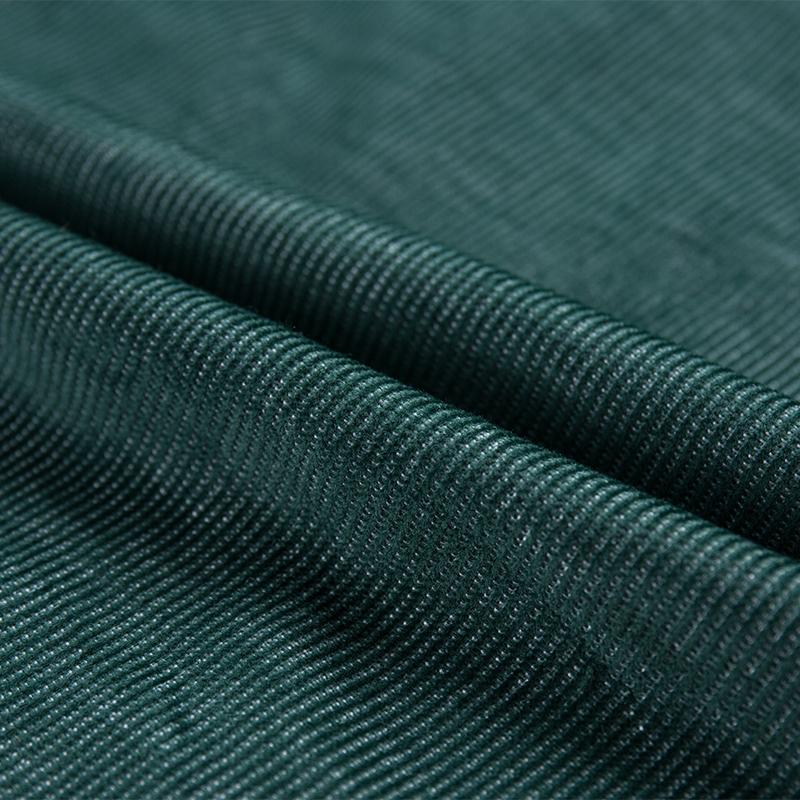
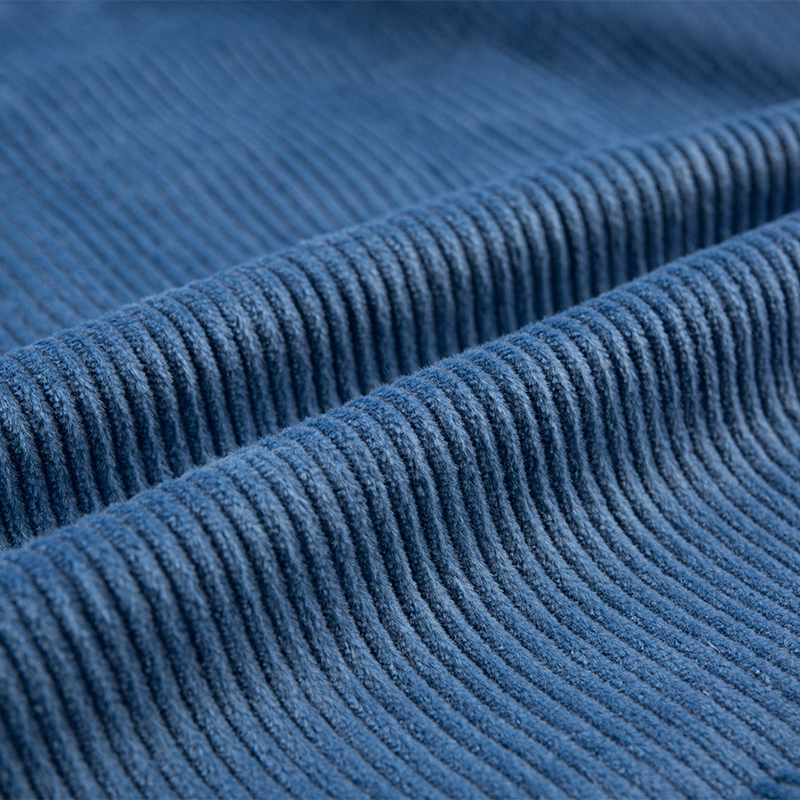
Corduroy is a cut-pile fabric constructed by weaving a base cloth with extra fill yarns that are then cut to create the raised ridges known as wales. The number of wales per inch determines the fabric's character: fewer, wider wales (such as 4.5-wale or 6-wale) produce a coarse, dramatically textured surface with strong visual presence. More wales per inch (such as 14-wale or 21-wale, sometimes called pinwale) produce a finer, smoother surface that reads almost flat from a distance.
For upholstery, mid-wale corduroy — typically 8-wale to 11-wale — offers the best balance. The ridges are visible and tactilely engaging without being so pronounced that they trap debris or show flattening under regular pressure.
Corduroy's durability is often underestimated. The pile construction that gives it texture also distributes wear across a three-dimensional surface rather than concentrating it on a flat plane. This means that high-contact areas such as seat cushion tops and armrests tend to show wear more gradually than equivalent areas on plain-woven textiles, because the rubbing action affects the tips of the wales first without immediately exposing the base fabric.
Corduroy's ridged pile creates a naturally insulating surface that traps a layer of warm air between the wales. This makes corduroy sofas particularly appealing in cooler climates or for living rooms that tend toward lower ambient temperatures. The tactile experience of sitting on corduroy is immediately distinctive — the directional texture responds to touch and movement, and many users find the sensation inherently comforting.
One underappreciated quality of corduroy for upholstery is its natural grip. The pile surface holds throw cushions and blankets in place rather than sending them sliding to the floor, which is a functional advantage in relaxed, casual living spaces.
Corduroy upholstery experienced a significant resurgence in interior design trends starting in the early 2020s, and it has maintained relevance as part of a broader appreciation for tactile, richly textured home environments. Wide-wale corduroy in deep jewel tones such as forest green, ochre, and terracotta has been particularly prominent in living room furniture styling guides.
In practical terms, corduroy reads warmer and more informal than linen and more expressive than canvas. It suits relaxed contemporary designs, mid-century influenced furniture with rounded arms and low profiles, and maximalist layering schemes where texture contrast is deliberately sought.
"Mid-wale corduroy at 8 to 11 wales per inch provides the optimal balance between visual texture, tactile comfort, and long-term pile retention for domestic upholstery applications."
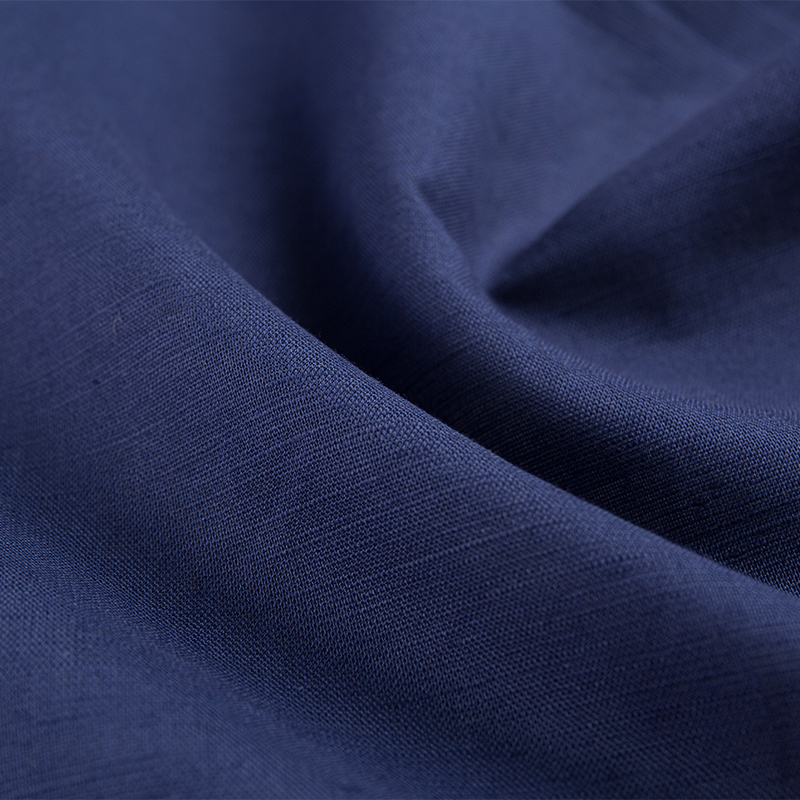
Linen is derived from the flax plant, and its fiber structure is fundamentally different from cotton or synthetic alternatives. Flax fibers are hollow, which gives linen exceptional breathability and moisture-wicking performance. The fiber is also naturally longer than cotton — flax staples can run 12 inches or more, compared to cotton's typical 1 to 2 inches — which means fewer joins in the spun yarn and a smoother, more lustrous final thread.
These fiber properties translate directly into upholstery performance characteristics that are both advantageous and limiting, depending on how the fabric is used and maintained.
Linen fabric outperforms both canvas and corduroy in warm-weather comfort. The hollow fiber construction promotes airflow, and linen's natural moisture management means that the fabric surface does not retain body heat or sweat in the way that tightly woven or pile fabrics can. In climates with hot summers, linen upholstery can make a measurable difference to seating comfort.
A comparison of thermal comfort ratings across fabric types illustrates this clearly:
| Fabric | Breathability Rating | Warm Weather Comfort | Cold Weather Insulation | Moisture Management |
|---|---|---|---|---|
| Canvas (cotton) | Good | Good | Moderate | Moderate |
| Corduroy | Moderate | Moderate | Excellent | Moderate |
| Linen | Excellent | Excellent | Limited | Excellent |
Linen has a paradoxical durability profile. Raw linen fiber is actually stronger than cotton by tensile strength measurements, and linen fabrics can achieve Martindale rub counts of 20,000 to 25,000 in quality upholstery weights. However, linen creases and wrinkles more readily than canvas, and it is susceptible to surface abrasion that causes the weave to develop a characteristic, intentional-looking "slubbing" — a subtle roughening of the surface fibers that many designers consider aesthetically pleasing but which others interpret as wear.
Linen's tensile strength means that seams and stress points on upholstered pieces do not fail as readily as softer materials. The fabric does not stretch significantly, which is advantageous for maintaining clean lines on structured sofa frames but can be a limitation when upholstering curved or compound-curved surfaces.
Linen brings a specific aesthetic register that neither canvas nor corduroy can replicate. The natural slubs in the yarn — irregular thickening caused by the uneven flax fiber — give linen an organic, handcrafted quality. Light plays across linen upholstery differently than it does across plain-woven cotton: the slight irregularities in the weave catch light at varying angles, producing a gentle shimmer that reads as elegant without being shiny.
In terms of color, linen's natural hue — a warm, slightly creamy off-white — influences the appearance of dyed versions. Colors applied to linen tend to look more muted and naturalistic than the same dyes applied to canvas or synthetic fabrics. This quality makes linen particularly effective in neutral and earth-tone palettes, and in interiors designed around natural materials such as wood, stone, and rattan.
For durable sofa applications in formal or carefully curated living rooms, linen's combination of refined appearance and reasonable durability makes it a compelling choice, provided maintenance expectations are realistic.
Choosing between canvas, corduroy, and linen ultimately depends on matching fabric characteristics to real use conditions. The following breakdown maps practical lifestyle factors to fabric performance.
| Use Scenario | Canvas | Corduroy | Linen |
|---|---|---|---|
| Households with pets | Excellent | Good (hair retention) | Good |
| Young children present | Excellent | Good | Moderate |
| Hot climate or summer comfort | Good | Moderate | Excellent |
| Formal or minimal interiors | Good | Moderate | Excellent |
| Rustic or cozy interiors | Good | Excellent | Good |
| Low maintenance preference | Excellent | Good | Moderate |
| Slipcover compatibility | Excellent | Good | Good |
| Long-term color retention | Excellent | Good | Good |
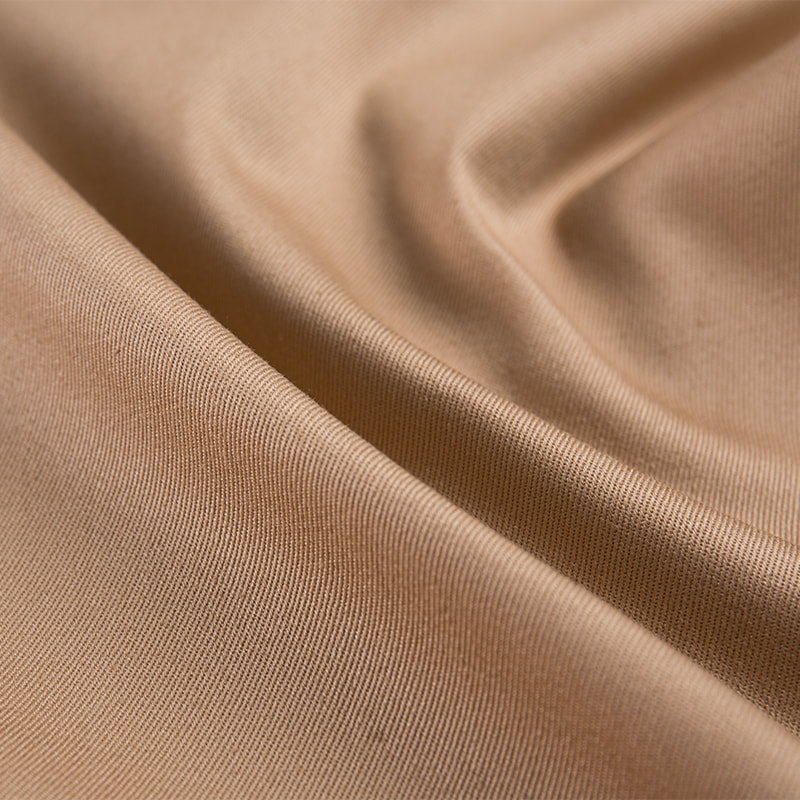
Within each of these three fabric families, twill construction represents a significant subcategory. A twill sofa fabric is woven with a diagonal rib pattern, achieved by offsetting warp and weft yarn intersections by one thread in each successive row. This creates the characteristic diagonal line visible across twill fabrics.
Twill construction adds strength by distributing stress along the diagonal weave rather than concentrating it at each thread intersection, as happens in plain weave. It also contributes to a fabric that drapes better and has a slightly softer hand than an equivalent plain-weave fabric of the same weight. Canvas made in twill construction (known as twill canvas) is particularly popular for heavy-duty upholstery because it combines the weight of canvas with improved flexibility and drape.
Beyond base fiber and weave construction, the finishing treatments applied to upholstery fabric significantly affect real-world performance. Common finishes relevant to these three fabric types include:
When evaluating fabric specifications for a durable sofa, asking about applied finishes alongside base construction gives a much more complete picture of expected real-world performance.
Interior design trends across the 2020s have moved substantially toward layered, tactile spaces that prioritize sensory richness over the clean uniformity that characterized minimalist design of the previous decade. In this context, fabric sofas with visible texture have become central rather than peripheral choices in living room schemes.
Canvas, corduroy, and linen each contribute differently to this texture vocabulary. Canvas provides a restrained, foundational texture — present but not dominant. Corduroy supplies a rhythmic, directional texture that reads strongly from across a room. Linen occupies a middle ground: its texture is apparent on close approach but does not overwhelm from a distance.
Each fabric interacts with color differently, and this interaction affects how the same shade appears across fabric types:
Professional interior stylists frequently recommend combining these fabrics across a living room rather than using a single fabric throughout. A canvas sofa paired with corduroy accent chairs and linen curtains, for example, creates textural contrast while maintaining tonal coherence if the color palette is unified. This approach also makes practical sense: each fabric's strengths can be applied where they matter most, with the most durable canvas at the primary seating surface and the most breathable linen at window treatments where durability demands are lower.
Velvet cloth for sofa applications is often considered alongside canvas, corduroy, and linen, and the comparison is instructive. Velvet is a cut-pile fabric — like corduroy — but with an extremely short, uniformly dense pile that produces its characteristic sheen. Unlike corduroy's directional wales, velvet's pile is multidirectional, creating a fabric that reflects light differently depending on the viewing angle.
Velvet's primary challenge in upholstery is crushing: the pile can flatten permanently in high-contact areas, particularly on seat cushion fronts where users slide forward when standing. Corduroy is less susceptible to crushing because the wales provide structural support for the pile, and canvas and linen are not susceptible at all due to their non-pile constructions.
For buyers who find velvet visually appealing but are concerned about durability, a high-quality mid-wale corduroy in a comparable color can often achieve a similar warm, tactile aesthetic with substantially better long-term resilience.
The decision process for upholstery fabric selection can be structured around four practical questions:
When none of these factors clearly dominates, a practical strategy is to request fabric samples and live with them for several days — placing them on existing furniture, sitting on them, and observing how they look in the natural and artificial lighting of the actual room.
Canvas is the stronger choice for daily pet use. Its flat, tight weave does not trap animal hair the way corduroy's wales do, and it withstands the abrasion from claws and constant repositioning more reliably. Canvas upholstery also wipes clean more easily after muddy paw contact. Corduroy is a viable option with good durability ratings, but the pile will collect hair that requires vacuuming with a brush attachment rather than simple wiping.
Linen can be used in conservatories but requires UV protection in the form of window film or blinds to prevent fading. Without protection, linen's natural dyes can shift noticeably within one to two seasons of strong sun exposure. Canvas with a UV-stabilized dye treatment is a more practical choice for high-sun environments. Neither fabric is suitable for unprotected outdoor use.
The key difference is in how warp and weft yarns intersect. Plain-weave canvas alternates over-under in a 1x1 pattern, producing maximum interlocking and a firm, flat surface. Twill weaves offset intersections to create a diagonal rib, which reduces the number of interlocking points and produces a fabric that is slightly more flexible, drapes better over curved frames, and has a softer hand while retaining comparable or superior strength. For upholstery on sofas with curved or rolled arms, twill canvas often performs better than plain-weave canvas of equivalent weight.
Corduroy is generally more durable than velvet in family environments with children. Velvet's very short pile is prone to crushing in high-contact areas and can show wear patterns within a few years of heavy use. Corduroy's taller, structured wales are more resistant to permanent flattening, and the fabric's base construction is typically more robust. Corduroy also tolerates the kind of repeated lateral friction — children sliding across cushions — better than velvet because the directional pile sheds this stress rather than compressing uniformly.
Canvas slipcovers are highly practical for everyday use. Pre-washed canvas is dimensionally stable, washes well at moderate temperatures, and resists the wrinkling and drooping that affects lighter slipcover materials. Linen slipcovers are more elegant in appearance but require more careful handling: they wrinkle easily, may need ironing after washing, and are best suited for households where slipcovers are washed infrequently. For high-frequency washing scenarios, canvas is the more manageable choice by a significant margin.
Yes, fabric weight has a perceptible effect on sitting comfort. Lighter canvas weights (around 7 to 8 ounces per square yard) feel more pliable and allow slight flex under body pressure, which some users find more comfortable. Heavier canvas (10 to 12 ounces) feels more rigid and supportive but less compliant. The underlying cushion construction has a much greater overall impact on comfort than fabric weight alone, but in direct contact with skin — particularly for users who sit in shorts or lightweight clothing — lighter canvas weights tend to feel less stiff and more agreeable over extended periods.
Related Products
Get in Touch
We're here for you when you need us.
Contact Information
Add:
No. 517 Huanzhu Road, High-Tech Zone, Wuxing District, Huzhou City, Zhejiang Province, China.
E-mail:
Product Category
QR Code
Join our community and stay connected
 English
 Español
 عربى
عربى