2026-06-11
Content
Not every fabric earns a place in outerwear. The outer shell of a structured jacket, trench coat, or field parka faces wind, friction, and repeated wear in ways that expose any weakness in the weave within a single season. Among the fabrics that have consistently met these demands, three stand out for their structural integrity, construction compatibility, and long-term performance: twill, drill, and canvas. Understanding how each behaves — and where each excels — is the foundation of designing outerwear that lasts.
This article examines these three fabric categories in technical depth, with attention to fiber composition, weave architecture, weight considerations, and tailoring implications. Whether the goal is a rigid work jacket, a refined cotton twill trench coat, or a utility shell with military heritage, the fabric choice determines everything downstream.
Twill, drill, and canvas are not simply fabric names — they represent distinct weave architectures that produce specific structural properties. Before evaluating performance, it is worth understanding what differentiates them at the thread level.
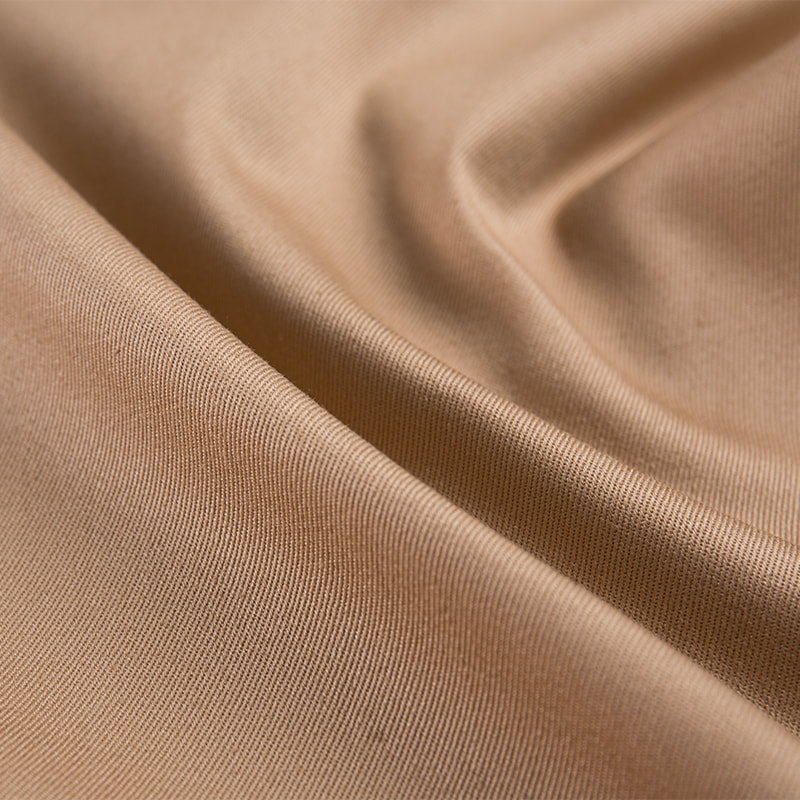
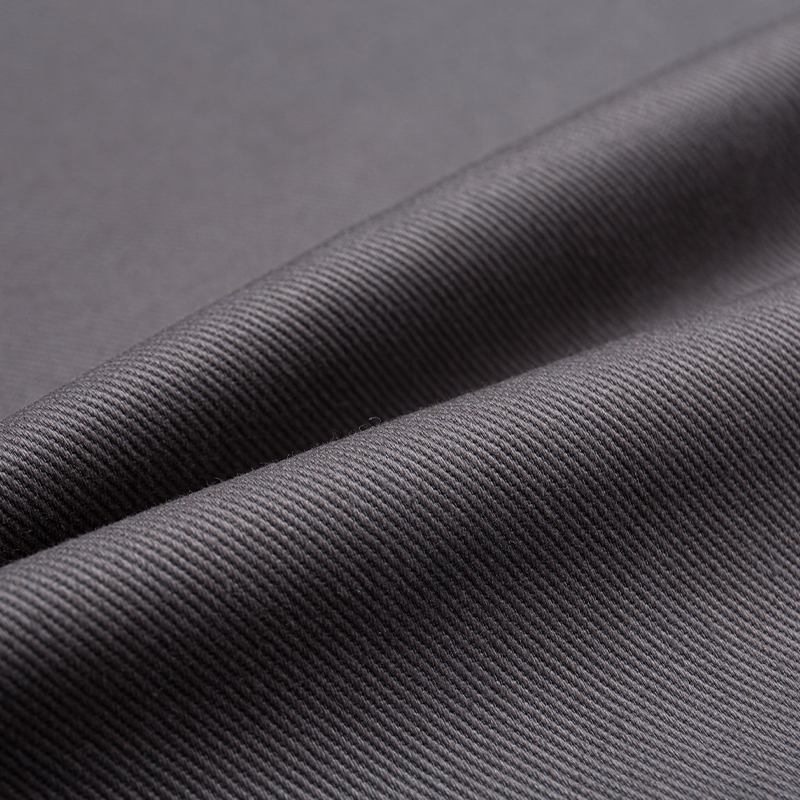
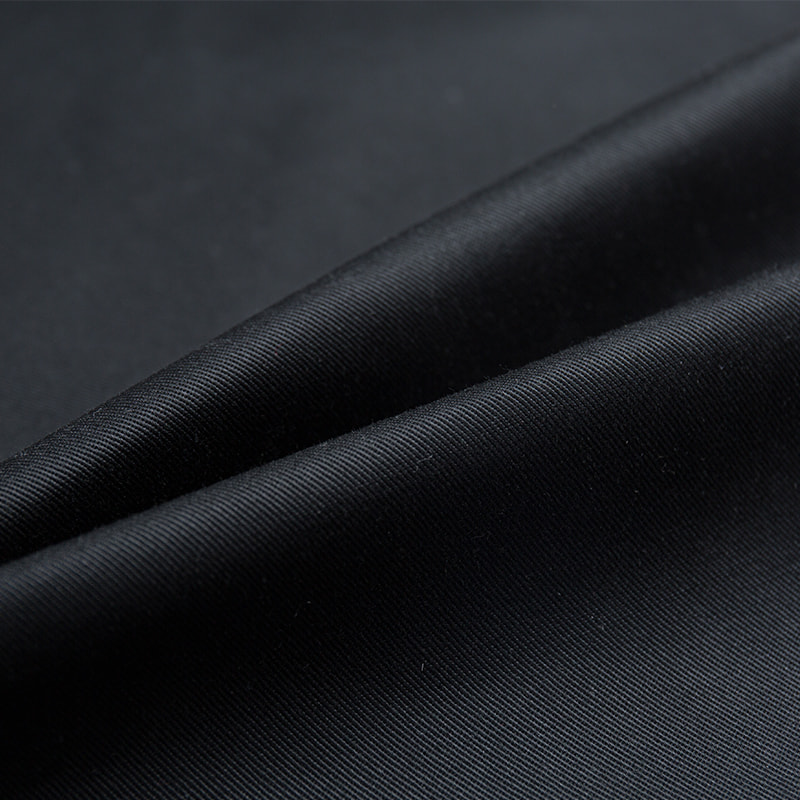
Twill is defined by a diagonal rib pattern formed when the weft thread passes over two or more warp threads before going under one. This offset repeat produces the characteristic diagonal line visible on the fabric surface. The angle and direction of this diagonal can vary, creating sub-categories such as 2x1, 2x2, and herringbone patterns.
The diagonal structure gives twill fabric inherent drape and flexibility that plain weave cannot match at the same weight. Because threads interlock at offset intervals rather than every crossing, the fabric has more give along the bias — a quality that matters significantly in outerwear designed for movement. Twill drill fabric in particular combines this diagonal architecture with a tighter construction, producing a surface that resists surface abrasion while retaining shape across the garment body.
Drill is a specific variant of twill, typically woven in a 3x1 or 2x1 configuration with a pronounced steep diagonal running from lower left to upper right. The result is a denser, heavier fabric with a firm hand feel and excellent resistance to deformation. Drill fabrics have historically been used in military uniforms, heavy-duty workwear, and equestrian gear — all contexts where abrasion resistance and dimensional stability are non-negotiable.
In outerwear applications, drill delivers a structured shell that holds its silhouette without relying entirely on interlining or padding. A jacket cut from 280–340 gsm drill fabric will retain shoulder shape and chest structure through hundreds of wearing cycles in ways that lighter wovens cannot replicate.
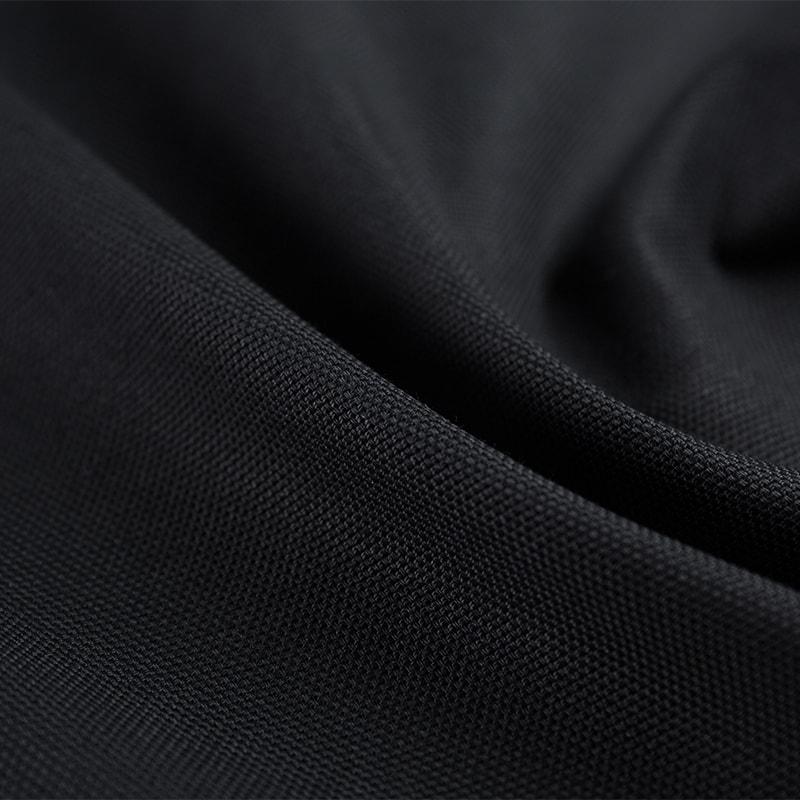
Canvas fabric operates on a plain weave or basket weave construction but achieves its characteristic stiffness through high thread density, thick yarn, and often a combination of fiber types. Traditional canvas used linen or cotton at weights above 350 gsm, producing a fabric stiff enough to hold form without any additional interlining. Modern canvas constructions may incorporate synthetic fibers to improve water resistance and reduce weight while maintaining structural integrity.
For outerwear, canvas provides the most rigid shell of the three categories. It is the preferred base for field coats, barn jackets, hunting shells, and military-inspired outerwear where the fabric itself functions as structural support.
Weave structure alone does not determine fabric performance. The fiber content woven into that structure shapes the final fabric's weight, breathability, moisture behavior, and lifespan. In structured outerwear, the most relevant fiber categories are natural cotton, synthetic polyester, and fiber blends.
Cotton twill material remains the benchmark for workwear and classic outerwear construction. It offers natural breathability, develops character with age and wear, and is compatible with dyeing processes that produce deep, saturated color. A 280 gsm cotton twill jacket body will carry considerable warmth when layered, and the natural fiber structure responds well to brushing and garment washing treatments that improve softness without sacrificing structure.
Cotton twill's limitation in outerwear is moisture absorption. Untreated cotton absorbs water readily, which increases fabric weight and reduces thermal performance in wet conditions. This is addressed through durable water repellent finishes, wax coatings, or tight-weave constructions that slow water penetration. The classic waxed cotton used in heritage field jackets is essentially a treated cotton canvas or drill — a pairing of weave and finish that has proven its outdoor credentials across decades.
Poly twill and polyester twill fabric have expanded significantly in outerwear design over the past two decades. Polyester offers intrinsic moisture resistance, faster drying times, and higher strength-to-weight ratios than cotton at equivalent weave densities. A 240 gsm polyester twill can deliver similar abrasion resistance to a heavier cotton twill while adding less bulk to the overall construction.
Polyester twill is particularly well suited to technical outerwear where water management is a priority. The fiber does not swell or distort when wet, meaning seam integrity and garment silhouette are maintained across weather exposure. In workwear contexts, polyester-dominant twill also resists bleach, chemical exposure, and industrial washing cycles more reliably than pure cotton.
The tradeoff is tactile: polyester twill lacks the natural texture and warmth of cotton, and it can develop shine or pilling at points of repeated friction if thread count and yarn twist are not carefully specified. Quality polyester twill fabric for outerwear should use ring-spun or textured polyester yarn with a minimum of 200 thread count to avoid these issues.
Micro twill uses fine-count yarns woven at high density to produce a smooth, almost silky surface while retaining the structural diagonal of a standard twill weave. In outerwear, micro twill is most relevant to transitional and formal contexts: structured blazers, lightweight field jackets, and tailored shell coats where the exterior must carry visual refinement alongside functional performance.
The fine yarn construction of micro twill means it is typically found in lower weight ranges — 160 to 220 gsm — which limits its role to lighter outerwear or as a shell over insulated inner layers. Its smooth surface accepts printing and bonding processes well, making it a practical base for bonded fleece or membrane constructions.
Cotton-polyester blends at ratios of 65/35 or 60/40 are among the most common in workwear and structured outerwear. These blends combine the comfort and dye uptake of cotton with the dimensional stability and moisture management of polyester. A 65% cotton, 35% polyester drill fabric at 300 gsm will resist distortion across laundry cycles while providing the hand feel that pure polyester cannot match.
For premium outerwear, cotton-nylon blends offer a different performance profile. Nylon adds tear resistance and a degree of water repellency that polyester does not naturally provide at the fiber level. Cotton-nylon canvas used in professional outerwear often tests above 50 Newtons in ISO tear resistance assessments — a threshold relevant to workwear requiring performance certifications.
| Fiber Type | Typical Weight Range | Moisture Behavior | Primary Outerwear Use | Key Strength |
|---|---|---|---|---|
| 100% Cotton Twill | 220 - 340 gsm | Absorbs moisture | Trench coats, work jackets | Natural breathability, drape |
| Polyester Twill | 180 - 280 gsm | Repels, dries fast | Technical shells, workwear | Durability, chemical resistance |
| Cotton-Poly Blend Drill | 260 - 340 gsm | Moderate absorption | Uniforms, utility jackets | Balanced performance, washability |
| Micro Twill | 160 - 220 gsm | Varies by fiber base | Shell layers, blazers | Smooth finish, visual refinement |
| Cotton Canvas | 340 - 500 gsm | Absorbs, can be treated | Field coats, barn jackets | Maximum stiffness, longevity |
| Cotton-Nylon Canvas | 300 - 420 gsm | Low absorption | Professional outerwear | Tear resistance, certification ready |
The question of twill vs canvas is not simply about weight or weave — it is about the functional and aesthetic brief of the garment being designed. Each fabric category creates a different relationship between the wearer and the jacket, and that relationship determines which is appropriate.
Twill — including standard drill and poly twill variants — is the superior choice when the outerwear design requires any of the following qualities:
Canvas steps in where rigidity and self-supporting structure are required:
The cotton twill trench coat represents one of the most technically demanding applications of twill fabric in outerwear design. The construction combines long panel lengths, structured shoulder and chest construction, functional belt and closure systems, and a double-breasted front — all of which place specific demands on the fabric's dimensional stability, seam strength, and dye consistency.
For a full-length trench coat, cotton twill in the 260–300 gsm range provides the weight needed to produce clean panel fall without excess bulk at the double-breasted front overlap. Lighter twill will not hold the chest structure; heavier twill creates a rigid front panel that resists the natural fold of the lapel. The 270 gsm range is the practical optimum for most adult sizing.
The diagonal grain of twill creates challenges specific to long-coat construction. If panels are cut without careful attention to grain line alignment, the diagonal rib will run visibly off-axis at the front hem or along the side seams after hanging. For a standard right-hand twill, the diagonal should be consistent across all body panels, with the back panel cut first to establish the reference grain before front panels are positioned.
Pockets, storm flaps, and shoulder epaulettes cut on-grain maintain visual consistency. Cut off-grain, these elements catch light differently than adjacent panels and create a surface-level inconsistency that appears as a quality failure even when seaming is technically correct.
A cotton twill trench coat typically uses a woven interlining at the chest, collar, and upper front panels to provide form retention without adding bulk at the hem or sleeves. The interlining weight should be 20–30% lighter than the shell fabric; a 280 gsm shell pairs well with a 60–70 gsm woven fusible. Heavier interlining stiffens the lapel roll line and creates a visual ridge visible through the shell fabric when the coat is worn open.
The lining serves a functional role in reducing friction against layered garments beneath. Cupro and polyester satin linings both perform adequately, but cupro's breathability and drape produce a more refined hand feel appropriate to the classic aesthetic of a cotton twill trench.
On cotton twill at 270+ gsm, standard lockstitch at 4.0 mm stitch length delivers seam strength exceeding 200 Newtons in tensile testing. The critical failure points in trench coat construction are the sleeve crown (high-movement joint), the belt loop attachment (repeated mechanical load), and the back vent stitching (concentrated stress during sitting). Each of these points benefits from bar tack reinforcement at a minimum; heavy bartack or double-needle topstitching is appropriate for any trench coat intended for daily wear.
Weight selection is one of the most consequential decisions in outerwear fabric specification. Too light and the garment lacks presence and durability; too heavy and tailoring becomes difficult, the finished weight becomes uncomfortable for all-day wear, and cost increases significantly.
As fabric weight increases, construction complexity and equipment requirements follow. Fabrics above 320 gsm require industrial sewing machines with higher presser foot pressure and walking foot attachments to feed the material evenly through multi-layer seams. Needle selection must step up to size 18 or 21 for canvas weights above 380 gsm; standard needle deflection at lighter sizes creates skipped stitches and seam weakness that will not become apparent until the garment is in field use.
For design teams without access to heavy-duty industrial equipment, limiting the base fabric to 300 gsm and supplementing with interlining at structural points is a practical compromise that maintains construction quality without requiring specialized machinery throughout the production process.
Working with drill, heavy twill, and canvas fabrics requires technique adaptations that differ substantially from those appropriate to fashion fabrics. The density and thickness of these materials expose weaknesses in standard production methods and reward investment in correct tooling and process sequencing.
Rotary cutting blades and oscillating knife cutters maintain edge quality on twill and canvas in ways that scissors cannot at production scale. The critical requirement is sharp tooling: a dull blade creates fraying and fiber displacement at the cut edge that increases seam allowance inconsistency and creates visible fraying at exposed seam allowances inside unlined garments. For canvas above 380 gsm, cut edge sealing with overlock or flat-fell seam construction is not optional — raw canvas edges begin to fray within the first garment washing cycle.
Chalk and tailor's carbon remain the reliable marking methods for thick fabrics. Notch marks should be cut as small as 3mm to avoid becoming visible in the finished seam when allowances are pressed open.
Pressing thick fabrics requires extended dwell time and higher steam application than fashion-weight materials. A seam pressed open on 300 gsm cotton drill needs minimum 8 seconds of direct steam contact before pressure is applied with the iron. Insufficient pressing leaves seam allowances that spring back and create visible ridges through the shell fabric face — a quality failure particularly visible on structured fronts and collar stands.
Flat-fell seams are the benchmark construction for workwear-grade outerwear in twill and drill. They enclose all raw edges, add a second row of topstitching that reinforces the seam structurally, and produce the layered seam appearance associated with authentic workwear construction. The trade-off is construction time: flat-fell seaming requires either specialized attachments or a two-pass process that adds meaningful labor cost per unit.
Canvas and heavy drill outerwear typically uses brass, gunmetal, or antique nickel hardware — materials that visually align with the workwear and military aesthetic these fabrics evoke. Hardware shanks must be long enough to penetrate the fabric thickness without crushing the woven structure beneath the setter. For canvas above 380 gsm, a shank length of 12mm minimum is required for snap fasteners; insufficient shank length produces a setting that fails under the first few opening cycles.
Topstitching on thick outerwear fabrics serves dual functions: structural reinforcement and aesthetic declaration. Thread weight should be heavier than the bobbin thread — bonded polyester at 40-weight on the needle and 60-weight on the bobbin produces consistent tension at the upper seam line without bobbin thread wicking to the surface. Stitch length of 3.5mm is the industry standard for topstitched outerwear seams; shorter stitching perforates the fabric and reduces seam integrity at the stitch line under tension.
The vocabulary of structured outerwear — drill, canvas, heavyweight twill, storm flaps, epaulettes, bellows pockets — originates in military and industrial uniform traditions where fabric performance directly affected function in the field. Understanding this heritage provides important context for contemporary outerwear design that draws on workwear aesthetics.
Military procurement historically specified fabrics by weave construction, fiber content, weight per square yard, and specific performance thresholds — tear strength, abrasion cycles before failure, colorfastness to washing. These specifications produced a body of functional knowledge about which fabric constructions perform reliably under extended physical use, knowledge that contemporary workwear-influenced outerwear design draws on directly.
Cotton-nylon blend canvas fabrics used in contemporary field outerwear trace their lineage to military specifications developed in the mid-twentieth century for field uniforms required to resist both abrasion and water exposure simultaneously. The fiber content ratios in many current workwear canvases — typically 60% cotton to 40% nylon — reflect optimization work carried out over decades in contexts where garment failure had operational consequences.
The current prominence of workwear aesthetic in fashion and premium outerwear design reflects genuine appreciation for functional design logic. When a chore coat is cut from 380 gsm canvas with flat-fell seams, triple-needle topstitching, and copper rivets at pocket corners, each of these choices references a functional origin: the seam construction prevents delamination under load, the topstitching carries stress away from needle holes, and the rivets prevent pocket corner tearing that occurs when tools or heavy items are carried.
This design language is most convincing when the fabric and construction method are internally consistent — when the weight of the canvas, the seam type, the hardware specification, and the overall garment silhouette all point toward the same functional reference. A lightweight twill chore coat with oversized riveted hardware lacks this internal logic and reads as aesthetic appropriation rather than design conviction.
The most enduring outerwear in the workwear-influenced category shares a common characteristic: the fabric was specified before the silhouette was designed, not chosen afterward to match a predetermined style. Starting with the structural and performance requirements of the fabric — and allowing those requirements to shape the construction method and ultimately the visual outcome — produces outerwear with the coherence that distinguishes lasting design from seasonal styling.
Drill is a specific type of twill weave characterized by a steep, prominent diagonal running from lower left to upper right, typically in a 3x1 weave configuration. Standard twill may use various diagonal angles and repeat ratios. Drill is generally denser, heavier, and firmer in hand compared to lighter twill variants, making it more appropriate for structured outerwear and workwear applications where abrasion resistance and dimensional stability are priorities.
Polyester twill fabric often exceeds cotton in specific durability metrics including tensile strength, abrasion resistance, and resistance to moisture-related degradation. However, cotton twill typically offers superior breathability and natural texture. For outerwear requiring long-term outdoor performance, cotton-polyester blend twills at 65/35 or similar ratios often provide the most practical balance between comfort, durability, and construction compatibility.
For a barn jacket intended as primary outerwear, canvas fabric in the 340 to 420 gsm range is most appropriate. This weight provides sufficient stiffness to hold the garment silhouette without interior support structures, offers strong abrasion resistance for outdoor use, and is compatible with traditional construction methods including flat-fell seams and heavy topstitching. Weights below 320 gsm will not deliver the self-supporting structure that defines the barn jacket aesthetic and function.
Micro twill is woven from finer-count yarns at higher density, producing a smoother, more refined surface with a softer hand compared to standard polyester twill. In outerwear, micro twill is suited to lighter shell layers and tailored jackets where surface refinement is prioritized. Standard polyester twill at higher weights is preferred for workwear and performance contexts where durability and abrasion resistance are more critical than surface aesthetics.
Waxed canvas and coated polyester address water resistance through fundamentally different mechanisms and have distinct performance profiles. Waxed canvas provides naturally renewable water resistance and develops character with age, but requires periodic re-waxing to maintain performance. Coated polyester maintains consistent water resistance without maintenance but may delaminate at seams over time under heavy UV and mechanical stress. For most outdoor outerwear applications, waxed cotton-canvas performs comparably to coated synthetics across a multi-year use period when properly maintained.
For canvas fabric above 380 gsm, needle size 18 (110 in metric sizing) is the minimum recommended, with size 21 (130) preferred for multi-layer seams or areas where four or more fabric layers intersect. Using undersized needles on heavy canvas causes needle deflection, skipped stitches, and heat buildup at the needle tip — all of which degrade seam integrity in ways that may not be immediately visible but become apparent under wear stress within the first season of use.
Related Products
Get in Touch
We're here for you when you need us.
Contact Information
Add:
No. 517 Huanzhu Road, High-Tech Zone, Wuxing District, Huzhou City, Zhejiang Province, China.
E-mail:
Product Category
QR Code
Join our community and stay connected
 English
 Español
 عربى
عربى