2026-05-01
Content
Cotton corduroy has maintained its position as a cornerstone fabric in the workwear industry for over a century, and for compelling reasons rooted in material science and practical performance. The fabric's distinctive ribbed surface—created through a unique weaving process—delivers a combination of durability, comfort, and cost-effectiveness that few alternatives can match. Understanding why cotton wale corduroy fabric has become synonymous with reliable work clothing requires examining the intricate relationship between its structural properties, manufacturing techniques, and real-world performance in demanding environments.
Workwear professionals and industrial suppliers consistently turn to corduroy because it addresses a critical challenge in protective clothing: balancing robustness with wearability. Unlike synthetic alternatives that may offer specific performance advantages, cotton corduroy delivers a holistic package of benefits that align with the diverse needs of workers across construction, manufacturing, agriculture, and trade sectors. The fabric's ability to withstand repeated washing, maintain structural integrity through extended use, and provide genuine comfort during long work hours has made it an industry standard.
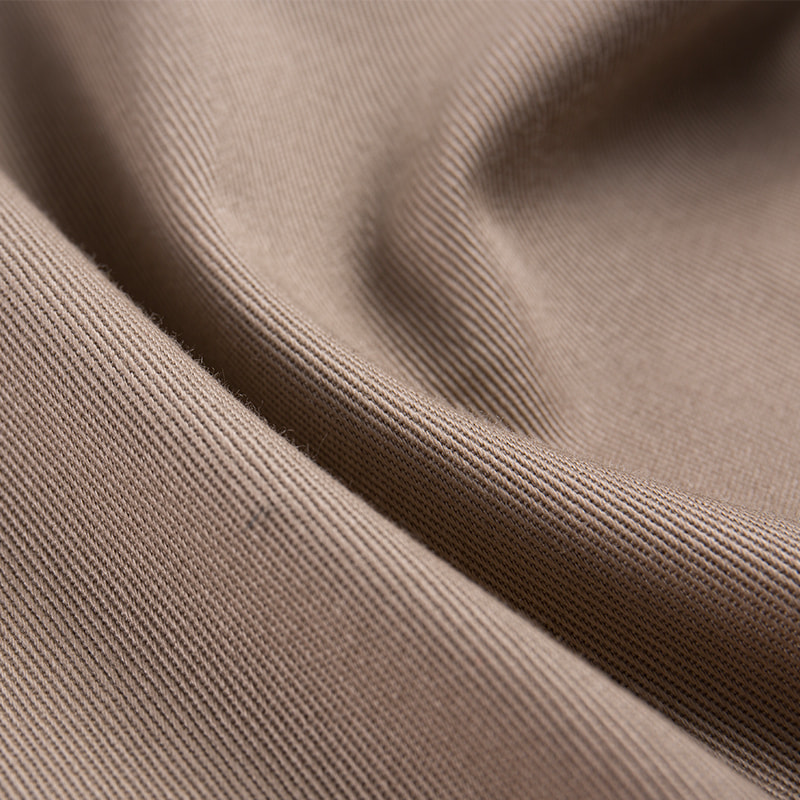
The remarkable durability of cotton wale corduroy fabric begins at the fundamental level of its construction. Unlike plain-weave cotton fabrics, corduroy features a distinctive pile structure that is created through a specialized weaving technique. The base of the fabric consists of a sturdy twill or plain weave, while parallel ribs—or wales—of cut pile are raised perpendicular to the weave direction. This architectural design creates a fabric with exceptional tensile strength and resistance to mechanical stress.
The term "wale" refers to each individual ridge or rib in corduroy fabric. The number of wales per inch directly influences the fabric's characteristics. A standard workwear corduroy typically features between 11 and 14 wales per inch, creating a dense structure that resists abrasion and puncture. This density is crucial—it means there are more individual fibers distributed across a given area, providing redundancy against damage. When a fiber breaks or frays, the adjacent fibers maintain the fabric's integrity, rather than allowing tears to propagate rapidly as occurs in thinner materials.
The pile construction itself provides an additional durability advantage. The cut loops that form each wale create a thick, cushioned surface that absorbs impacts and abrasion. Workers moving through rough environments, rubbing against sharp edges, or kneeling on coarse surfaces experience less wear transmission to the base fabric. This protective buffer extends the garment's service life considerably compared to fabrics with smooth, flat surfaces that expose underlying layers to direct contact with wear-inducing elements.
The durability of workwear corduroy also depends significantly on the quality of cotton yarns used in its construction. Premium workwear-grade corduroy typically employs longer-staple cotton fibers, which produce stronger, less fuzzy yarns than shorter-staple varieties. These longer fibers can be twisted together more efficiently, creating yarns that resist breaking under tension and maintain structural stability even after exposure to repeated stress and washing.
The total thread count—the number of yarns woven per square inch—further contributes to durability. Workwear corduroy typically maintains a thread count ranging from 200 to 280 per square inch, substantially higher than casual cotton garments. This density means more fibers are working together to distribute stress, resist tearing, and maintain the garment's shape and structure through extended use and multiple wash cycles.
The durability of finished corduroy workwear reflects not only the fabric's inherent design but also the precision of modern manufacturing processes. Contemporary textile facilities employ rigorous quality control measures that ensure consistency and reliability in every bolt of fabric produced.
Raw corduroy fabric undergoes several finishing treatments that significantly enhance its durability and performance characteristics. One critical process is pre-shrinking, which removes the residual shrinkage potential from the cotton fibers. By subjecting the fabric to heat and moisture during manufacturing, producers ensure that garments maintain consistent dimensions through multiple wash and wear cycles. This prevents the gradual size reduction that would otherwise compromise fit and accelerate wear patterns.
Additional finishing treatments may include singeing to remove surface fuzz, mercerization to increase luster and strength, and the application of functional coatings. Mercerization, a process that treats cotton with alkali solution, can increase the tensile strength of cotton fibers by up to 15 percent while also enhancing dye absorption. This results in more vibrant colors that resist fading and improved overall durability.
Color stability in workwear corduroy is achieved through careful selection of dyestuff and dyeing methodology. Reactive dyes, which form covalent bonds with cotton molecules, produce colors that resist fading even under conditions of repeated washing and sun exposure. The fabric's dense structure aids color retention by preventing deep penetration of light that would otherwise cause fading. This means workwear maintains its professional appearance through extended service life, supporting the safety and identification functions of uniformed work clothing.
The real-world performance of cotton corduroy workwear is perhaps most evident in how effectively it resists the various forms of wear that occur in professional work environments. Different working conditions create distinct types of stress on clothing materials, and corduroy's structure addresses each category with particular effectiveness.
Abrasion—the gradual wearing away of material through friction—is a primary cause of garment failure in workwear. Corduroy demonstrates exceptional resistance to this form of wear. Laboratory testing using standard abrasion measurement protocols shows that quality workwear corduroy can withstand 10,000 to 15,000 rub cycles before showing visible wear, compared to 4,000 to 6,000 cycles for lightweight cotton twill. This superior performance reflects both the fabric's density and the buffering effect of its pile structure.
The pile construction creates a sacrificial layer that absorbs the initial friction. As the surface fibers gradually wear, the underlying structure remains intact and continues to provide protection. This progressive wear pattern means that corduroy garments degrade gracefully over time rather than developing sudden failures. Workers can continue wearing garments safely long after lighter fabrics would require replacement.
Beyond simple abrasion, workwear must resist tearing and puncturing from sharp objects and rough surfaces encountered in industrial environments. The thick, dense structure of corduroy provides natural protection against these threats. A sharp edge that might easily tear through a thin fabric will often snag on the corduroy pile without piercing the base weave, preventing the initiation of larger tears.
The tensile strength of quality corduroy—typically ranging from 130 to 160 pounds per inch of width—ensures that even when a small tear does occur, it will not propagate rapidly. The fabric's structure distributes tension across multiple fibers, requiring significant applied force to extend a tear. This property has proven invaluable in preventing minor snags from developing into garment-ending damage.
Workers frequently kneel, lean, and apply pressure to localized areas of their clothing. The corduroy's pile structure acts as a cushioning layer that distributes this pressure across a wider area, reducing the stress concentration on any single point. This property protects both the fabric itself and the worker wearing it, reducing fatigue and discomfort during prolonged use of the garment in demanding positions.
Perhaps the most telling measure of workwear durability is how well garments maintain their integrity and appearance through multiple wash cycles. Industrial workwear is typically laundered far more frequently than casual clothing, subjecting it to repeated mechanical stress, chemical exposure, and thermal cycling that would degrade inferior fabrics rapidly.
Quality workwear corduroy is engineered to maintain consistent dimensions and shape throughout its service life. The pre-shrinking processes applied during manufacturing remove most residual shrinkage potential, ensuring that garments remain true to their intended sizing even after 50, 100, or 200 wash cycles. This dimensional stability is crucial for maintaining fit and function, particularly in safety-critical applications where loose or ill-fitting clothing poses hazards.
The structural integrity of the weave also resists the distortion that occurs in many fabrics during washing and drying. While other materials may develop uneven stretching or pilling, corduroy's dense construction maintains a uniform surface and consistent appearance. This property contributes to the professional appearance of workwear throughout its usable lifespan.
Pilling—the formation of fuzzy balls of fiber on the fabric surface—is a common problem in cotton garments, particularly those exposed to repeated mechanical stress. Corduroy demonstrates remarkable resistance to pilling due to its unique construction. The pile structure and the way individual fibers are secured in the weave prevent the formation of the loose fiber loops that initiate pilling in other fabrics. Studies of workwear corduroy show minimal pilling even after 200 wash cycles, compared to significant pilling in conventional cotton fabrics after 50 cycles.
The pile also means that even if surface degradation does occur, the fabric maintains a consistent appearance. Slight wear on the surface does not expose bare weave or create the patchy, worn appearance that develops in flat-weave fabrics. Instead, the pile gradually flattens and develops a subtle sheen that many workers consider to be a sign of "broken in" workwear—a garment that has proven itself through service.
The durability of a garment depends not only on the fabric itself but on the structural integrity of seams and construction methods. Corduroy's density and stability allow for reliable seam construction that maintains strength throughout the garment's life. The fabric does not shift or distort around seams, preventing the progressive weakening that occurs when lighter materials shift relative to thread lines. Industrial quality corduroy workwear is typically constructed with reinforced seams in high-stress areas, with stitch counts of 8 to 10 stitches per inch that distribute forces effectively.
Beyond the mechanical properties of the fabric structure, cotton as the base material for workwear corduroy provides significant advantages that contribute to both durability and overall value.
Cotton fibers maintain excellent breathability even in the dense corduroy weave, allowing moisture to evaporate from the skin. This property is crucial for worker comfort and safety, as moisture accumulation can lead to chafing, skin irritation, and in extreme cases, hypothermia in cold wet conditions. The hollow structure of cotton fibers provides insulation while allowing moisture management, making corduroy suitable for use across a wide range of seasonal conditions. Workers can wear corduroy garments comfortably in spring, summer, and fall, and in winter, the fabric's insulation properties mean layering remains effective.
The thermal properties of corduroy also contribute to its durability. Synthetic fibers used in some workwear alternatives are prone to melting or degrading when exposed to heat sources common in industrial environments—welding, hot work, or proximity to ovens. Cotton's higher melting point and non-melting properties make it intrinsically safer in these environments.
Cotton corduroy exhibits good resistance to many common workplace chemicals including oils, mild acids, and cleaning compounds. The non-reactive nature of cotton means these substances do not chemically degrade the fiber itself. Additionally, if workplace chemicals do contact the fabric, corduroy's dense structure means they penetrate slowly, allowing workers time to remove contaminated clothing before significant exposure occurs. This property has made cotton corduroy a preferred choice in environments where chemical splashes or spills are possible.
The biodegradability of cotton also provides safety advantages in certain workplace environments. Unlike synthetic fabrics that can release microplastics when worn or washed, cotton corduroy breaks down naturally without creating persistent environmental contamination or workplace hazards from synthetic fiber dust.
Cotton is naturally hypoallergenic and does not cause irritation for the vast majority of workers. Some synthetic fiber alternatives can trigger allergic reactions or skin sensitivities, particularly in individuals with sensitive skin or eczema. The use of cotton corduroy eliminates this concern, making it suitable for workers with diverse skin conditions. This property contributes to long-term durability in another important way: workers experiencing skin irritation tend to wash garments more frequently or in hotter water, and they are more likely to stop wearing uncomfortable clothing. Comfortable cotton corduroy garments are worn consistently and cared for appropriately, extending their service life.
Understanding corduroy's durability advantage requires context about how it compares to other materials commonly used in workwear applications.
Plain cotton twill, while durable, lacks the pile structure that provides corduroy's abrasion buffering. Twill garments typically show visible wear in high-friction areas within 6 to 12 months of regular use, while corduroy garments remain serviceable for 18 to 24 months. Canvas offers greater stiffness but less comfort and less resistance to repeated washing, as the fabric tends to stiffen or become board-like over time. Corduroy maintains consistent hand feel and flexibility indefinitely.
Many modern workwear options incorporate polyester blends to reduce cost and improve wrinkle resistance. While these blends may offer certain advantages in appearance maintenance, they typically provide inferior durability in high-abrasion environments. Polyester fibers do not absorb moisture effectively, meaning sweat accumulates in the fabric. This leads to odor problems and reduced comfort, often causing workers to abandon synthetic workwear for natural fiber alternatives. Additionally, polyester blends may show reduced tear strength and are more prone to snagging and pilling in environments with sharp edges and rough surfaces.
High-performance technical fabrics designed for specific hazards—flame resistance, electrical conductivity, chemical barrier properties—may outperform corduroy in those specific applications. However, for general-purpose workwear in construction, manufacturing, agriculture, and trade work, corduroy remains superior due to its balanced combination of properties. Specialized fabrics often sacrifice comfort or restrict breathability, and their durability advantage is limited to specific hazard categories. Cotton corduroy provides robust durability across all common wear mechanisms while maintaining comfort and safety across diverse work environments.
The durability of cotton corduroy workwear translates directly into favorable economics for both individual workers and organizations responsible for workwear provision.
A quality corduroy work garment typically provides 18 to 24 months of regular service before reaching the point where replacement is necessary due to wear rather than desire for updated styles or size changes. This service life is substantially longer than lightweight cotton or polyester alternatives, which may require replacement after 6 to 12 months. Over a multi-year period, the higher initial cost of premium corduroy is offset by the reduced frequency of replacement purchases.
For organizations managing workwear inventories, this extended service life reduces administrative overhead associated with requisition processing, inventory management, and distribution. Workers spend less time dealing with clothing replacements and more time productive on their core job functions.
Corduroy's stability through washing means that garments maintain acceptable condition with standard laundering practices. Unlike some specialty fabrics that require specific water temperatures or delicate handling, corduroy tolerates normal industrial laundry processes that may use warm or hot water and commercial detergents. This reduces the specialized handling and costs associated with fabric maintenance, benefiting both individual workers and laundry services managing institutional workwear.
The durability also means fewer replacement purchases driven by premature wear, reducing the volume of clothing requiring processing through laundry facilities. For organizations operating centralized laundry operations, this translates to reduced operational costs and more efficient resource utilization.
The extended service life and consistent quality of corduroy workwear supports worker productivity. Garments that maintain their integrity, fit, and protective properties throughout their service life create fewer distractions and safety concerns. Workers do not experience the frustration of rapidly deteriorating clothing or the distraction of managing failing garments that might compromise safety or professional appearance. This psychological and practical benefit contributes to overall worker satisfaction and performance.
While corduroy is inherently durable, proper care maximizes the service life of workwear garments and maintains their protective and aesthetic properties throughout their useful life.
Cotton corduroy tolerates washing in warm water with neutral or slightly alkaline detergents. Industrial laundry processes using temperatures up to 140 degrees Fahrenheit will not compromise the fabric's integrity or durability. Garments can be machine washed with other workwear items without separation needed. The density of quality corduroy means that dyes will not bleed significantly, even in mixed loads with new garments.
To maximize durability, garments should be dried at moderate heat or air dried when possible. High-heat dryer cycles can accelerate wear by encouraging more rapid deterioration of the fiber structure and increasing shrinkage stress. However, standard commercial laundry drying conditions used in industrial settings will not cause damage. The pre-shrinking applied during manufacturing ensures that normal drying will not create problematic size changes.
Proper storage protects corduroy workwear from environmental damage. Garments should be stored in cool, dry conditions away from direct sunlight and moisture. Prolonged exposure to intense UV light can cause gradual color fading, even in corduroy with excellent color fastness. Moisture exposure in storage areas can promote mold or mildew growth that damages fibers and creates unpleasant odors.
When garments are not in use for extended periods, storage in breathable cotton storage bags rather than sealed plastic containers prevents moisture accumulation and allows air circulation that discourages microbial growth.
The structural integrity of corduroy means that garments with minor damage can often be repaired rather than discarded. Small tears or holes can be patched with matching material, and the density of the fabric means these patches will integrate well and provide long-lasting repair. Seam failure can be re-stitched using heavier thread to provide reinforced repair that may exceed the strength of the original seam.
Organizations and individual workers willing to invest in repair rather than immediate replacement of damaged garments can extend service life by 20 to 30 percent beyond normal wear-out scenarios. This approach is both economically efficient and environmentally responsible, reducing the volume of textiles requiring disposal.
The durability attributes of cotton corduroy workwear are not merely subjective observations but are quantified and validated through established industry standards and testing protocols.
Quality workwear corduroy is evaluated using standardized testing methods that measure specific performance characteristics. Tensile strength testing measures the maximum force required to tear a fabric sample, with results typically expressed in pounds per linear inch. Abrasion testing using devices like the Martindale abrader measures how many cycles a fabric can withstand before developing visible wear. Pilling resistance is measured using standardized pill boxes and assessment scales that quantify the extent of fuzzing that develops on the fabric surface. Color fastness is tested through repeated washing, exposure to light, and exposure to chlorine bleach, with results rated on standardized scales.
Premium workwear corduroy suppliers subject their materials to these tests and provide documentation of results that demonstrate conformance to performance standards. This allows buyers to compare fabrics objectively and select materials that will deliver required durability for specific applications.
Many workwear corduroy products are certified to specific standards that ensure consistency and reliability. International standards such as those established by textile standards organizations specify minimum performance requirements for workwear fabrics. Compliance with these standards ensures that corduroy used in workwear applications meets established benchmarks for durability, colorfastness, and dimensional stability.
Certification also ensures that fabrics have been produced under consistent quality control protocols and that batch-to-batch variation is minimized. This consistency allows organizations to deploy workwear with confidence that garments will perform similarly regardless of when they were manufactured.
The durability of cotton corduroy workwear reflects a convergence of favorable factors: the structural advantages of the pile weave construction, the properties of premium cotton fibers, the effectiveness of modern finishing processes, and the favorable characteristics of natural fibers in demanding work environments. Understanding these factors provides insight into why corduroy has maintained its dominant position in workwear for over a century, and why despite constant development of new synthetic alternatives, cotton corduroy continues to be the preferred choice for professionals whose livelihood depends on reliable, durable clothing.
The practical benefits of corduroy durability extend beyond the immediate value of extended garment life. Comfortable, reliable workwear supports worker productivity, safety, and satisfaction. The environmental benefits of longer-lasting garments that reduce consumption of resources and generation of textile waste also merit consideration. For both economic and practical reasons, cotton corduroy remains the default choice for workwear applications where durability, comfort, and real-world performance matter most.
Premium cotton corduroy workwear typically provides 18 to 24 months of regular service in demanding environments, substantially longer than lightweight cotton twill (6 to 12 months) or polyester blends (8 to 14 months). The extended service life results from the fabric's dense structure, pile construction, and superior resistance to abrasion, tearing, and repeated washing stress.
The wales—the distinctive ribs in corduroy—create a dense, structured surface with higher fiber concentration than smooth fabrics. This density provides redundancy against damage; when surface fibers wear, underlying fibers maintain integrity. The pile also acts as a sacrificial layer that absorbs abrasion, protecting the base weave and extending overall garment life significantly.
Corduroy's structural integrity makes it excellent for repair. Small tears can be patched, and the dense fabric allows these patches to integrate effectively and provide lasting repair. Seam failures can be re-stitched with heavier thread. Many workers and organizations choose repair over replacement, extending garment service life by 20 to 30 percent and reducing costs while minimizing textile waste.
While synthetic blends may offer wrinkle resistance and ease of care, cotton corduroy typically provides superior durability in high-abrasion environments. Synthetic fibers do not absorb moisture as effectively, leading to odor accumulation and reduced comfort that often causes workers to abandon the garments. Cotton corduroy balances durability with comfort and maintains performance across diverse work conditions and seasons.
Cotton corduroy tolerates standard industrial laundering with warm water and neutral detergents. Moderate heat drying is preferable to high-heat settings. Proper storage in cool, dry conditions away from direct sunlight preserves color and fiber integrity. These straightforward care practices, combined with corduroy's inherent durability, ensure maximum service life and consistent performance throughout the garment's useful life.
Yes, established industry standards specify minimum performance requirements for workwear fabrics, including tensile strength, abrasion resistance, colorfastness, and dimensional stability. Premium workwear corduroy suppliers test their materials according to these standards and provide documentation of compliance. This ensures consistency and allows buyers to select materials with confidence that required durability specifications will be met.
Cotton provides superior moisture absorption and temperature regulation, maintaining comfort across diverse work environments and seasons. Cotton is naturally hypoallergenic, suitable for workers with sensitive skin. Cotton does not melt when exposed to heat sources common in industrial work, providing inherent safety advantages. Additionally, cotton's biodegradability eliminates concerns about persistent environmental contamination or microplastic shedding associated with synthetic garments.
Related Products
Get in Touch
We're here for you when you need us.
Contact Information
Add:
No. 517 Huanzhu Road, High-Tech Zone, Wuxing District, Huzhou City, Zhejiang Province, China.
E-mail:
Product Category
QR Code
Join our community and stay connected
 English
 Español
 عربى
عربى